Lifestyle Branding for Clothing Brands: Build a World People Want to Join
Most clothing brands start with products. A logo, a fabric choice, a few t-shirts, then hope. That approach is backwards. Instead, the clothing brands that grow fastest start with a world. A feeling. A lifestyle people want to be part of.
Supreme did not build a billion-dollar brand by selling better t-shirts. It built a world around street culture, exclusivity, and hype. Patagonia did not become iconic by making better jackets, it built a world around environmental activism and outdoor adventure. Neither brand is really selling clothing. They are selling a way of living, and the clothing is the entry point.
Why Feature-Driven Marketing Doesn’t Work for Clothing Brands
Traditional marketing assumes a product solves a problem. For example, a faster laptop saves time, and a better vacuum cleans more dirt. Clothing rarely works that way, since almost no clothing brand founder is fixing a functional problem for their customer. Instead, people buy a hoodie because they like how it looks, how it fits their identity, or how the brand makes them feel.
That is not just a hunch. A recent global survey of luxury shoppers by McKinsey and The Business of Fashion found that emotional connection has become the strongest driver of brand desirability, ahead of price, status, and even craftsmanship. That finding applies just as much to a small independent label as it does to a luxury house.
The Problem-Solution Trap
Most marketing frameworks are built around a problem-agitate-solve structure, which works well for software and appliances. However, apply it to a hoodie and it collapses, since there is no pain point to agitate. As a result, the copy ends up inventing one, usually about comfort or quality, that was never the real reason someone clicked.
Founders who lean on this framework often sound like every other brand in their niche, since comfortable, durable, and versatile describe almost every t-shirt on the market. As a result, none of those words tell a shopper who they become by wearing it.
The Identity Test for Your Copy
Here is a fast way to check your own marketing. Take a piece of ad copy or a product description, then swap your brand name for a competitor’s. If the sentence still makes sense, you are selling fabric, not identity. In other words, strong identity copy should feel wrong coming from any other brand.
This is the shift the rest of this guide walks you through. Not a new tagline, but a different foundation for every design, photo, and post you put out.
What Lifestyle Branding Actually Means
Lifestyle branding means building a brand that represents a specific way of living. You are not just selling clothes, you are selling identity, culture, emotion, and belonging. When you create a lifestyle, people do not just buy your products, they buy into the world you built.
Supreme represents street culture and exclusivity. Nike represents athletic performance and ambition. Patagonia represents environmental responsibility and outdoor adventure. These are not just clothing brands, they are lifestyles, and that is why people stay loyal to them long after the first purchase.
Lifestyle Branding Is Worldbuilding
Think of lifestyle branding as worldbuilding for fashion. You are creating a universe with its own rules, aesthetics, emotions, and culture. When someone enters your brand world, they should recognize the vibe instantly. Luxury feels different from streetwear, and streetwear feels different from outdoor culture.
In practice, your world gets built through several layers working together: your visuals, your tone of voice, your storytelling, your product choices, your community, and your collaborations. The stronger each layer aligns with the others, the stronger your world feels overall.
Worldbuilding in Film as Inspiration
Great films do not just tell stories, they create worlds. Think of Blade Runner. The neon lights, the rain, the dystopian architecture, the costumes. You recognize that world instantly because every visual choice reinforces the same atmosphere. Think of Black Panther, where the technology, the fashion, and the music all support one cohesive vision.
Fashion brands can learn from this, since nothing in a strong world is random and every choice pushes people deeper into it. For instance, applied to your brand, your photoshoots, product pages, packaging, and social content should all feel like one complete world, not a set of disconnected assets.
Define Your Brand Associations
Before you can build your world, you need to define your brand associations. These are the emotions, values, and cultural cues that shape how your brand should feel. They are the emotional destination of your world, and everything else follows from them.
Broad vs Specific Associations
Broad associations are a useful starting point: luxury, sports, streetwear, skate, outdoor, workwear, sustainable, gaming, artistic, minimal. However, they are not enough on their own, since dozens of brands already claim each one.
The real power comes from being specific. Your lifestyle can be tied to a city, a subculture, or a niche interest, such as football culture in London, old money summer aesthetics, or underground techno and rave culture. As a result, the more defined your association, the stronger your lifestyle feels to the people who connect with it.
How Associations Shape Your World
If you choose luxury, your world revolves around sophistication, elegance, and timeless confidence, similar to Hermès or Chanel. Streetwear works differently, since that world revolves around authenticity, culture, and urban energy, similar to Supreme or Stüssy.
Sports brands follow the same logic, though the tone shifts toward discipline and performance, similar to Nike or Gymshark. In short, your associations tell you exactly what kind of lifestyle you need to create, before you design a single piece.
Bring Your Lifestyle to Life
Once you know the feelings you want your brand to evoke, the next job is making that lifestyle visible. This happens through two channels that reinforce each other constantly: the story you tell, and the way your brand looks.
Through Storytelling
Lifestyle becomes real through storytelling. Your story explains why your brand exists and what world you are inviting people into. Supreme tells its story through limited drops and cultural collaborations, it does not explain exclusivity, it lives it. Patagonia tells its story through activism and supply chain transparency, it does not just talk about environmentalism, it proves it.
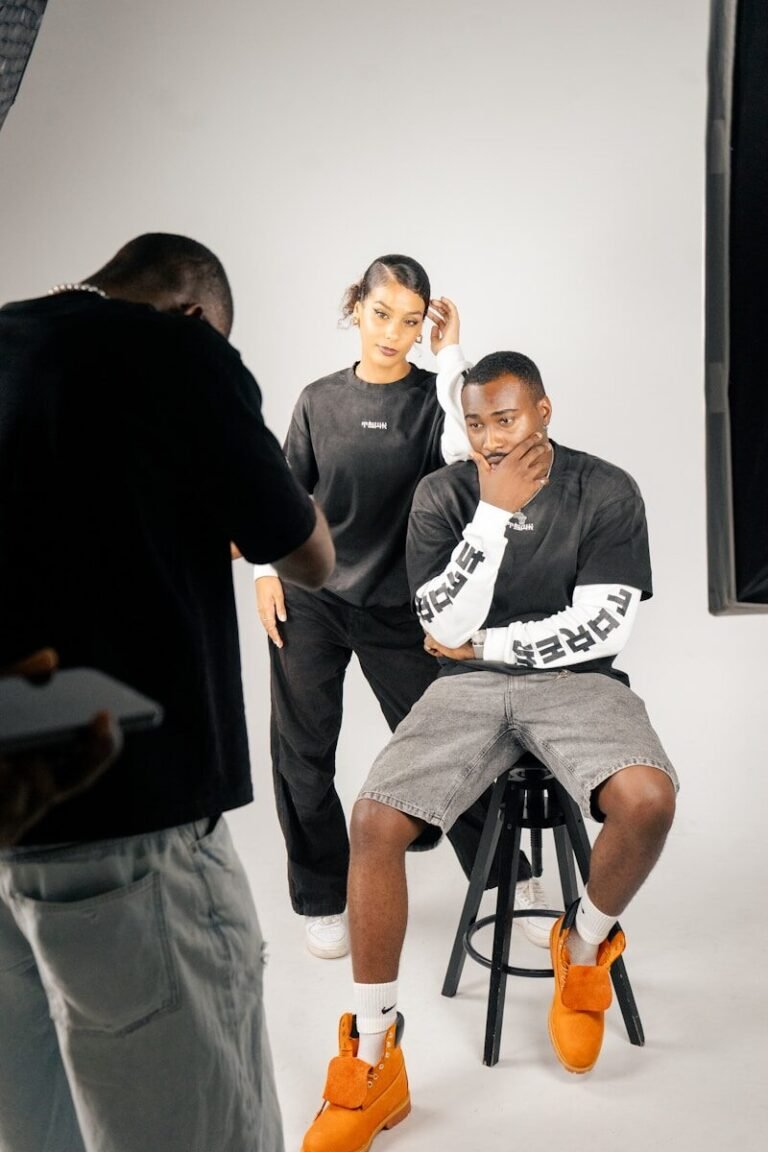
Your behind-the-scenes footage and your photoshoots all tell your story and reinforce your lifestyle, one post at a time.
Through Visual Identity
Your brand identity is the visual expression of your world. Your colors, typography, imagery, and packaging all need to align with the lifestyle you are building, not just look good on their own.
A luxury lifestyle uses refined colors and clean compositions. Streetwear, on the other hand, leans into bold colors and raw photography, while outdoor brands lean toward earth tones and natural landscapes. In short, your lifestyle determines your visual choices, not the other way around.
Real Examples of Lifestyle Branding
Red Bull does not sell energy drinks, it sells energy itself. Extreme sports, adventure, and pushing limits fill its brand world. People do not drink Red Bull simply because they need caffeine, they drink it because they want to feel alive. That feeling is the lifestyle.
Supreme built a world around authenticity, scarcity, and cultural relevance. People line up for drops not just for the product, they line up for the lifestyle. The emotional value lives in belonging to the culture, not in the fabric itself.
Worldbuilding this consistent is not unique to fashion. For instance, the Chrysler Building in New York is a fitting example, even though Chrysler is a car brand, not a clothing brand. Walter Chrysler commissioned the skyscraper as a physical symbol of his company’s ambition, and architect William Van Alen carried that identity into the smallest details. The building’s exterior ornamentation directly references Chrysler automobile parts, from hubcaps to radiator caps to eagle gargoyles.
That is worldbuilding taken to its logical extreme. The brand did not stop at the product, it shaped an entire building around the same identity. Applied to a clothing brand, the lesson holds just as well. If your packaging, your photography, and your store experience do not carry the same identity as your product, the world you are building has gaps in it.
Your Audience Chooses the Lifestyle That Reflects Them
People buy clothing because it reflects who they are, or who they want to be. Because of this, your audience chooses your brand when your lifestyle aligns with their identity. To build a world that resonates, you therefore need to understand your audience deeply, what they care about, what their ideal day looks like, and what they want to express when they wear your clothes.
Supreme attracts people who value street culture and exclusivity. Patagonia attracts people who care about the environment. Your lifestyle filters your audience, it attracts the right people and repels the wrong ones, and that is a feature, not a flaw.
How to Build Your Lifestyle
Building a lifestyle brand is a sequence, not a single decision. Work through these steps in order.
- Define your brand associations – write down the specific emotions, values, and cultural touchpoints your brand represents.
- Understand your audience – get clear on who they are, what they care about, and what lifestyle they aspire to.
- Build your world – create moodboards and define your visuals, tone, and content style around your associations.
- Tell your story – use storytelling to communicate your lifestyle, show it instead of only stating it.
- Align every product and campaign – make sure each drop and each post reinforces the same lifestyle.
- Stay consistent – keep building the same world over time, since consistency is what makes it recognizable.
Common Mistakes to Avoid
A few patterns quietly undo a lifestyle brand, even when the founder means well.
- No clear lifestyle – selling clothes without defining a world leaves people unsure what you stand for.
- Mixing too many lifestyles – trying to be luxury, streetwear, and sustainable all at once dilutes all three.
- Not living the lifestyle – claiming sustainability while using cheap production breaks trust the moment it is noticed.
- Reverting to feature language under pressure – when sales dip, founders often panic and start listing fabric weight again, undoing months of identity-first positioning.
- Copying another brand’s lifestyle – building your own world holds up longer than borrowing someone else’s.
What to Do Next
Start with your associations. What world do you want to create, and what emotions do you want people to feel? From there, choose the lifestyle direction that fits your brand and go deeper with one of these guides.
- Luxury Clothing Brand
- Streetwear Clothing Brand
- Outdoor Clothing Brand
- Sustainable Clothing Brand
- Minimalistic Clothing Brand
Lifestyle branding turns your clothing brand from a product line into a universe people want to join. Build your world first, the products will follow.
Frequently Asked Questions about Lifestyle Branding
Lifestyle branding means building a brand that represents a specific way of living rather than just selling clothes. Customers buy into the identity, culture, and emotion the brand represents, not only the product itself.
Clothing is usually an emotional and identity-driven purchase rather than a solution to a functional problem. Marketing that only lists fabric specs or features fails to answer the real question a shopper is asking, which is who they become by wearing it.
Start broad with a category like streetwear, luxury, or outdoor, then get specific by tying it to a subculture, city, or niche interest. The more defined the association, the stronger the lifestyle feels to the people who connect with it.
No. Consistency in visuals, tone, and storytelling matters more than budget. A small brand with a clearly defined world will outperform a bigger brand with inconsistent messaging.
The most common mistake is reverting to feature-driven language as soon as sales slow down. Lifestyle branding only works when it stays consistent across every product, post, and campaign instead of being treated as a temporary theme.