Business Models Made Simple for Clothing Brands
You have €2,000 saved, three strong designs ready to go, and a launch date circled on your calendar. But you’re stuck on one question: should you order 100 units upfront, take pre-orders first, or start with print on demand?
This decision affects everything. How much money you need. How fast you can launch. How much risk you take on. Whether you’ll have cash flow problems in month three or celebrate your first profit in month one.
Most clothing brands pick a business model based on what sounds exciting or what another brand is doing. That’s backwards. Your business model should match your resources, timeline, and risk tolerance right now, not your ambitions for year five.
This guide breaks down the five core models: print on demand, pre-order, full inventory, custom clothing, and handmade. By the end, you’ll know which one fits your situation and how to test it without betting everything on one approach.
Who this is for
This guide is for founders who need to make a decision, not collect information. You’re ready to commit to a model for your first launch, but you want to choose strategically instead of guessing.
You’ll get the most value if:
- You have a clear brand identity and at least 3-5 designs ready
- You know your approximate budget (even if it’s just €500)
- You’re willing to test small before going big
- You want real numbers, not vague advice
If you’re still figuring out your brand story or what products to make, start there first. Business model comes after you know what you’re selling and who you’re selling to.
Start here: match model to resources
Your first filter is simple: what do you actually have right now?
Budget under €500?
Start with print on demand. You can launch without inventory risk and test designs before committing to larger production.
Budget €500 to €2,500 and an engaged audience?
Run a pre-order to fund production. Use limited drops and community building to create hype.
Budget €2,500+ and clear demand signals?
Consider full inventory for your bestsellers. You’ll get better margins and faster shipping, but only if you’re confident in what will sell.
Premium positioning and niche audience?
Custom clothing or handmade lets you charge higher prices and build stronger customer connections.
Not sure yet?
Keep reading. The next section breaks down each model so you can see exactly what you’re signing up for.
The five core business models
Each model solves different problems and fits different situations. Read through all five before deciding, because most successful brands eventually combine multiple approaches as they grow.
Print on Demand (POD)
Print on demand means you sell products before they’re made. When a customer orders a tshirt or hoodie, a third-party supplier prints and ships it directly to them. You never touch inventory.
Who it’s for:
Beginners with limited budgets, creators testing designs, brands that want to launch fast without production knowledge.
How it works:
You upload designs to a POD platform (Printful, Printify, SPOD), connect it to your online store, and set your prices. The platform handles printing, packing, and shipping. You pay per order and keep the difference between your retail price and their production cost.
Real numbers:
A basic tshirt costs €8-€12 to produce and ship via POD. Most brands sell them for €25-€35, leaving €13-€27 in gross profit per sale. After marketing and platform fees, net margins are typically 20-30%, which Printful’s own market data confirms as the industry-standard range for apparel sold through POD.
Advantages:
- Launch in days with almost no upfront cost
- Test designs without risk
- No inventory management or storage
- Easy to add new products
Challenges:
- Lower profit margins than bulk production
- Limited control over quality and shipping times
- You’re dependent on the supplier’s reliability
- Harder to build a premium brand when customers see 7-10 day shipping
Best printing techniques for POD:
Direct to garment (DTG), dye sublimation, heat transfer vinyl
When to use POD:
When you’re validating demand, don’t have capital for bulk orders, or want to offer a wide variety of designs without holding stock. Many brands use POD for their launch, then transition winning designs to bulk production.
When to move away:
Once a design consistently sells 20+ units per month, the margin improvement from bulk production usually justifies the switch. Calculate your break-even in Step 3 to know when.
Resources:
Use our free marketing tips and low budget marketing to drive traffic without spending much on ads. Create mockups to test interest before committing to POD platforms.
Pre-Order
Pre-order means customers pay upfront, then you produce based on confirmed demand. You sell first, manufacture later. This reduces risk and generates cash to fund production.
Who it’s for:
Indie brands with a small but engaged audience, founders who want to validate demand before spending on inventory, brands launching seasonal collections.
How it works:
You announce a launch window (often 1-3 weeks), take orders with payment upfront, close the pre-order period, then send confirmed quantities to your manufacturer. Customers wait 4-8 weeks for delivery.
Real numbers:
Typical pre-order conversion rates range from 5-15% of your audience if you’ve built trust. If you have 500 engaged followers, expect 25-75 orders. Minimum order quantities (MOQs) from manufacturers usually start at 50-100 units per design, so your audience size needs to support that.
Advantages:
- Minimizes unsold inventory
- Generates revenue before production costs hit
- Creates urgency and hype around your launch
- Validates demand with real purchases, not survey responses
Challenges:
- Longer wait times can frustrate customers
- Requires clear communication and realistic timelines
- Production delays hurt your reputation
- You need an existing audience to make it work
Best printing techniques for pre-order:
Screen printing and plastisol work well for bulk pre-orders because of better pricing at higher quantities.
When to use pre-order:
When you have 300+ followers who engage with your content, you’re launching a new collection, or you want to test a new product category without betting your own cash.
Production planning:
Add 2 weeks to whatever your manufacturer promises. If they say 3 weeks, tell customers 5 weeks. Under-promise, over-deliver. One late shipment loses more trust than you’ll build in six months.
Communication strategy:
Send weekly updates during production. Show behind-the-scenes progress. If there’s a delay, announce it immediately with a revised timeline. Transparency keeps customers on your side even when things go wrong.
Full Inventory
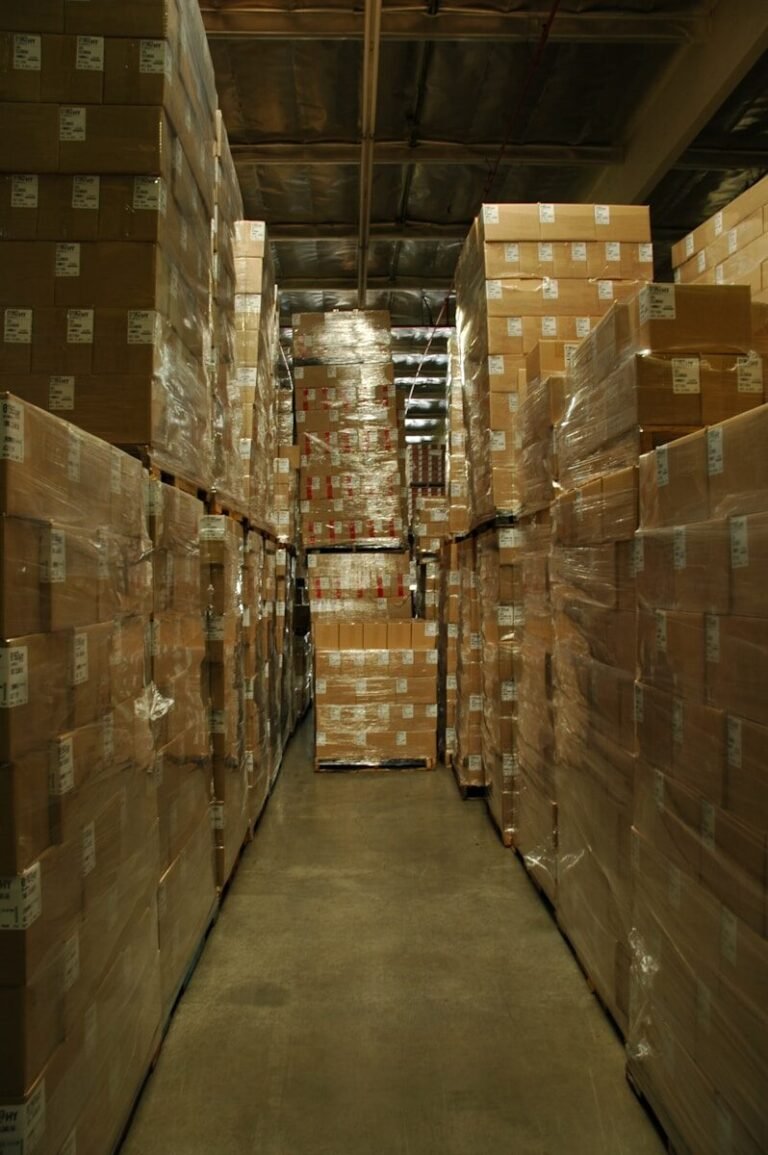
Full inventory is the traditional retail model. You order products in bulk, store them, and ship as orders come in. This gives you complete control over quality, branding, and fulfillment speed, but requires significant upfront capital.
Who it’s for:
Established brands with predictable demand, founders who have validated their designs through POD or pre-orders, brands that need fast shipping to compete.
How it works:
You place bulk orders with manufacturers (typically 100-500+ units per design), pay upfront or with a deposit, receive inventory, store it in your home, warehouse, or fulfillment center, then ship as customers order.
Real numbers:
A basic tshirt produced in bulk (200+ units) costs €5-€8 per unit including printing. Sell at €30, and your gross margin is €22-€25 per sale (73-83%). After storage, shipping, and returns, net margins are typically 40-50%, significantly better than POD.
MOQs usually start at 50-100 units per design per colorway, though industry guidance on apparel MOQs puts the realistic range for US and small-batch manufacturers at 50-500 units per style. For a collection with 4 designs in 3 colors each, you’re looking at 600-1,200 total units and €3,000-€6,000 in upfront costs.
Advantages:
- Highest profit margins at scale
- Full control over production quality and timelines
- Fast shipping (1-3 days vs 7-10 with POD)
- Better brand assets like custom hangtags, packaging, and care labels
- Easier to scale when demand is steady
Challenges:
- High upfront costs before you see revenue
- Risk of unsold inventory if demand drops
- Storage and logistics add complexity
- Cashflow pressure if products don’t sell quickly
Best printing techniques for full inventory:
Screen printing and embroidery offer the best quality and margins for bulk orders.
When to use full inventory:
When you’ve proven demand through POD or pre-orders, have €3,000+ to invest, and can confidently forecast what will sell. It’s also essential if you’re targeting retail stores or want to compete with fast shipping expectations.
Planning for seasonal demand:
Order winter items like hoodies and sweaters in August, summer items like tank tops in February. This gives you production time and avoids holding out-of-season stock.
Custom Clothing (Made-to-Order)
Custom or made-to-order clothing is produced individually for each customer. This can mean adjustable sizing, personalized colors, unique graphic designs, or fully bespoke pieces. Each item is made only after the customer orders it.
Who it’s for:
Premium or niche brands, founders who want to emphasize exclusivity and craftsmanship, brands targeting customers who value personalization over speed.
How it works:
Customers order through your website with custom specifications (size adjustments, fabric choices, personalized details). You send each order to your manufacturer or produce it yourself. Production takes 2-6 weeks depending on complexity.
Real numbers:
Custom pieces typically cost 30-50% more to produce than bulk orders due to individual handling. A custom jacket might cost €40 to produce vs €25 for a bulk version. But you can charge 2-3x more because of the personalization premium. Sell that jacket for €120-€180 instead of €80.
Margins depend on your pricing confidence and how well you communicate value.
Advantages:
- Builds strong emotional connections with customers
- Reduces waste since nothing is made speculatively
- Justifies higher prices through exclusivity
- Lower inventory risk than full stock
Challenges:
- Longer production and shipping times
- More complex logistics for individual orders
- Harder to scale without specialized systems
- Customer service is more intensive (custom requests, revisions)
When to use custom clothing:
When your brand emphasizes craftsmanship, your audience values uniqueness over speed, or you’re targeting a premium market willing to wait for quality.
Custom works well for luxury clothing brands and niche categories like workwear or artistic clothing.
Handmade
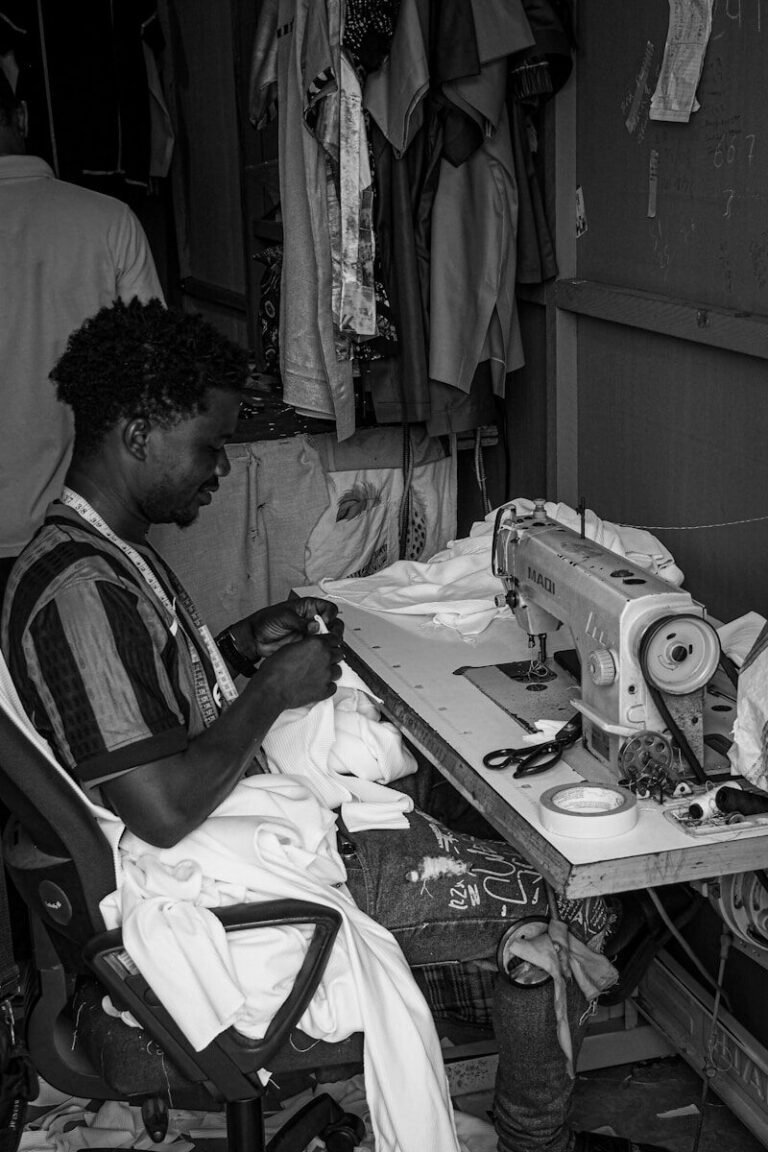
Handmade clothing is produced by hand, often in small batches or one-off pieces. Every item carries the mark of individual craftsmanship. This model is about quality, authenticity, and telling a story that mass production can’t replicate.
Who it’s for:
Artisan brands, founders with sewing or crafting skills, luxury or niche labels where exclusivity is the core selling point.
How it works:
You (or a small team) make each piece by hand. This could mean hand-sewing jeans, hand-dyeing fabrics, or hand-applying techniques like airbrushing or custom embroidery.
Real numbers:
Production costs are harder to calculate because your time is the biggest expense. A handmade hoodie might take 4-8 hours to complete. If you value your time at €20/hour, that’s €80-€160 in labor alone, plus materials. You need to sell for €200-€400 to make it sustainable.
Most handmade brands produce 10-50 pieces per month, not hundreds.
Advantages:
- Extremely high perceived value and exclusivity
- Appeals to customers who appreciate craftsmanship and sustainability
- Reinforces brand identity through storytelling
- No minimum order quantities or supplier dependencies
Challenges:
- Nearly impossible to scale without losing the handmade element
- High production costs relative to output
- Time-intensive, which limits how much you can grow
- Hard to compete on price with mass production
When to use handmade:
When your main differentiator is quality and uniqueness, your brand centers on craftsmanship, or you’re targeting a vintage, artistic, or sustainable niche.
Handmade works particularly well for minimalistic clothing brands where each piece is an investment, not a trend.
Storytelling advantage:
Use storytelling and behind the scenes content to show your process. Customers pay a premium when they see the work that goes into each piece.
Decision framework: choosing your model
Knowing the models is one thing. Choosing the right one for your situation is another. This framework walks you through the decision step by step so you pick based on logic, not hype.
Step 1: Assess your resources
Start with what you actually have, not what you wish you had. Your resources determine which models are even possible right now.
Budget:
- €0 to €500: Print on demand is your only realistic option. You can’t fund bulk production or hold inventory with this budget. Use POD to test designs and build an audience while you save for the next step.
- €500 to €2,500: Pre-order becomes viable if you have an engaged audience. You can also mix POD for some products while saving for a small bulk order of your bestseller. This is the transition zone.
- €2,500 to €10,000: Full inventory for a focused collection (3-5 designs, 2-3 colorways each) is possible. You can afford MOQs, better printing techniques, and professional brand assets.
- €10,000+: You have flexibility. Full inventory, custom options, or a hybrid approach where you stock core items and offer custom pieces for premium customers.
Time to launch:
- 1 month or less: POD is the only model that moves this fast. You can have designs live and selling within a week.
- 1 to 3 months: Pre-order works if you spend the first month building hype and the next two months in production. Full inventory is tight but possible if you have manufacturer relationships already.
- 3 to 6 months: Full inventory, custom clothing, or handmade all fit this timeline. You have room to plan, prototype, and refine before launch.
Skills:
- Design only: POD or pre-order. You don’t need production knowledge because suppliers handle manufacturing.
- Design + some production knowledge: Pre-order or full inventory. You can communicate with manufacturers and manage quality control.
- Design + full production skills: Any model works. If you can sew or manage complex workflows, handmade or custom clothing become realistic options.
Step 2: Define your target audience
Your audience’s expectations and behavior should influence which model you choose. Not every model works for every customer type.
Mass market vs niche:
- Mass market (trying to reach as many people as possible): POD or full inventory work best. Customers expect fast shipping and competitive prices.
- Niche market (targeting a specific lifestyle or value set): Pre-order, custom clothing, or handmade work well. Niche customers are more patient and willing to pay premiums for brands that align with their identity.
Reference your work on lifestyle branding and specific niches like streetwear, outdoor, or sustainable to understand your audience better.
Price sensitivity:
- Budget-conscious customers: POD or full inventory with competitive pricing. These customers prioritize value and won’t wait long for delivery.
- Quality-focused customers: Custom clothing, handmade, or premium full inventory. These customers pay more for better materials, construction, and exclusivity.
Check your pricing strategy to ensure your business model supports the prices you need to charge.
Wait tolerance:
- Low tolerance (want it now): Full inventory with fast shipping. Stock core garments so you can ship within 1-3 days.
- Medium tolerance (willing to wait 1-2 weeks): POD works fine. Clearly communicate shipping times upfront.
- High tolerance (willing to wait 4-8 weeks): Pre-order, custom clothing, or handmade. Build anticipation and trust through transparent communication.
Step 3: Calculate break-even
Break-even tells you how many units you need to sell before you’re profitable. This number changes dramatically depending on which model you choose.
POD break-even example:
- Upfront costs: €200 (website, mockups, initial marketing)
- Cost per tshirt: €10
- Sell price: €30
- Profit per sale: €20
Break-even: €200 ÷ €20 = 10 sales
After 10 sales, you’re profitable. Low risk, but also low margin.
Pre-order break-even example:
- Upfront costs: €500 (samples, photography, marketing to build hype)
- Bulk production: 100 tshirts at €6 each = €600
- Total investment: €1,100
- Sell price: €30
- Profit per sale: €24
Break-even: €1,100 ÷ €24 = 46 sales
You need to sell 46 of your 100 units to break even. After that, the remaining 54 sales are pure profit.
Full inventory break-even example:
- Upfront costs: €1,000 (samples, photography, brand assets, website improvements)
- Bulk production: 300 tshirts at €5 each = €1,500
- Total investment: €2,500
- Sell price: €30
- Profit per sale: €25
Break-even: €2,500 ÷ €25 = 100 sales
You need to sell 100 of your 300 units to break even. Higher risk, but the remaining 200 sales generate €5,000 in profit.
Simple formula you can copy:
Break-even units = (Upfront costs + Production costs) ÷ (Sell price – Cost per unit)
Run this calculation for each model you’re considering. The one with the lowest break-even point carries the least risk.
Step 4: Test before committing
Don’t bet everything on one model until you’ve tested it on a small scale. A micro-launch with 10-50 units tells you everything you need to know before you go big.
How to run a micro-launch:
- Pick one product: Choose your strongest design in one garment type. Don’t launch 5 designs at once.
- Produce or list a small batch: If using POD, list it. If doing pre-order or full inventory, start with 50-100 units.
- Drive targeted traffic: Use free marketing and low budget strategies to reach your audience without burning cash on ads.
- Measure three things:
- Conversion rate: What percentage of visitors actually buy? (Aim for 2-5%)
- Customer feedback: Do they mention quality, fit, shipping time, or price?
- Profit margin: After all costs, how much do you actually keep per sale?
- Decide:
- Scale: If conversion and feedback are strong, order more or expand to other designs.
- Pivot: If one variable is off (low conversion, quality complaints), fix it before scaling.
- Stop: If nothing works and you can’t identify the problem, pause and reassess your brand or product-market fit.
Testing saves you from spending €5,000 on inventory that doesn’t sell or locking into a model that doesn’t fit your strengths.
Hybrid models (the smart approach)
Most successful clothing brands don’t stick to one business model forever. They evolve. They test, learn, and combine models to maximize profit while minimizing risk. Here’s how smart brands use hybrid approaches to grow strategically.
POD → Pre-Order → Full Inventory
This is the most common growth path for new brands. You start lean, validate demand, then scale into better margins as you gain confidence and capital.
Stage 1: POD (Months 1-6)
Launch with print on demand to test 5-10 designs with zero inventory risk. Track which designs sell consistently. Use mockups and social media marketing to drive traffic.
Goal: Identify 2-3 bestsellers that sell 20+ units per month.
Stage 2: Pre-Order (Months 6-12)
Once you have proven designs and a small audience (300-1,000 followers), run a pre-order campaign for your bestsellers. Use limited drops to create urgency.
Goal: Sell 50-100 units of each bestseller, generate €2,000-€5,000 in revenue before production, and build trust with your audience.
Stage 3: Full Inventory (Months 12+)
With proven demand and capital from pre-orders, place bulk orders for your core products. Stock items that you know will sell.
Goal: Improve margins from 20-30% (POD) to 40-50% (bulk), ship faster (1-3 days instead of 7-10), and reinvest profits into new designs or marketing.
Real brand example:
A streetwear brand starts with POD for 8 graphic tees. Three designs sell well. They run a pre-order for those three, fund production with customer payments, then move to full inventory for the bestseller while keeping experimental designs on POD.
This hybrid approach minimizes risk at every stage while maximizing profit on proven winners.
Full Inventory + Custom Options
This model works for brands that want the speed and margin benefits of bulk production but also want to offer premium, personalized products for loyal customers.
How it works:
Stock your core garments in standard sizes and colorways (tshirts, hoodies, jeans). These are ready to ship immediately and cover 80-90% of your sales volume.
Offer a separate “custom” tier where customers can request personalized designs, adjusted sizing, premium fabrics, or unique colorways. These orders take 3-6 weeks and cost 50-100% more.
Why it works:
- You capture fast, high-volume sales from stocked items
- You capture premium, high-margin sales from custom orders
- Customers who want instant gratification get it; customers who want exclusivity get that too
Example:
A workwear clothing brand stocks standard cargo pants and jackets in black, navy, and khaki. But they also offer custom embroidery, reinforced stitching, or custom pocket configurations for professional customers willing to pay double and wait a month.
This works especially well for luxury, outdoor, or techwear brands where customization is part of the value proposition.
Seasonal Pre-Order + Evergreen POD
This hybrid balances hype-driven drops with consistent, low-risk availability. You use pre-orders for seasonal collections and POD for evergreen basics that customers expect year-round.
How it works:
Run pre-order campaigns for limited seasonal collections: spring, summer, fall, winter. These drops create urgency, fund production upfront, and align with trends or weather.
Keep 3-5 core designs available year-round via POD. These are your brand staples that new customers discover through organic search or word-of-mouth.
Why it works:
- Pre-order drops generate excitement and community engagement
- POD ensures you never miss a sale when someone discovers your brand between drops
- You’re not stuck holding out-of-season inventory
Example:
A sustainable clothing brand runs quarterly pre-orders for seasonal collections using organic cotton and linen. Between drops, they keep signature tees and tank tops available via POD so customers can always buy something.
Use email marketing to drive pre-order campaigns, while relying on SEO and content to sustain POD sales.
Common mistakes (and how to avoid them)
Most brands don’t fail because they picked the wrong model. They fail because they implemented it poorly, ignored warning signs, or scaled at the wrong time. Here are the mistakes that cost the most money and how to avoid them.
Starting with full inventory too early
The mistake:
You’re excited about your designs, so you order 500 units across 5 designs before you’ve sold a single piece. Three months later, 400 units are sitting in boxes in your garage and you’re out of cash for marketing.
This happens when founders confuse confidence with validation. You believe your designs will sell, but belief doesn’t pay bills.
The fix:
Test demand first. Run POD or a small pre-order campaign (50-100 units) before committing to bulk inventory. If those 50 units sell out in two weeks, you have proof. If they take three months to move, you just saved yourself from ordering 500.
Track website traffic, email signups, and conversion rates. Real demand shows up in numbers, not compliments from friends.
When full inventory actually makes sense:
When you’ve already sold 100+ units of a design through POD or pre-order, have €3,000+ to invest without risking rent money, and your audience is actively asking when items will be back in stock. That’s validation.
Running pre-orders without a plan
The mistake:
You announce a pre-order, take payments, then realize your manufacturer needs 6 weeks instead of 3, your sizes are wrong, or you didn’t budget for shipping. Customers get angry. Your reputation takes a hit. Some demand refunds.
Pre-orders fail when founders focus on collecting money but skip the logistics. Taking payment is easy. Delivering on time is hard.
The fix:
Before you open pre-orders, lock in these details:
- Manufacturer confirmation: Get a written timeline. Add 2 weeks to their estimate and use that as your customer promise.
- Sample approval: Order a physical sample. Check quality, sizing, and printing technique before you sell anything.
- Cost breakdown: Calculate production, shipping (domestic and international), packaging, hangtags, and care labels. Add 15% buffer for mistakes.
- Communication plan: Write email templates for order confirmation, production updates, shipping notifications, and delays. Have them ready before day one.
Set a realistic delivery window (6-8 weeks is safer than 4 weeks) and send weekly updates even when nothing changes. Customers tolerate delays if you’re transparent. They don’t tolerate silence.
Staying on POD when you should scale
The mistake:
You’re selling 50+ units per month through POD, making €15 profit per sale, and thinking “this is fine.” Meanwhile, you could be making €25 per sale with bulk production and better printing techniques like screen printing or embroidery.
Over a year, that’s €6,000 in lost profit on just 50 units per month.
Founders stay on POD too long because it’s comfortable. No inventory risk, no upfront costs, no decisions. But comfort costs money when you have proven demand.
The fix:
Track your monthly sales per design. When a design consistently hits 20+ units per month for three months straight, run the break-even calculation from Step 3.
Compare:
- POD: €15 profit per sale, zero upfront cost
- Bulk: €25 profit per sale, €1,500 upfront for 200 units
If you’re selling 30 units per month, bulk pays back in 5 months (€1,500 ÷ €300 extra profit per month). After that, you pocket an extra €300 every month.
Don’t switch everything at once. Move your bestseller to bulk while keeping experimental designs on POD. Test full inventory on one product before committing to an entire collection.
Recognize the tipping point:
When customers start asking “why does shipping take so long?” or when you’re spending more time fulfilling orders than creating new designs, it’s time to scale.
Mixing models without strategy
The mistake:
You’re running POD, pre-orders, and full inventory at the same time with no clear reason why. Customers are confused about shipping times. You’re juggling three suppliers. Nothing runs smoothly.
Hybrid models work when they’re intentional. They fail when they’re reactive or driven by FOMO.
The fix:
Every model you run should solve a specific problem:
- POD for testing: New designs or low-volume items where you’re still validating demand
- Pre-order for hype: Seasonal collections or limited releases where urgency drives sales
- Full inventory for core products: Core garments that sell consistently
Document your strategy. Write down which products use which model and why. Share this with your team (even if it’s just you) so decisions stay consistent.
Clear customer communication:
If a product is POD, say “ships in 7-10 days.” If it’s pre-order, say “estimated delivery: 6-8 weeks.” If it’s in stock, say “ships in 1-3 days.” Set expectations upfront so customers aren’t surprised.
Use your website to clearly label which products are ready to ship and which require patience. Transparency prevents complaints.
Business model comparison table
Use this table to compare all five models side by side. It’s a quick reference when you’re deciding or explaining your choice to a partner or investor.
| Factor | Print on Demand | Pre-Order | Full Inventory | Custom Clothing | Handmade |
|---|---|---|---|---|---|
| Startup cost | €0-€500 | €500-€2,500 | €2,500-€10,000 | €1,000-€5,000 | €500-€3,000 |
| Time to launch | 1-7 days | 1-3 months | 2-4 months | 1-3 months | 1-6 months |
| Profit margin | 20-30% | 35-45% | 40-50% | 50-70% | 60-80% |
| Risk level | Very low | Low to medium | High | Medium | Low to medium |
| Scalability | High (automated) | Medium (batch-based) | Very high (with capital) | Low (labor-intensive) | Very low (manual work) |
| Best printing techniques | DTG, dye sublimation, heat transfer vinyl | Screen printing, plastisol | Screen printing, embroidery | DTG, screen printing, embroidery | Airbrushing, embroidery |
| Customer wait time | 7-10 days | 4-8 weeks | 1-3 days | 3-6 weeks | 2-8 weeks |
| Inventory risk | None | Minimal | High | None | None |
| Quality control | Limited | Medium | Full | Full | Full |
| Best for | Testing ideas, low budget | Engaged audience, validation | Proven demand, scale | Premium positioning | Artisan focus, exclusivity |
Start with what fits now, not where you want to be
Your business model isn’t permanent. It’s a tool that should match your current resources, audience, and goals. Most founders pick based on ambition instead of reality, and that’s why they run out of money before they find traction.
If you have €500 and no audience, print on demand is the right choice even if your dream is to run a premium brand with full inventory. Build the audience first. Prove demand. Then upgrade your model.
If you have €5,000 and 1,000 engaged followers, a pre-order campaign funds production without risking your savings. Use their trust to validate your next step.
If you’ve already sold 200 units and customers keep asking when items will be back in stock, it’s time to invest in bulk production and improve your margins.
The smartest brands evolve through multiple models. They start lean, test ruthlessly, and scale only when the numbers prove it’s time. They combine approaches strategically instead of committing to one forever.
Pick your model based on the decision framework in Step 1-4. Run a small test. Measure conversion, feedback, and profit. Adjust or scale based on what the data tells you.
Your business model sets the foundation for how you operate, but it doesn’t define your brand. That comes from your story, your designs, and how you connect with your audience.
Start with what fits now. Grow into what comes next.
Frequently Asked Questions about Clothing Brand Business Models
Yes, and most brands do. Switching models is a sign of growth, not failure. The most common progression is POD to pre-order to full inventory as you gain capital and confidence. You can switch gradually by moving one product at a time, keeping experimental designs on POD while transitioning bestsellers to bulk production. The key is timing: switch when the data supports it, such as consistent sales and sufficient budget, not because you are bored or impatient.
Handmade and custom clothing typically have the highest margins, around 60-80%, because you can charge premium prices for exclusivity and craftsmanship, though they are also the hardest to scale. Full inventory offers strong margins of 40-50% with better scalability if you have proven demand and capital. POD has the lowest margins at 20-30% but also the lowest risk, making it ideal for testing or low-budget launches.
You do not need a formal business plan, but you do need a clear strategy for each model you run, documenting why you are using it, your target sales volume and timeline, your break-even point, and how you will communicate shipping times to customers. Even a one-page document is enough to keep decisions consistent and prevent you from mixing models without purpose.
Yes, but only if each model serves a specific purpose, such as POD for testing new designs alongside full inventory for proven bestsellers, or pre-order for seasonal drops alongside POD for evergreen basics. Avoid running multiple models for the same product category without a clear reason, since that creates confusion for both you and your customers.
Print on demand is the fastest option, since designs can be live and ready to sell within 1 to 7 days with no inventory and no waiting on manufacturers. The tradeoff is lower profit margins and longer shipping times, so it works best when speed matters more than margin in the early stage.