Hermès Case Study: How Scarcity, Family Control, and Craft Built a €15 Billion House
Hermès makes handbags with multi-year waiting lists and a resale value that often exceeds retail. It remains one of the most recognized French clothing brands in the world, and that is not a marketing trick.
The house survived a hostile takeover attempt from the world’s largest luxury conglomerate. It never lost a single share of family control. Chanel uses private ownership to fund creative risk. Hermès uses that same independence to protect something even more fundamental: the pace at which it makes things. This case study breaks down that model and what smaller luxury clothing brands can take from it directly.
What You Can Learn From Hermès
Five principles run through nearly 190 years of Hermès. Keep these in mind as you read the full breakdown.
- Craftsmanship is a supply chain decision, not a marketing claim. Hermès owns the tanneries and workshops that make its products, rather than outsourcing the skills that define its quality.
- The best products are often born from accidents, not briefs. The Birkin bag exists because a spilled straw tote sparked a conversation on a flight, not because of a planning meeting.
- Scarcity works when it comes from production limits, not manufactured hype. Hermès genuinely cannot make bags fast enough to meet demand, since each one takes 15 to 20 hours of a single artisan’s time.
- Ownership structure determines what a brand can protect. The Hermès family locked up their shares specifically so outside capital could not force decisions on them.
- Refusing to grow faster than your craft can support is a strategy, not a limitation. Hermès has never chased the volume its competitors pursue, and that restraint is exactly what protects its pricing power.
Hermès Timeline: From Paris Harness Workshop to a €15 Billion House
Hermès has stayed under family control across six generations. That is a rare feat in an industry where most heritage houses eventually sell out.
- 1837 — Thierry Hermès opened a harness and saddle workshop in Paris, building a reputation among European nobility for saddles stitched with the durable, hand-worked saddle stitch technique.
- 1880 — Charles-Émile Hermès moved the business to 24 Faubourg Saint-Honoré, the address that remains Hermès’ headquarters today.
- 1920s — Émile-Maurice Hermès spotted the zipper in the United States and secured exclusive French rights to it, becoming the first to bring it into French leather goods and clothing.
- 1930s — Hermès introduced the Sac à Dépêches, a structured document case that would later be renamed the Kelly bag.
- 1956 — Grace Kelly was photographed in Life magazine using her Sac à Dépêches to shield her pregnancy from photographers. Hermès formally renamed the bag the Kelly in 1977.
- 1984 — Jean-Louis Dumas designed the Birkin bag for actress Jane Birkin after a chance conversation on a flight. It became the world’s most coveted handbag.
- 2010-2014 — LVMH secretly built a stake in Hermès that reached 23%. The resulting legal battle and family defense ended with LVMH divesting its shares entirely.
- 2024 — Hermès crossed €15 billion in annual revenue for the first time. Revenue grew 13% year over year with an operating margin above 40%.
Hermès’s Craftsmanship and Vertical Integration
Hermès treats craftsmanship as infrastructure, not decoration. That distinction shapes nearly every operational decision the house makes.
The Saddle Stitch as Founding Technique
Thierry Hermès built his reputation on the saddle stitch, a hand-worked technique using two needles and a single thread. Each stitch locks independently rather than relying on one continuous line, so the seam holds even if a thread breaks. Machine stitching cannot do that.
New craftspeople spend years mastering it before touching a Birkin or Kelly. That training means Hermès still makes its most famous products with essentially the same hand method the company was founded on.
Owning the Supply Chain
Hermès owns a significant share of the tanneries that supply its leather. It also operates its own artisan workshops across France, rather than outsourcing production to contract manufacturers the way most fashion houses do. That vertical integration is expensive, but it gives Hermès direct control over material quality that a brand relying on outside suppliers simply cannot match.
It also means Hermès cannot simply order more product when demand spikes. The number of artisans and the real time a saddle-stitched bag takes to make cap output. That limit is precisely what turns availability into the brand’s defining scarcity.
The Birkin and Kelly: Scarcity Built Into the Product Itself
Hermès’s two most famous bags did not launch through a campaign. Both came from real moments, and both became the clearest examples of how genuine scarcity outperforms manufactured hype.
The Kelly Bag and Grace Kelly
Hermès introduced the Sac à Dépêches in the 1930s as a structured document case. In 1956, Life magazine photographed a visibly pregnant Grace Kelly using hers to shield her stomach from photographers. Demand for “the Grace Kelly bag” followed almost immediately, and Hermès formally renamed it the Kelly in 1977.
Hermès did not engineer that moment. It simply had a product good enough to become part of it, then let the association carry the name for decades afterward.
The Birkin, Born From a Spilled Bag
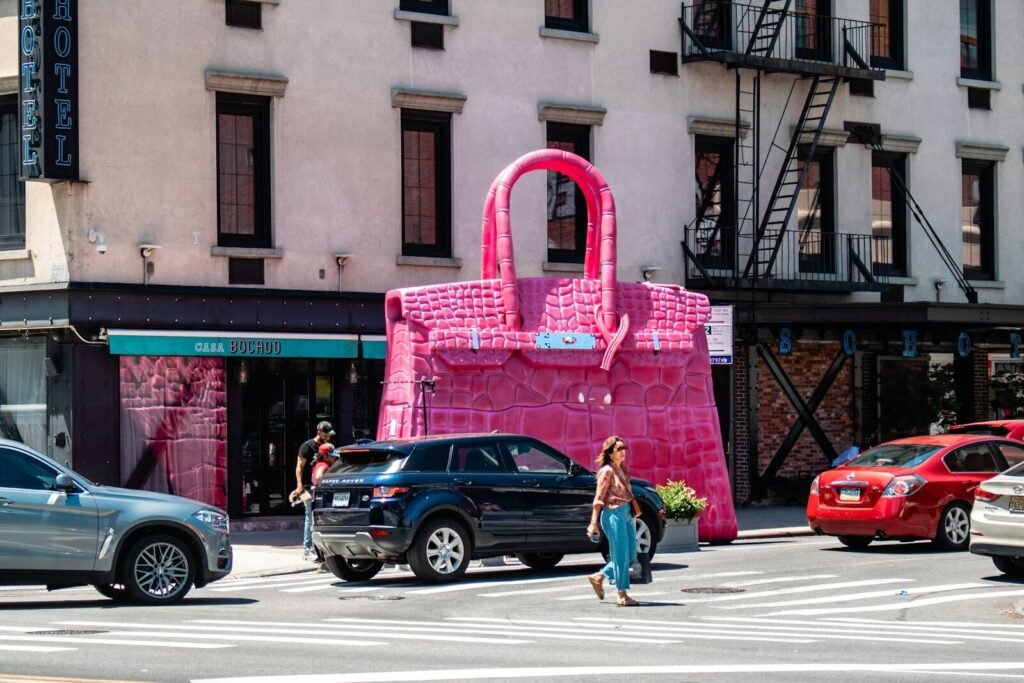
In 1984, actress Jane Birkin sat beside Hermès chief executive Jean-Louis Dumas on a flight from Paris to London. Her straw tote spilled its contents into the aisle, and she complained she could never find a practical bag with pockets. Dumas sketched a design on an airsickness bag before the flight landed. The Birkin launched later that year.
Each Birkin still takes a single artisan roughly 15 to 20 hours to complete by hand. That production reality, not a deliberate withholding strategy, created the waiting lists the bag is now known for. Hermès has consistently said it does not manufacture scarcity for effect. The math backs that up: demand for hand-stitched leather goods will always outpace what a limited number of trained artisans can physically produce.
Scarcity That Competitors Cannot Fake
Plenty of brands try to manufacture desire through limited drops and artificial waitlists. Hermès’s version is harder to copy, because it is not a policy decision. A competitor can announce a limited run. It cannot fast-track a decade of saddle-stitch training or duplicate a tannery Hermès has owned for generations. That structural constraint is what makes the scarcity credible rather than staged.
Hermès and the LVMH Takeover Battle
Nothing guaranteed Hermès’s independence. Between 2010 and 2014, the house fought off the most serious ownership threat in its history.
The Secret Stake-Building Campaign
In October 2010, Hermès discovered that LVMH chairman Bernard Arnault had quietly built a 17.1% stake in the company. He used complex equity swap instruments, a mechanism that let LVMH avoid the disclosure rules that apply to direct share purchases. LVMH’s stake eventually reached 23%. The Hermès family had never expected a rival luxury group to try to absorb them, and they viewed the move as a hostile ambush rather than a legitimate investment.
France’s financial markets regulator later fined LVMH €8 million for concealing how it built the position. That fine confirmed the stake-building had deliberately skirted disclosure rules meant to give target companies fair warning.
The Family’s Defense
Within weeks, more than 50 Hermès family members mobilized. They pooled just over half of their combined 73% ownership into a new holding company called H51. A 20-year agreement locked the shares in place and gave family members first right to buy any shares another member wanted to sell. That structure made a future takeover effectively impossible, since Arnault could no longer approach individual family shareholders one at a time.
The dispute ended in a 2014 settlement. LVMH agreed to distribute nearly all of its Hermès shares to its own shareholders and committed to buying no further Hermès stock for five years. Family ownership rose back to roughly two-thirds of the company.
What Family Control Actually Protected
The fight was never really about ownership percentages. It was about production pace. A public Hermès, answering to shareholders focused on quarterly growth, would face constant pressure to make more bags faster. That is exactly the kind of volume expansion that would undercut the scarcity and craftsmanship the brand’s entire value depends on. Keeping the company in family hands preserved the ability to say no to growth that did not fit the model.
What Clothing Brands Can Learn From Hermès
Nearly 190 years of Hermès offers lessons that apply well below the level of nine-figure handbags. Here’s what translates directly.
Invest in the Skill, Not Just the Story
Hermès’s craftsmanship is not a talking point added on top of the product. It is the product. For smaller brands, that means putting real budget into construction quality and material sourcing before spending on the story around them. A well-made product markets itself far more convincingly than a well-written product description.
Let Scarcity Come From Real Constraints
Hermès’s waiting lists exist because there are only so many trained artisans, not because the brand plays a psychological game. For smaller brands, manufactured scarcity, fake countdown timers, artificially low stock numbers, tends to erode trust once customers notice the pattern. Genuine production constraints, small batches, hand-finishing, limited fabric runs, create the same effect honestly.
Protect Your Decision-Making Authority Early
The Hermès family only survived LVMH’s approach because they moved fast to lock up their ownership structure. For smaller brands, this is a much earlier-stage version of the same lesson. Know exactly who has a say in your brand’s direction before you take on investors, co-founders, or manufacturing partners. Decisions about growth pace, quality standards, and pricing get much harder to protect once outside parties have a formal claim on the business.
Let Real Moments Become Your Icons
Neither the Kelly nor the Birkin came from a marketing brief. One came from a paparazzi photo Hermès did not orchestrate. The other came from a spilled bag on a flight. For smaller brands, the products and moments that become iconic rarely start in a boardroom. Staying observant matters more than trying to force a signature product into existence. An unscripted moment, or even an offhand customer complaint, often counts for more than a planning meeting.
The Hermès Blueprint in One Sentence
Hermès won by refusing to let anyone, including its own growth ambitions, make it produce faster than its craftsmanship could honestly support.
The same discipline scales down to any brand willing to let quality set the pace instead of demand. Founders working through how to start a clothing brand can apply that patience from day one. The marketing for clothing brands fundamentals show how to build desire around genuine craft rather than manufactured hype.
Frequently Asked Questions About Hermès
Hermès was founded in 1837 by Thierry Hermès, who opened a harness and saddle workshop in Paris. The company moved to 24 Faubourg Saint-Honoré in 1880, an address that remains its headquarters today, and has stayed under family control across six generations since.
Each Birkin bag is made by a single artisan using the hand-worked saddle stitch technique, a process that takes roughly 15 to 20 hours per bag. Because Hermès has never outsourced this production to speed it up, genuine artisan capacity, not a deliberate marketing strategy, limits how many bags the house can make.
Between 2001 and 2010, LVMH secretly built a stake in Hermès using equity swap instruments that avoided standard disclosure rules, eventually reaching 23 percent. The Hermès family responded by pooling over half their shares into a locked holding company, and the two sides settled in 2014 with LVMH agreeing to divest nearly all of its position.
Hermès remains majority owned by descendants of founder Thierry Hermès, spread across the Puech, Dumas, and Guerrand family branches. Following the LVMH dispute, family ownership was restored to roughly two-thirds of the company, and the business is led by sixth-generation family member Axel Dumas as executive chairman.
The Kelly bag started as the Sac à Dépêches, a structured document case Hermès introduced in the 1930s. In 1956, Life magazine photographed a pregnant Grace Kelly using hers to shield her stomach from photographers, and public demand for the Grace Kelly bag led Hermès to formally rename it the Kelly in 1977.
Clothing brands can learn four things from Hermès: invest in genuine craftsmanship rather than just the story around it, let scarcity come from real production constraints instead of manufactured hype, protect decision-making authority over growth and quality before taking on outside investment, and stay ready to let unplanned moments become a brand’s defining products.