Fabric MOQ: How Fabric Minimums Shape Your Clothing Production
Your garment MOQ is only half the story. Before a factory can sew a single hoodie, someone has to buy the fabric, and fabric mills have minimums of their own. For many small brands, the fabric MOQ is the real reason a production run grows bigger than planned.
In this guide, we explain how fabric MOQs work, why custom colors push them up and how to work around them. It builds on our general guide to MOQ for clothing brands.
What Fabric MOQ Means
A fabric MOQ is the smallest amount of fabric a mill or supplier will sell or produce in one order. Woven fabrics are usually sold by the meter or yard. Knit fabrics, like cotton jersey and fleece, are often sold by weight in kilograms. Wholesalers sometimes sell per roll.
Your choice of fabric therefore affects your minimum before you even talk to a garment factory. Our guide to fabrics for clothing brands helps you understand the main options.
Stock Fabric vs Custom Fabric
Stock Fabric
Stock fabric is already made and waiting in a warehouse. You can often buy it per roll, and some suppliers sell even smaller cuts. That makes it the easiest route for a first collection. The downside is that you can only choose from the colors and qualities that are available.
Custom Fabric
Custom fabric is made or dyed specifically for your order. That gives you full control over color, weight and composition. However, mills usually ask for much larger minimums per color. Shopify’s guide on how to source fabric notes that made-to-order fabric often starts at a full roll per color and adds weeks to your timeline.
Why Custom Colors Raise the Minimum
Dyeing is a batch process. A dye machine needs a minimum amount of fabric to run properly. The energy, water and chemicals cost roughly the same for a small batch as for a full one. Small batches also make it harder to hit exactly the same shade every time.
The same logic applies further up the chain. Yarn spinners and knitting mills have their own minimums for special yarns and constructions. As a result, every custom step adds another minimum on top of the last one.
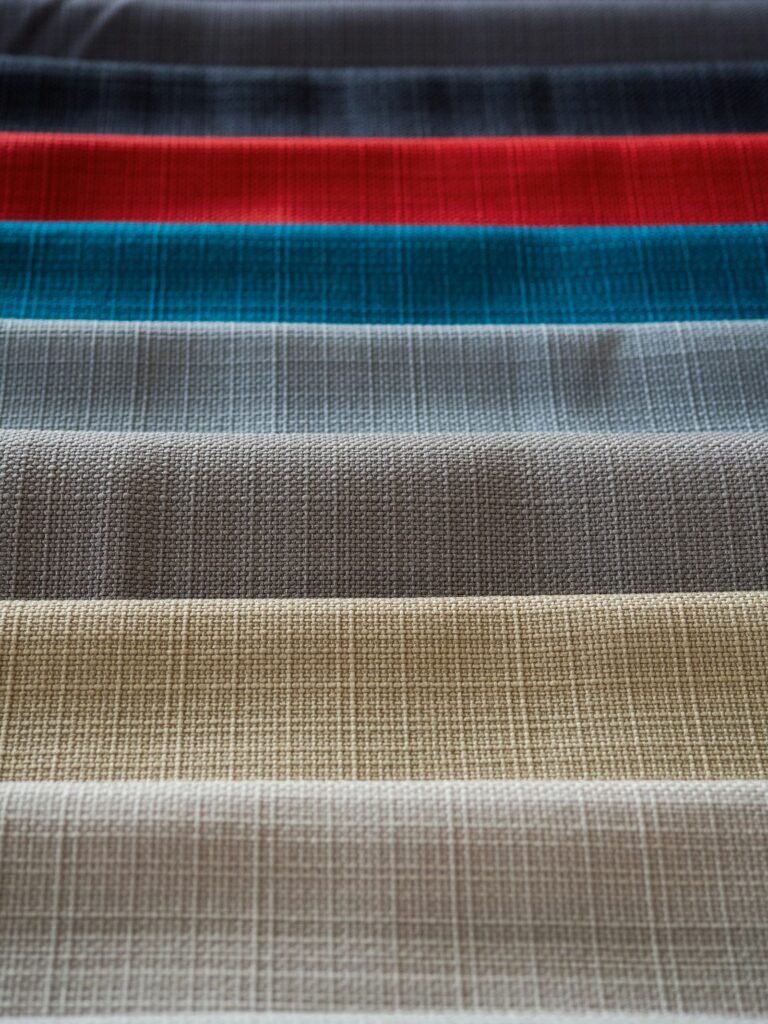
How Fabric MOQ Affects Your Garment Order
Fabric minimums translate directly into garments. Say one T-shirt uses around one meter of jersey, including cutting waste. A minimum of a few hundred meters per color then quickly means a few hundred T-shirts in that color. That is why a factory’s garment MOQ often follows the fabric minimum.
Fabric weight plays a role too. A heavier fabric, measured in GSM, weighs more per meter. So when fabric is sold per kilogram, a heavier jersey gives you fewer meters for the same minimum.
How to Work Around High Fabric Minimums
You rarely need custom fabric for a first collection. These options keep your minimums low:
- Choose a stock color and quality from the mill’s existing range.
- Use the same fabric for several styles, so they share one minimum.
- Ask your garment factory which fabrics it already buys in bulk.
- Look into deadstock fabric, the leftover rolls from other brands and mills.
- Work with fabric wholesalers that sell per roll or per cut.
Private label production often solves this problem for you, because the factory uses fabric it already has. Our comparison of private label vs cut and sew explains that trade-off.
Questions to Ask a Fabric Supplier
Before you commit to any fabric, get clear answers to these questions:
- Is the MOQ per color, per quality or per order?
- Is this a stock fabric, or will it be made or dyed for me?
- What is the lead time, and what is the surcharge for a smaller batch?
- Can I get a swatch or lab dip before I commit?
- Will a reorder match the same shade?
A lab dip is a small dyed test piece that shows the exact color before bulk dyeing. Approve it before production, just like you approve your clothing samples.
Frequently Asked Questions about Fabric MOQ
A fabric MOQ is the smallest amount of fabric a mill or supplier will sell or produce in one order. It is usually counted per color and measured in meters, yards, kilograms or rolls.
Stock fabrics can often be bought per roll or even per cut. Custom made or custom dyed fabrics usually have much higher minimums, often hundreds or thousands of meters per color.
Dyeing happens in batches. A dye machine needs a minimum load to run properly, and the costs per batch are roughly fixed, so mills set a minimum per color.
Woven fabrics are usually measured in meters or yards. Knit fabrics, such as jersey and fleece, are often measured in kilograms.
Choose stock colors, use one fabric for several styles, ask what your factory already stocks, consider deadstock fabric or buy from wholesalers that sell per roll.
A lab dip is a small dyed sample of fabric that shows the exact color before bulk dyeing. Brands approve it to make sure the final color matches what they want.