12 Peruvian Clothing Brands Worth Knowing (2026)
Peruvian clothing brands work from raw material almost no other country can claim: alpaca, vicuña, and guanaco fiber straight from the Andes, alongside pima cotton considered among the finest in the world. Grupo Inca and the Michell Group built entire vertical operations around that fiber, from breeding the animals to weaving the final garment. A newer generation of Lima designers has since pushed past pure luxury knitwear into upcycling, natural rubber leather alternatives, and genuinely experimental textile work. That range, from ancient fiber tradition to contemporary material science, is what makes Peruvian fashion worth watching closely.
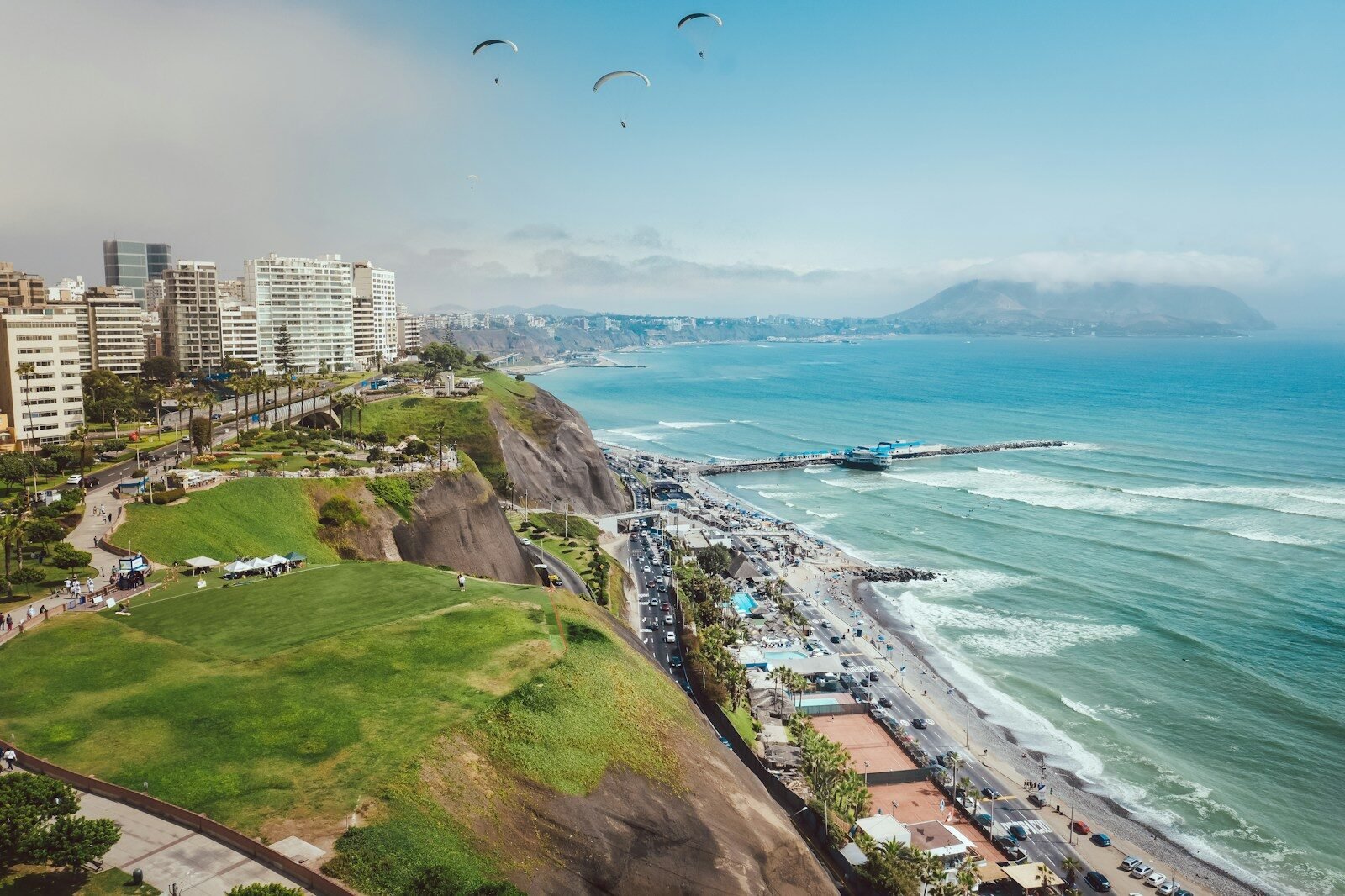
Lima anchors the country’s contemporary design scene, while Arequipa in the south functions as the industrial home of Peru’s alpaca and vicuña processing. Compared with Colombia or Argentina, Peru’s fashion identity leans harder on one specific material advantage rather than broad ready-to-wear manufacturing. Many of the country’s most interesting labels operate without traditional storefronts at all, taking appointments over Instagram or WhatsApp from studios tucked into Lima’s Barranco and Miraflores neighborhoods.
Peruvian Clothing Brands Overview
Here’s a quick overview of the twelve Peruvian brands featured in this guide, from alpaca luxury houses to Lima’s newest experimental designers.
- Kuna – Arequipa alpaca and vicuña brand since 2007, part of the vertically integrated Grupo Inca.
- Sol Alpaca – Arequipa luxury knitwear brand since 2004, part of the Michell Group’s alpaca empire.
- Ana G – Lima label since 2005, known for hand-painted motifs and graphic prints.
- Mozhdeh Matin – Lima luxury label since 2008, known for Shiringa rubber-tree leather alternatives.
- Estrafalario – Lima regenerative fashion brand since 2016, built on upcycled textile surplus.
- Annaiss Yucra – Lima label since 2018, built around bold prints and thoughtful, themed collections.
- Theodore Herald – Lima menswear label since 2018, focused on soft, sustainable luxury knitwear.
- D.N.I. – Lima label since 2019, founded by twin brothers celebrating Peruvian identity.
- Cornelio Borda – Lima accessories label from recent years, blending Italian craft with Peruvian embroidery.
- Lima Zulu – Lima streetwear label from recent years, mixing traditional craft with urban style.
- Hijos del Sol – Lima streetwear label from recent years, built on Peruvian folklore and sustainability.
- Ayni – Lima label from recent years, focused on eco-friendly materials and artisan collaboration.
Peruvian Clothing Brands
Kuna
Location: Arequipa, Peru
Founded: 2007
Price level: luxury
Product type: knitwear, outerwear
Style: refined, Andean
Website: kunastores.com
Instagram: @kunaperu
Kuna launched in 2007 as the retail face of Grupo Inca, a company that traces back to 1957 when Swiss immigrants Francis Patthey and Hugo Corzo began commercializing alpaca fiber from Arequipa. That decades-long head start gave Kuna direct control over the entire production chain, from breeding vicuña and guanaco to spinning yarn and designing the final garment. Every piece carries a certificate of authenticity registered with Peru’s Ministry of Agriculture, a level of traceability few luxury brands anywhere can match. The brand primarily serves Peru and the United States, with a smaller niche presence in Europe and Asia. Kuna proves a genuinely vertically integrated fiber company can build a real consumer luxury brand on top of decades of raw material expertise.
Sol Alpaca
Location: Arequipa, Peru
Founded: 2004
Price level: luxury
Product type: knitwear, accessories
Style: sophisticated, Andean
Website: solalpaca.com
Instagram: @solalpacaoficial
Sol Alpaca launched in 2004 as the retail chain of the Michell Group, a company that has exported Peruvian alpaca fiber since 1931 and remains one of the world’s leading alpaca producers. Designer Fariba Heydari, of Persian origin, leads the collections, blending Andean cultural references with contemporary tailoring rather than literal costume. The brand now runs boutiques across Peru, Chile, Bolivia, and Australia, extending its reach well beyond South America. That international footprint rests entirely on Michell’s near-century of raw fiber expertise rather than outside investment or celebrity partnership. Sol Alpaca shows how a luxury clothing brand can be built directly on top of an existing commodity export business.
Ana G
Location: Lima, Peru
Founded: 2005
Price level: high
Product type: ready-to-wear
Style: graphic, artistic
Website: anaguiulfo.com
Instagram: @ana_g_oficial
Ana María Guiulfo started her brand in Miami in 2005 before relocating the business to Lima, building a signature style around hand-painted motifs layered over graphic prints. Her designs draw on pre-Columbian iconography, translating archaeological references into wearable, contemporary silhouettes rather than costume pieces. That approach gave Ana G a distinctive visual identity in a market that often defaults to either pure luxury knitwear or plain streetwear. The brand has held a consistent presence in Lima’s fashion scene for close to two decades, unusually long for an independent Peruvian label. Ana G represents the artistic, print-driven side of Peruvian fashion that sits apart from the country’s alpaca-focused luxury houses.
Mozhdeh Matin
Location: Lima, Peru
Founded: 2008
Price level: luxury
Product type: ready-to-wear, outerwear
Style: artistic, textural
Website: mozhdehmatin.com
Instagram: @mozhdehmatin
Mozhdeh Matin, born in Peru to Iranian parents, entered the fashion industry through a Peru Moda design contest before building her label from 2008 onward. Her most distinctive material is Shiringa, a natural latex tapped by hand from Amazonian rubber trees in Madre de Dios, then smoked onto cotton fabric to create a genuine leather alternative. That process connects directly to specific families in the Amazon rather than an anonymous supply chain, giving the brand real traceability. Alongside Shiringa outerwear, the collections use alpaca, highland wool, and backstrap-loom weaving from various Peruvian artisan communities. Mozhdeh Matin proves a genuinely novel material can become a brand’s entire identity when the sourcing story is this specific.
Estrafalario
Location: Lima, Peru
Founded: 2016
Price level: high
Product type: ready-to-wear
Style: upcycled, artisanal
Website: estrafalario.pe
Instagram: @estrafalario
Valery Zevallos founded Estrafalario in 2016 as a direct response to social inequality and the environmental damage the fashion industry causes elsewhere. The brand transforms textile surplus, fabric that would otherwise go to waste, into one-off garments finished with hand embroidery. That process ties design, sustainability, and social impact together rather than treating sustainability as a marketing add-on. Estrafalario has since expanded its sales reach into the United States, Canada, Puerto Rico, Italy, Denmark, and Japan. The brand functions as a genuine sustainable clothing brand built specifically around what other manufacturers discard.
Annaiss Yucra
Location: Lima, Peru
Founded: 2018
Price level: high
Product type: ready-to-wear
Style: bold, thematic
Website: annaissyucra.com
Instagram: @annaissyucra
Annaiss Yucra, a Central Saint Martins graduate who grew up inside her family’s textile workshop, founded her eponymous label in 2018. Her jagged, brightly printed garments draw immediate attention, but the softness and comfort of the actual construction is what keeps customers returning. Each collection builds around a specific theme, resistance and revolution among them, translated into tangible motifs like the retama flower rather than abstract concepts. That combination of formal design training and hands-on textile background gives the brand real technical depth alongside its visual boldness. Annaiss Yucra represents Peru’s newest generation of internationally trained designers building at home rather than staying abroad.
Theodore Herald
Location: Lima, Peru
Founded: 2018
Price level: luxury
Product type: menswear, knitwear
Style: soft, tailored
Website: theodoreherald.com
Instagram: @theodoreherald
Ivo Zuazo left a corporate career and used his personal savings to launch Theodore Herald in 2018, after struggling to find sustainably made Peruvian menswear formal enough for the social events he was attending. The brand takes its name from two Peruvian cultural figures, artist-activist Teodoro Nuñez and poet Javier Heraud, tying the label directly to national creative history. Soft tailoring and knitwear, produced using yarns from a renewable-energy-powered eco-factory, define the collections rather than traditional formal menswear codes. Zuazo built the brand explicitly around a gentler, less rigid model of masculinity than typical luxury menswear projects. Theodore Herald shows how a personal frustration with the local market can turn directly into a values-driven menswear label.
D.N.I.
Location: Lima, Peru
Founded: 2019
Price level: contemporary
Product type: ready-to-wear
Style: identity-driven, contemporary
Website: N/A
Instagram: @dni.pe
Twin brothers Paulo and Roberto Ruiz Muñoz founded D.N.I. in 2019, naming the brand after the Spanish acronym for Peru’s National Identity Document. That name choice signals the label’s core theme directly: clothing built around Peruvian identity rather than imported design codes. The brand has shown at international showroom events in Copenhagen alongside more established Peruvian labels like Kuna and Cornelio Borda. D.N.I. sits closer to contemporary ready-to-wear than the alpaca-focused luxury houses that dominate Peru’s fashion exports. The brand represents a younger generation of Peruvian designers building identity-driven fashion without leaning on traditional textile symbolism alone.
Cornelio Borda
Location: Lima, Peru and Italy
Founded: recent years (exact date undocumented)
Price level: luxury
Product type: accessories, footwear
Style: refined, heritage
Website: N/A
Instagram: @cornelioborda
Renata García-Menacho named her label after a Lima street where her great-aunts once ran a tailoring workshop, turning family history directly into brand identity. She holds a master’s degree in shoes and accessories completed in collaboration with Fendi in Rome, and that Italian training shows in the brand’s construction quality. Cornelio Borda merges Italian shoemaking expertise with Peruvian embroidery, using alpaca yarn and leftover pima cotton in place of animal hides for its rug and accessory lines. Every piece carries the Mochica heritage García-Menacho grew up around, referencing pre-Columbian culture without treating it as decoration alone. The brand shows how two countries’ craft traditions can combine into one coherent luxury accessories identity.
Lima Zulu
Location: Lima, Peru
Founded: recent years (exact date undocumented)
Price level: contemporary
Product type: streetwear
Style: urban, craft-based
Website: N/A
Instagram: @limazulu
Lima Zulu builds bomber jackets, hoodies, skirts, and dresses that sit squarely in streetwear territory, distinguishing itself through a stated commitment to preserving traditional craftsmanship inside that format. Rather than treating streetwear and artisan technique as opposites, the brand deliberately blends the two into single pieces. That positioning appeals to buyers who want to support local Peruvian artisans without giving up a contemporary, urban silhouette. The brand offers both men’s and women’s pieces, avoiding the narrower menswear focus common among Peru’s other emerging labels. Lima Zulu shows traditional craft has a genuine place inside Peru’s growing streetwear category, not just its luxury one.
Hijos del Sol
Location: Lima, Peru
Founded: recent years (exact date undocumented)
Price level: contemporary
Product type: streetwear
Style: bold, folkloric
Website: N/A
Instagram: @hijosdelsol
Hijos del Sol celebrates Peruvian culture through bold graphics and vibrant colors, drawing directly on national history, art, and folklore rather than generic streetwear references. Designs pull inspiration from Peru’s varied landscapes, from mountain ranges to coastline, giving the graphics a specifically local point of reference. The brand also states a commitment to eco-friendly materials and ethical production methods where possible, tying sustainability to its cultural positioning. That combination sets Hijos del Sol apart from streetwear labels that treat local references as pure surface decoration. It represents the graphic, culturally rooted end of Peru’s growing streetwear scene.
Ayni
Location: Lima, Peru
Founded: recent years (exact date undocumented)
Price level: high
Product type: ready-to-wear
Style: minimal, artisanal
Website: N/A
Instagram: @ayni.pe
Ayni takes its name from the Andean principle of reciprocity, a philosophy of mutual exchange between community members that shapes how the brand works with its artisan partners. The label sells through The Ayni House and Ayni Dasso in Lima, alongside international stockists including Holt Renfrew, extending its reach well beyond Peru. Puffed sleeves, structured collars, and airy textures define a restrained, romantic silhouette that still reads as distinctly artisanal rather than mass-produced. Ayni’s current presence spans Peru, the United States, Canada, Puerto Rico, Italy, Denmark, and Japan. The brand shows how a values-driven name and genuine artisan partnership can support real international retail distribution.
Other Notable Peruvian Clothing Brands
- Ascendia – Lima label founded by three brothers, focused on Andean aesthetics and community balance.
- Saqra Studio – Handcrafted jewelry and accessories brand drawing on Andean semi-precious stones.
- Jafra – Lima label known for tailored menswear and elegant evening dresses.
Frequently Asked Questions about Peruvian Clothing Brands
Kuna and Sol Alpaca are Peru’s most internationally recognized names, both built on decades of alpaca and vicuña fiber expertise from Arequipa. Kuna operates under Grupo Inca, tracing back to 1957, while Sol Alpaca belongs to the Michell Group, exporting Peruvian fiber since 1931. Both brands show how raw material expertise can support a genuine luxury retail brand.
Peru is home to the largest alpaca population in the world, alongside vicuña and guanaco, both prized for exceptionally fine natural fiber. Companies like Grupo Inca and the Michell Group built vertically integrated operations spanning breeding, fiber processing, and retail, giving Peruvian brands direct control most competitors lack. That control lets brands like Kuna issue authenticity certificates tracing each garment back to its fiber source.
Estrafalario is the clearest example, built specifically around transforming textile surplus into new garments through upcycling and hand embroidery. Mozhdeh Matin applies a related philosophy through Shiringa, a natural rubber-tree latex used as a leather alternative sourced directly from Amazonian communities. Ayni also ties sustainability to Andean reciprocity principles, working directly with artisan partners rather than anonymous suppliers.
Lima Zulu and Hijos del Sol both represent Peru’s streetwear side, building bomber jackets, hoodies, and graphic basics rather than alpaca luxury knitwear. Both brands tie their designs to specific Peruvian cultural references and craftsmanship rather than generic streetwear codes. D.N.I. sits nearby as well, focused on Peruvian identity through a more contemporary ready-to-wear format.
Peruvian fashion draws on genuinely rare raw materials, alpaca, vicuña, and pima cotton, alongside newer innovations like Shiringa rubber-tree leather alternatives. Lima’s design scene often skips traditional storefronts entirely, with designers taking private appointments from studios in neighborhoods like Barranco and Miraflores. That combination of ancient fiber tradition and contemporary experimentation gives Peru a fashion identity built on material innovation rather than manufacturing scale alone.