12 Canadian Clothing Brands You Should Know (2026)
Canadian fashion runs on weather. Almost every brand that matters here started by solving a genuine cold-weather problem. Then the solution turned out to look good enough to wear in cities that never see snow. A down-filling machine invented for police parkas became a global luxury symbol. A pair of jeans built for a bike commute became a performance-denim category of its own.
Compared with the United States or France, Canadian fashion identity leans harder on genuine technical need. Pure luxury heritage and conceptual design school output take a back seat here. The twelve brands below span outerwear, denim, athleisure, and streetwear, chosen for range rather than just recognition. They cover Toronto, Vancouver, Montreal, and the towns around them.
Canadian Clothing Brands Overview
Here’s a quick overview of the twelve Canadian brands featured in this guide. The list runs from a 1957 Toronto workwear shop to a jean built for a bike commute.
- Canada Goose – Toronto outerwear brand since 1957, built on a police-parka down-filling machine.
- Roots – Toronto lifestyle brand since 1973, born from a summer camp friendship in Algonquin Park.
- Arc’teryx – North Vancouver technical brand since 1989, started as a climbing harness workshop.
- Lululemon – Vancouver athletic wear brand since 1998, born from a design studio that became a yoga studio at night.
- Aritzia – Vancouver fashion retailer since 1984, opened by a 23-year-old in a shopping mall.
- Herschel Supply Co. – Vancouver bag brand since 2009, named after a tiny Saskatchewan town.
- Mackage – Montreal outerwear house since 1999, named after a niece’s mispronunciation of “makeup.”
- Naked & Famous Denim – Montreal denim label since 2008, built with zero celebrity endorsements.
- Moose Knuckles – Montreal outerwear brand since 2009, backed by a century-old Winnipeg parka factory.
- Kotn – Toronto basics brand since 2015, built around Egyptian cotton farmers.
- Peace Collective – Toronto streetwear brand since 2014, built on a single “Toronto vs Everybody” t-shirt.
- Duer – Vancouver performance denim brand since 2014, built for a bike commute.
Canadian Clothing Brands
Canada Goose
Location: Toronto, Canada
Founded: 1957
Price level: luxury
Product type: outerwear, knitwear
Style: technical, heritage
Website: canadagoose.com
Instagram: @canadagoose
Polish-Jewish immigrant Sam Tick founded Metro Sportswear Ltd. in a small Toronto warehouse in 1957, making wool vests, raincoats, and snowmobile suits. In 1972, his son-in-law David Reiss joined the company and invented a volume-based down-filling machine. That launched a new label called Snow Goose, which would later become Canada Goose. The brand’s parkas became standard issue for police departments, park rangers, and Canadian Rangers. In 1982, Laurie Skreslet wore a custom Metro Sportswear parka to become the first Canadian to summit Mount Everest.
Sam Tick’s grandson Dani Reiss took over as CEO. He pushed the brand from government supplier into a global luxury name, keeping manufacturing in Canada as a central part of the story. Canada Goose now trades publicly on both the Toronto and New York stock exchanges. The company still traces its entire identity back to one immigrant’s wool vest workshop.
Roots
Location: Toronto, Canada
Founded: 1973
Price level: contemporary
Product type: apparel, leather goods, footwear
Style: outdoor, heritage
Website: roots.com
Instagram: @rootscanada
Michael Budman and Don Green, two Detroit natives, met as teenagers at Camp Tamakwa in Ontario’s Algonquin Park in the early 1960s. Both fell in love with the park and eventually moved to Canada permanently, Budman in 1969 and Green in 1972. In 1972, sitting in Algonquin Park, the two friends conceived the idea for Roots. They launched the company the following year with their first product, a “negative heel” shoe designed with the heel lower than the toe.
The unusual shoe sold fast enough that by the end of 1973 Roots had opened stores in Toronto, Vancouver, and Montreal, plus several US locations. Budman and Green stayed actively involved in the company for decades. The beaver logo introduced in 1985 became one of the most recognizable symbols in Canadian retail. Roots later became the official outfitter for Canada’s Olympic teams, cementing its position as the country’s most culturally embedded clothing brand.
Arc’teryx
Location: North Vancouver, Canada
Founded: 1989
Price level: premium
Product type: technical outerwear, equipment
Style: technical, minimalist
Website: arcteryx.com
Instagram: @arcteryx
Vancouver climber Dave Lane started a home-based business called Rock Solid in 1989. He was unhappy with the climbing harnesses on the market and convinced he could build better ones himself. Lane sold his stake to Jeremy Guard and other partners. They renamed the company Arc’teryx in 1991 after Archaeopteryx, the fossil marking the transition from dinosaurs to birds. It was a nod to their goal of evolutionary product design. That philosophy is broken down in more detail in the site’s own Arc’teryx case study. It traces how genuine technical excellence built crossover appeal in streetwear decades later.
The Vapor harness, launched in 1993 using heat-lamination technology, became the small twelve-person company’s first breakout product. Arc’teryx licensed Gore-Tex in 1996 and released the Alpha SV jacket in 1998, setting new standards for waterproof, breathable shells. The company was sold to Salomon Group in 2001 and later to Amer Sports. Its headquarters and product testing still remain rooted in the Coast Mountains surrounding North Vancouver.
Lululemon
Location: Vancouver, Canada
Founded: 1998
Price level: premium
Product type: athletic apparel
Style: athleisure, technical
Website: lululemon.com
Instagram: @lululemon
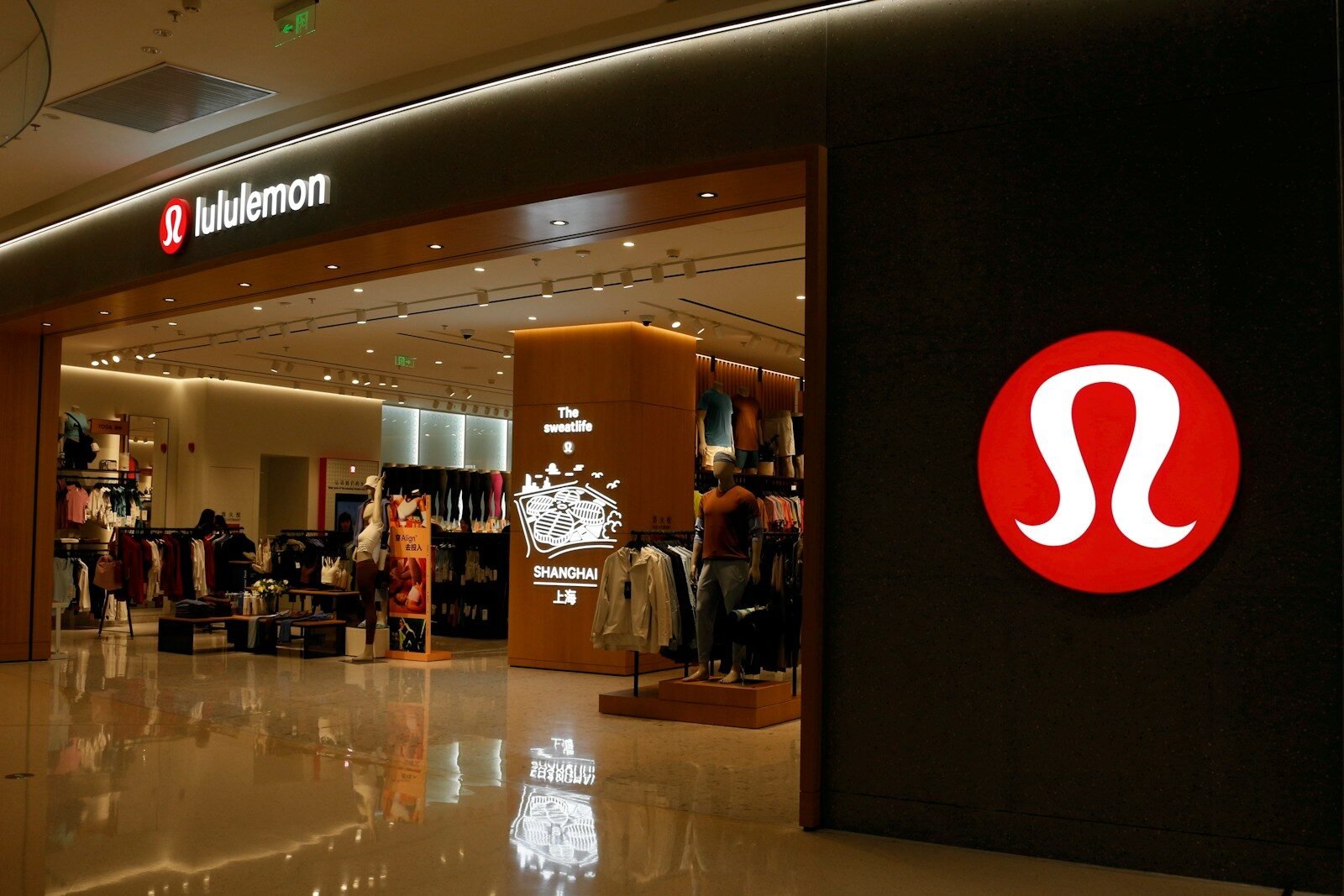
Chip Wilson took his first yoga class in 1997 and hated doing it in standard cotton clothing. That prompted him to found Lululemon in Vancouver the following year. The company ran as a design studio by day and a yoga studio by night to help cover rent. Local yoga instructors tested the first products and gave direct feedback. Lululemon opened its first standalone store in November 2000 on West 4th Avenue in Vancouver’s Kitsilano neighborhood. It was designed as a community hub for healthy living rather than a pure retail space.
Lululemon went public on the NASDAQ in 2007 at $18 a share and has since grown into a direct competitor to Nike and Adidas globally. The full growth story, including how the brand handled a costly 2013 product recall, is covered in the site’s own Lululemon case study. Wilson stepped down as CEO in 2005 but remains one of the most discussed founders in Canadian retail history.
Aritzia
Location: Vancouver, Canada
Founded: 1984
Price level: contemporary
Product type: women’s ready-to-wear
Style: everyday luxury
Website: aritzia.com
Instagram: @aritzia
Brian Hill was 23 years old, fresh out of an economics degree. In 1984, he opened the first Aritzia boutique at Vancouver’s Oakridge Centre mall with help from his father and brother. Hill had grown up around retail. His grandfather ran a dry goods store and his father owned Hills of Kerrisdale, a Vancouver department store. He identified a gap between fast fashion and luxury that he called “everyday luxury.” Rather than reselling other labels, Aritzia gradually built its own house brands, including Wilfred, Babaton, and TNA. That gave it control over design and pricing that pure multi-brand retailers don’t have.
Hill didn’t open his first US stores until 2007, but growth accelerated sharply after that, with American revenue overtaking Canadian revenue by 2023. Aritzia went public on the Toronto Stock Exchange in 2016 and later listed on the NYSE. Hill ran the company as CEO for 38 years before stepping back to executive chair in 2022. He still works from the same city where he opened his first mall boutique.
Herschel Supply Co.
Location: Vancouver, Canada
Founded: 2009
Price level: contemporary
Product type: bags, accessories
Style: heritage, minimalist
Website: herschel.com
Instagram: @herschelsupply
Brothers Lyndon and Jamie Cormack worked in sales for Vans and K2 Sports respectively. They noticed backpacks on the market were either purely functional or expensive designer pieces with nothing in between. Lyndon began making bags out of his own garage in 2009 while still working his day job. The brothers named the company after Herschel, the small Saskatchewan town where three generations of their family had lived after emigrating from Scotland. They launched with no outside investment and have reportedly turned down more than 500 potential investors since.
Herschel grew from a garage operation into a global travel and accessories brand sold across Europe, Australia, and Asia. It stayed headquartered in Vancouver’s Railtown neighborhood throughout. The company didn’t open its first Canadian retail store until 2018, having built its following almost entirely through wholesale and word of mouth. Herschel now aims to manufacture the majority of its bags from recycled materials.
Mackage
Location: Montreal, Canada
Founded: 1999
Price level: luxury
Product type: outerwear, leather goods
Style: tailored, technical
Website: mackage.com
Instagram: @houseofmackage
Eran Elfassy founded Mackage in Montreal in 1999. He drew on his brothers’ experience in the leather industry to focus the early collection on fitted leather jackets. Childhood friend Elisa Dahan joined as co-creative director in 2001, and the pair have run the brand together ever since. The name itself came from a family mispronunciation. Elfassy’s young niece couldn’t say “maquillage,” the French word for makeup, and the garbled version stuck as the company name.
Mackage expanded into menswear in 2008, children’s wear in 2012, and handbags in 2013, all designed from the brand’s offices on Montreal’s Chabanel Street. The label has been worn publicly by Meghan Markle, Gwyneth Paltrow, and Madonna. It now sells through directly-operated stores across Canada, the US, China, Japan, and Europe. Elfassy and Dahan still lead creative direction together, more than two decades after they first designed a coat combining leather and wool.
Naked & Famous Denim
Location: Montreal, Canada
Founded: 2008
Price level: contemporary
Product type: denim
Style: raw, experimental
Website: nakedandfamousdenim.com
Instagram: @nakedandfamousdenim
Brandon Svarc launched Naked & Famous Denim in 2008 as a third-generation garment maker. His family had worked in Montreal’s garment district for more than 65 years by that point. He built the brand around a deliberate set of rules. No celebrity endorsements, no advertising, and every pair cut and sewn in Canada using raw, un-distressed Japanese denim. That was a direct reaction to what Svarc saw as a bloated, celebrity-driven premium denim market coming out of Los Angeles at the time.
McGill News reports that Svarc’s Montreal factory has produced fabric experiments including glow-in-the-dark denim and heat-sensitive thermochromic denim. One 32-ounce weight stands up on its own without a wearer inside it. Despite the experimental fabrics, the brand has stayed anti-celebrity throughout, turning down free product requests from A-list actors early in its history. Naked & Famous now sells in more than 250 stores across over 20 countries. It’s still run from the same Chabanel district building where Svarc’s family has worked for three generations.
Moose Knuckles
Location: Montreal, Canada
Founded: 2009
Price level: luxury
Product type: outerwear
Style: technical, streetwear-adjacent
Website: mooseknucklescanada.com
Instagram: @mooseknucklescanada
Two Toronto Metropolitan University design graduates approached Noah Stern in 2009. His family’s business, Freed and Freed, had been manufacturing cold-weather gear in Winnipeg since 1921, originally producing military and police coats. Stern and business partner Ayal Twik saw an opening to challenge Canada Goose and Moncler. Their silhouette was slimmer and more body-conscious than the traditional bulky parka. When Twik and Stern took over the fledgling brand in 2010, it was producing fewer than 300 coats a year.
The brand leaned into humor and subversive marketing rather than pure heritage messaging. It deliberately doesn’t take itself too seriously, despite operating in the ultra-premium outerwear category. Moose Knuckles now sells across more than 25 countries with offices in Montreal, New York, Milan, and Seoul. Its century-old Winnipeg manufacturing roots still anchor the brand’s claim to genuine cold-weather expertise.
Kotn
Location: Toronto, Canada
Founded: 2015
Price level: accessible
Product type: basics
Style: minimalist, ethical
Website: kotn.com
Instagram: @kotn
Friends Mackenzie Yeates, Benjamin Sehl, and Rami Helali started Kotn in 2015 while searching for a genuinely well-made t-shirt. Their research into Egyptian cotton led them somewhere unexpected. Helali, who has Egyptian family roots, traveled to the Nile Delta and lived with a cotton-farming family for months. He discovered that Egypt’s once-dominant cotton export industry had shrunk to roughly 10 percent of its size since 2000. That trip reshaped the entire business into a sustainable clothing brand. It’s built around direct trade with the farmers themselves, cutting out the middlemen that had been squeezing their prices.
Helali funded the earliest days by living on canned tuna and sleeping on his brother’s couch. He personally packed and shipped every online order from a Toronto storage locker. Kotn has since built schools for its farming partners’ children in Egypt and won the Canadian Arts and Fashion Awards Sustainability Award in 2019. The company now runs retail locations in Toronto, Montreal, and Vancouver alongside its original online store.
Peace Collective
Location: Toronto, Canada
Founded: 2014
Price level: accessible
Product type: streetwear
Style: local pride, community-driven
Website: peacecollective.com
Instagram: @peacecollective
Yanal Dhailieh printed a small run of t-shirts reading “Toronto vs Everybody” to wear to a Toronto Raptors playoff game in 2014. The team’s deep postseason run was rare enough that year to feel worth marking. The streetwear slogan caught on fast. Dhailieh, then 23 and working full-time at a tech company, started filling orders out of his parents’ basement with roughly $1,000 in personal savings. The phrase has since become close to an unofficial city motto, printed on shirts, hoodies, and merchandise well beyond Dhailieh’s original design.
Peace Collective built a nonprofit arm, the Peace Foundation. It directs a share of every sale toward causes like the Breakfast Club of Canada and local food banks. The brand later signed official partnerships with the Toronto Blue Jays and the Juno Awards, extending the local-pride formula beyond basketball. Dhailieh now runs two Toronto stores and a staff of more than 30, built entirely from one t-shirt design and a Raptors game.
Duer
Location: Vancouver, Canada
Founded: 2014
Price level: contemporary
Product type: performance denim, apparel
Style: technical, everyday
Website: shopduer.com
Instagram: @duer
Gary Lenett had already spent decades as one of North America’s largest denim manufacturers, producing jeans for Levi’s and Wrangler among others. Then he gave up his car for a bike commute and found his regular jeans too rigid to ride in. At 56, planning what he assumed would be a small retirement project, Lenett engineered a stretch denim. It moved like activewear but still looked like a normal pair of jeans. He funded early production through a Kickstarter campaign with co-founder Abid Hafeez. Duer’s first two styles from that campaign still account for the majority of sales today.
What started as a retirement gig grew 100 percent year over year in its first several years. It expanded into more than 500 retailers across 52 countries. Duer later developed a denim made from roughly 95 percent plant-based and recycled material, cutting petroleum inputs well below typical stretch denim. Lenett still runs the company from the same Vancouver studio where he first designed a jean that could handle a bike commute.
Other Notable Canadian Clothing Brands
- Wings+Horns – Vancouver basics brand mixing Canadian-made staples with Japanese influences.
- Reigning Champ – Vancouver sweats and fleece brand known for cut-and-sew manufacturing.
- Frank And Oak – Montreal menswear label focused on modern, accessible basics.
- Nobis – Toronto luxury outerwear brand competing directly with Canada Goose and Moncler.
- Dime – Montreal skate brand rooted in the city’s grassroots skateboarding scene.
- Province of Canada – Toronto basics brand built entirely around domestic manufacturing.
Frequently Asked Questions about Canadian Clothing Brands
Canada Goose and Lululemon carry the strongest global recognition, both having grown from a single Toronto or Vancouver workshop into international public companies, while Roots holds equal cultural weight domestically as Canada’s most historically embedded lifestyle brand.
Canada’s genuinely harsh winters created real product demand long before fashion positioning mattered, which is why brands like Canada Goose, Arc’teryx, and Moose Knuckles all trace their roots back to functional cold-weather gear rather than pure design concepts.
Kotn is a clear example, building its entire supply chain around direct trade with Egyptian cotton farmers rather than importing cheaper cotton through middlemen, while Duer developed a denim made from roughly 95 percent plant-based and recycled material.
Peace Collective anchors Toronto’s local-pride streetwear scene with its Toronto vs Everybody design, while Naked & Famous Denim brings a similarly anti-celebrity, product-first attitude to raw Japanese denim out of Montreal.
Canadian fashion tends to start with a genuine technical problem, extreme cold, a rough bike commute, a missing basic, rather than a purely aesthetic or conceptual starting point, which is why so many of its biggest brands were engineered before they were styled.