
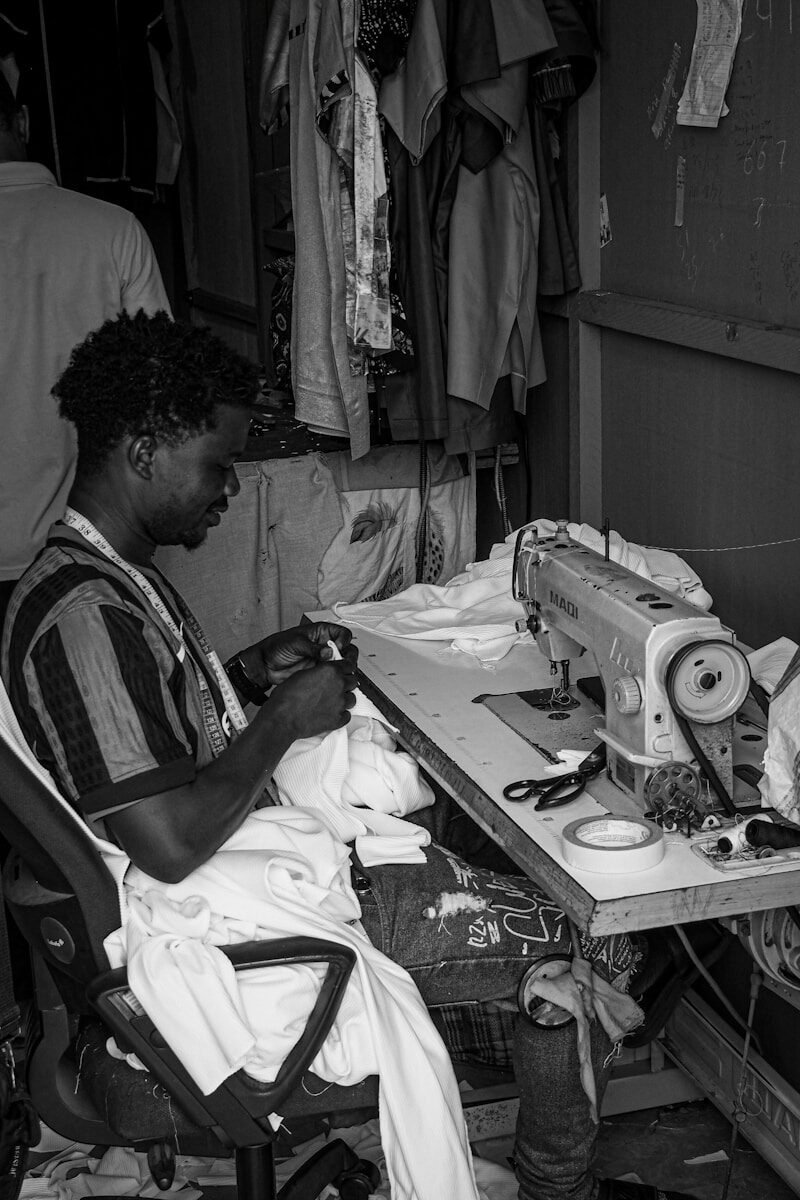
Custom Clothing: A Complete Guide for Clothing Brands
You’re tired of competing on price with brands selling the same basic tees for €25. You want to build something premium, something exclusive, where customers pay €80-€150 for a piece made specifically for them. You have sewing skills or access to a talented tailor, and you’re willing to spend 3-6 weeks per order to deliver something truly special.
Custom clothing solves the commoditization problem. Instead of selling mass-produced items, you create one-of-a-kind pieces tailored to each customer’s measurements, preferences, and style. Margins jump to 50-70% because you’re charging for craftsmanship and exclusivity, not competing with factories pumping out thousands of units.
But custom clothing introduces complexity that print on demand and full inventory don’t have. You’re managing individual specifications, customer revisions, measurement accuracy, and production timelines that can stretch to 6 weeks. Mess up one measurement and you’ve wasted hours of work on a piece that doesn’t fit.
This guide shows you how to launch a custom clothing brand without drowning in revisions, refunds, or unsustainable workloads. You’ll learn how to define your customization level, build production capability, price for premium value, and scale strategically without sacrificing quality.
Who this is for
This guide is for clothing brand founders who want to position as premium or luxury and are willing to trade volume for margin and exclusivity.
You’ll get the most value if:
- You have sewing skills or access to skilled tailors/seamstresses
- You’re targeting customers who value craftsmanship over speed (willing to wait 3-6 weeks)
- You want to charge 2-3x standard retail prices (€80-€200+ per piece)
- You’re comfortable with lower volume (10-50 pieces per month instead of 100+)
If you have no production knowledge and don’t want to learn, custom clothing isn’t for you. Stick with print on demand or pre-order where manufacturers handle production.
If you’re targeting mass-market customers who want €30 tees delivered in 3 days, custom clothing won’t work. Those customers prioritize speed and price over personalization.
Custom clothing works for luxury brands, niche markets (tall, petite, plus-size), and founders who want to build reputations on craftsmanship rather than volume.
What is Custom Clothing (and how it actually works)
Custom or made-to-order clothing means each piece is produced individually based on customer specifications. Nothing is made until a customer orders it, and every order is unique.
Here’s the workflow:
- Customer orders through your website with customization options (size, fabric, color, design details)
- You collect measurements (customer self-measures or you provide measurement guide)
- You create the piece in-house or through a tailor partner (2-6 weeks depending on complexity)
- You deliver with personalized packaging and care instructions
- Customer receives a one-of-a-kind piece made specifically for them
Real numbers:
A custom jacket might cost you:
- Fabric and materials: €25-€40
- Labor time: 6-10 hours at €15-€20/hour = €90-€200
- Total cost: €115-€240
Sell at €250-€400, and your gross margin is €135-€160 per sale (35-60% depending on labor costs).
Net margins after platform fees, photography, and marketing are typically 50-70%, significantly higher than POD (20-30%) or even full inventory (40-50%). But you’re making far fewer units per month.
Timeline:
Production takes 2-6 weeks depending on complexity:
- Simple (size-adjusted tee with custom embroidery): 1-2 weeks
- Medium (jeans with custom fit and fabric choice): 3-4 weeks
- Complex (fully bespoke jacket built from measurements): 4-6 weeks
Customers who choose custom clothing understand and accept longer wait times. They’re paying for exclusivity, not instant gratification.
For a full comparison of custom clothing versus other models, see our guide on business models for clothing brands.
Step-by-step: launching custom clothing
This framework walks you through every decision from defining what you’ll customize to scaling without compromising quality. Follow the steps in order.
Step 1: Define your customization level
Not all custom clothing requires the same skill level or time investment. Choose the complexity that matches your capabilities and target market.
Simple customization (easiest to start):
What it includes:
- Size adjustments (hemming, taking in/letting out)
- Color choices from pre-selected options
- Simple personalization (name embroidery, monograms)
- Fabric choice from 2-3 pre-approved options
Skills needed:
- Basic sewing and alteration skills
- Pattern adjustment knowledge
- Access to embroidery machine or local embroidery service
Time per piece: 2-4 hours
Example: Customer orders a basic tee in their exact measurements, chooses navy blue, and adds their initials embroidered on the sleeve.
Best for: Founders just starting with custom work or targeting customers who want light personalization without full bespoke construction.
Medium customization:
What it includes:
- Full size customization (built to exact measurements)
- Fabric choice from 5-10 options
- Minor design tweaks (pocket placement, collar style, hem length)
- Custom details (buttons, zippers, lining)
Skills needed:
- Intermediate to advanced sewing
- Pattern drafting or modification
- Understanding of garment construction
Time per piece: 6-12 hours
Example: Customer orders jeans built to their exact inseam, waist, and rise measurements, chooses between raw denim or stretch denim, and selects copper rivets instead of standard silver.
Best for: Founders with solid production skills or partnerships with experienced tailors. Targets customers willing to pay premium for perfect fit and personalized details.
Complex customization (fully bespoke):
What it includes:
- Garment built entirely from customer measurements
- Full design input (customer collaborates on style, silhouette, details)
- Multiple fittings or revision rounds
- Luxury fabrics and construction techniques
Skills needed:
- Advanced pattern drafting
- Expert sewing and construction
- Fitting and alteration expertise
Time per piece: 15-30+ hours
Example: Customer works with you to design a custom wool coat, you draft a pattern from their measurements, create a muslin prototype, do a fitting, make adjustments, then construct the final piece in their chosen fabric.
Best for: Founders positioning as high-end luxury or couture. Targets customers who value craftsmanship above all else and have budgets of €500-€2,000+ per piece.
Match level to your skills and target market:
Start with the simplest level you can execute well. Don’t promise complex bespoke work if you’re still learning pattern drafting. Deliver excellent simple customization first, then expand to medium or complex as your skills and reputation grow.
Your target market should align with complexity:
- Simple customization: €50-€100 price range, customers want personalization without huge investment
- Medium customization: €100-€300 price range, customers prioritize fit and quality
- Complex customization: €300-€2,000+ price range, customers value artistry and exclusivity
Step 2: Build production capability
Custom clothing requires reliable production. You have three main options depending on your skills, budget, and desired control.
In-house production (you make everything yourself):
When it works:
- You have sewing skills (intermediate to advanced)
- You enjoy hands-on production work
- You’re starting small (5-20 pieces per month)
- You want full creative and quality control
Equipment needed:
- Sewing machine (€300-€1,500 depending on quality)
- Serger/overlock machine (€200-€800 for finishing seams)
- Iron and pressing tools (€50-€150)
- Cutting table and tools (€100-€300)
- Patterns and measuring tools (€50-€200)
Total startup: €700-€3,000
Time investment:
- Simple pieces: 2-4 hours each
- Medium pieces: 6-12 hours each
- Complex pieces: 15-30+ hours each
Pros:
- Full control over quality and timeline
- Highest profit margins (no labor costs to others)
- Direct customer connection (you made their piece)
Cons:
- Time-intensive (limits how many orders you can take)
- Requires significant skill development
- Hard to scale beyond 20-30 pieces/month
Best for: Founders who love the craft and want to build reputation on personal craftsmanship.
Partner with local tailors/seamstresses:
When it works:
- You have design/business skills but limited sewing skills
- You want to take more orders than you could produce yourself
- You’re willing to share profit in exchange for production help
How to find tailors:
- Search “[your city] custom tailor” or “alterations specialist”
- Visit local sewing schools and ask recent graduates
- Post in local Facebook groups or community boards
- Ask at fabric stores (they often know local seamstresses)
How to vet:
- Request samples of their work (bring fabric and a pattern, pay for a test piece)
- Check turnaround time (can they deliver in 2-3 weeks consistently?)
- Discuss capacity (how many pieces per month can they handle?)
- Negotiate pricing (per piece or hourly rate)
Typical costs:
- Simple alterations: €15-€30 per piece
- Medium construction: €50-€100 per piece
- Complex bespoke: €150-€300+ per piece
Pros:
- Leverage their expertise without learning advanced sewing
- Can scale to 30-50+ pieces per month
- Focus your time on design, marketing, customer service
Cons:
- Lower margins (paying for their labor)
- Less control over quality (depends on their standards)
- Communication overhead (explaining each custom order)
Best for: Founders who want to focus on creative direction and customer experience while outsourcing production.
Small-batch custom manufacturers:
When it works:
- You’re getting 20+ custom orders per month consistently
- You want to scale beyond local tailor capacity
- You need faster turnaround (1-2 weeks instead of 4-6)
Where to find:
- Maker’s Row (US-based custom manufacturers)
- Local garment districts or fashion incubators
- Trade shows focused on small-batch production
- Referrals from other custom clothing brands
MOQs for custom work:
- Some require minimum 50-100 pieces per month
- Others work on per-piece basis but charge higher rates for low volume
Typical costs:
- Higher than local tailors (€80-€200 per piece) but more consistent quality
- Some offer tiered pricing (cheaper per piece at higher monthly volume)
Pros:
- Professional quality and consistency
- Can handle higher volume (100+ pieces/month)
- Often have systems for managing custom specs
Cons:
- Higher costs eat into margins
- Less personal touch than in-house or local tailor
- May require contracts or minimum commitments
Best for: Established custom brands ready to scale beyond 50 pieces/month.
Step 3: Create customization system
A clear, organized system for collecting customer preferences and measurements prevents errors and makes production scalable.
What can customers customize?
Define exactly what’s customizable and what’s not. Too many options overwhelm customers and slow production. Start with 3-5 customization points and expand as you gain experience.
Common customization options:
Size/fit (most important for custom clothing):
- Exact measurements (chest, waist, hips, inseam, sleeve length, etc.)
- Fit preference (slim, regular, relaxed)
- Length adjustments (hem, sleeves)
Fabric choices:
- 3-5 fabric options per garment (don’t offer 20 choices on day one)
- Show swatches with clear photos and descriptions
- Price different fabrics accordingly (premium fabrics = higher price)
Color:
- Pre-selected color palette (5-10 colors that work with your brand)
- Avoid “any color you want” unless you have advanced dyeing capability
Design details:
- Button style (standard vs custom)
- Pocket placement or type
- Collar/neckline style
- Lining options (for jackets)
- Hardware (zippers, rivets, snaps)
Personalization:
- Embroidery (name, initials, custom text)
- Monograms
- Custom labels or tags
Example for a custom jacket:
Customers can choose:
- Size (12 measurements required)
- Fabric (3 options: cotton canvas, wool blend, waxed cotton)
- Lining color (5 options)
- Hardware color (brass or silver)
- Optional embroidery (up to 10 characters, €20 extra)
That’s clear, manageable, and gives meaningful customization without overwhelming production.
Order form/questionnaire design:
Create a structured form that captures all necessary information in one place. Don’t rely on back-and-forth emails. Use your website or a tool like Google Forms, Typeform, or custom Shopify apps.
What to include:
- Product selection: Which garment are they ordering?
- Customization choices: Fabric, color, details (dropdowns or radio buttons)
- Measurements: Clear instructions with diagrams (see next section)
- Fit notes: Any specific requests (longer arms, looser waist, etc.)
- Contact info: Email and phone for follow-up questions
- Timeline acknowledgment: Checkbox confirming they understand 3-6 week delivery
Example form flow:
Step 1: Choose garment (jacket, jeans, shirt) Step 2: Select fabric from photos with descriptions Step 3: Choose design details (buttons, pockets, etc.) Step 4: Enter measurements using provided guide Step 5: Add any special requests (text box) Step 6: Review summary and confirm
Make it foolproof. If a field is required, mark it clearly. If customers skip measurements, your form shouldn’t let them submit.
How to collect measurements:
Most custom clothing brands use customer self-measurement with detailed guides. Professional in-person fittings are ideal but not scalable.
Create a measurement guide:
- Visual diagrams: Show exactly where to measure (around chest at fullest part, waist at natural waistline, etc.)
- Written instructions: Step-by-step for each measurement
- Video tutorial: Record yourself or a model demonstrating how to measure (post on YouTube, embed on website)
- Common mistakes: Call out errors people make (“Don’t pull tape too tight” or “Measure over the clothes you’ll wear with this piece”)
Required measurements vary by garment:
Shirt/jacket:
- Chest, waist, shoulders, sleeve length, back length, neck
Pants/jeans:
- Waist, hips, inseam, outseam, rise, thigh
Full garments:
- 10-15 measurements depending on complexity
Pro tip: Ask for measurements in both cm and inches if targeting international customers. Provide a conversion chart.
Reducing measurement errors:
Even with great guides, customers make mistakes. Reduce errors by:
- Requiring photos of them measuring (optional but helpful for complex orders)
- Offering measurement verification call (15-minute video call to confirm key measurements)
- Building in ease (add 1-2cm ease to avoid pieces being too tight)
- Clear return/remake policy (see Step 5)
Step 4: Set pricing for premium value
Custom clothing commands premium prices because of exclusivity, craftsmanship, and personalization. Don’t underprice just because you’re new.
Cost calculation (materials + labor time):
Start by calculating your true cost per piece.
Example: Custom jeans
Materials:
- Denim fabric: €15-€30 (depending on quality)
- Thread, zippers, rivets: €5-€10
- Packaging, labels: €3-€5
- Total materials: €23-€45
Labor:
- Pattern adjustment: 1 hour
- Cutting: 30 minutes
- Sewing and finishing: 4-6 hours
- Quality check and pressing: 30 minutes
- Total time: 6-8 hours
If you value your time at €15/hour (minimum), labor cost is €90-€120.
Total cost per piece: €113-€165
That’s your break-even before platform fees, marketing, or profit.
Premium pricing (2-3x standard retail):
Custom clothing should sell for 2-3x what standard retail charges for similar items.
Standard retail jeans: €60-€100 Your custom jeans: €180-€300
Why customers pay more:
- Perfect fit (no alterations needed)
- Fabric choice (they pick what they want)
- Exclusivity (one-of-a-kind piece)
- Craftsmanship (handmade, attention to detail)
Pricing formula:
(Materials + Labor) × 2.5 to 3 = Retail price
Using the jeans example: €165 (cost) × 2.5 = €412 retail price
That might feel high, but it’s justified for true custom work. If it feels too high for your market, you’re either targeting the wrong customers or need to reduce labor time through efficiency.
Justifying the price:
Customers need to understand what they’re paying for. Use your brand story and behind the scenes content to show the work.
On your product pages:
- “Each piece takes 8-10 hours of handwork”
- “Made to your exact measurements, no alterations needed”
- “Choose from premium Japanese selvedge denim or Italian wool”
- “Only 20 pieces made per month to ensure quality”
In your marketing:
- Show work-in-progress photos (cutting fabric, sewing details)
- Share customer stories (“Sarah’s custom jacket fit perfectly on the first try”)
- Explain material sourcing (“We source organic cotton directly from mills in Portugal”)
Transparency builds trust. When customers see the work, they understand the price.
Pricing tiers for different customization levels:
If you offer simple, medium, and complex customization, price accordingly:
Simple (size adjustment + color choice):
- Cost: €40-€60
- Retail: €100-€150
Medium (custom measurements + fabric choice + details):
- Cost: €80-€120
- Retail: €200-€300
Complex (fully bespoke with fittings):
- Cost: €150-€250
- Retail: €400-€800+
Customers self-select based on budget and how much customization they value.
For deeper pricing psychology and strategy, see our guide on pricing.
Step 5: Manage customer expectations
Custom clothing requires more customer communication than POD or pre-order. Clear expectations prevent refund requests and bad reviews.
Timeline communication (2-6 weeks typical):
Custom work takes time. Communicate timelines everywhere and add buffer for delays.
Where to show timeline:
Product pages:
- “Production time: 3-4 weeks after order confirmation”
- “Shipping: 3-5 days after production complete”
- “Total estimated delivery: 4-5 weeks”
Order confirmation email:
- “Thank you for your order! Production begins this week.”
- “Estimated delivery: [date range]”
- “We’ll send updates every 7-10 days”
During production:
- Week 1: “Your fabric has been cut, sewing begins next week”
- Week 2: “Construction in progress, on track for [date]”
- Week 3: “Final finishing and quality check this week”
- Week 4: “Shipped! Tracking number: [link]”
Add buffer for problems:
If you think a piece takes 3 weeks, tell customers 4-5 weeks. Early delivery delights. Late delivery destroys trust.
Revision policy (how many changes allowed?):
Custom clothing involves subjective preferences. Without a clear revision policy, customers will request endless changes and you’ll work for free.
Standard revision policy:
“We include one round of minor revisions after you receive your piece (hemming, taking in/letting out up to 2cm). Additional revisions or major alterations are charged at €15-€30 per change.”
What counts as minor vs major:
Minor (included):
- Hemming length
- Taking in or letting out seams by 1-2cm
- Adjusting sleeve length
Major (additional charge):
- Changing fit significantly (slim to relaxed)
- Replacing fabric or major design elements
- Rebuilding large sections
Make this policy visible during checkout and in your confirmation email. Customers who know limits upfront complain less.
No-refund or limited refund policy:
Custom pieces can’t be resold, so full refunds don’t make sense. Your policy should protect you while being fair to customers.
Standard custom clothing policy:
“Because each piece is made to your specifications, we do not offer refunds. If your piece doesn’t fit due to measurement errors on our end, we will remake it at no charge. If the issue is due to incorrect measurements you provided, we offer one free round of alterations or a 50% credit toward a new order.”
When to offer remakes:
- You made a measurement error (transcribed wrong, cut wrong size)
- Production defect (seam came apart, zipper broken)
- Fabric significantly different from photos (color way off)
When NOT to offer remakes:
- Customer provided wrong measurements
- Customer changed their mind about fabric/color after approving
- Fit is correct but customer doesn’t like how it looks on them
Be firm but empathetic. Most customers understand custom work policies if they’re clearly stated upfront.
Progress updates during production:
Regular updates reduce anxiety and build excitement.
Minimum communication:
- Order confirmation: “We received your order, production starts this week”
- Midpoint update (week 2): “Your piece is in progress, on track for delivery by [date]”
- Completion update: “Finished! Shipping today, tracking: [link]”
Ideal communication (builds loyalty):
- Day 1: Order confirmation
- Day 3-5: “Fabric cut, here’s a photo of your chosen material”
- Week 2: “Construction underway, here’s a progress shot”
- Week 3: “Final details being added, almost ready”
- Week 4: “Quality check passed, shipping tomorrow”
Photos make updates more engaging. Customers love seeing their piece come together.
Step 6: Build portfolio and social proof
Custom clothing sells on trust. New customers need proof you can deliver before they commit €200-€500 to a stranger on the internet.
First 10 orders (offer discount for testimonials):
Your first 10 custom pieces are marketing investments, not just revenue.
Offer to early customers:
“We’re launching custom [jeans/jackets/shirts] and looking for our first 10 customers. Order now and get 30% off in exchange for:
- Detailed photos of the finished piece (on you or flat lay)
- Written testimonial about your experience
- Permission to use photos on our website and social media”
Price: €200 becomes €140, but you gain portfolio pieces and social proof worth far more than €60.
What to ask for in testimonials:
- How was the ordering process?
- How does the fit compare to off-the-rack?
- What do you love most about your custom piece?
- Would you order again?
Use these testimonials on product pages, homepage, and marketing emails.
Document process (behind the scenes content):
Show your work. Customers pay premium for craftsmanship, so make it visible.
Content to create:
Photos:
- Fabric swatches being selected
- Pattern cutting on cutting table
- Sewing details (close-ups of stitching, seams, hardware)
- Finished piece on mannequin or model
Videos:
- Time-lapse of garment construction (1-2 minutes)
- Voiceover explaining your process (“This is how I draft a custom pattern from measurements”)
- Customer unboxing their piece (ask them to film and send)
Stories:
- Instagram/TikTok stories showing daily work
- “Making Sarah’s custom jacket: Day 1, Day 2, Day 3” series
Post this content consistently. It builds trust, educates customers on why custom costs more, and attracts people who value craft.
Use tactics from behind the scenes and storytelling to make your process compelling.
Customer photos and reviews:
Nothing sells custom clothing better than real customers wearing real pieces.
How to get customer photos:
- Ask in your delivery email: “We’d love to see how your piece fits! Send us a photo for 10% off your next order”
- Run occasional contests: “Share a photo of your custom piece with #[yourbrand], winner gets a free accessory”
- Follow up 2 weeks after delivery: “How’s your piece working out? Mind sharing a quick photo?”
Where to use customer photos:
- Homepage: “See what our customers are wearing”
- Product pages: Show real people, not just models
- Instagram/social: Repost with permission (always tag and credit)
- Email marketing: “Customer spotlight” features
Real customers in real settings convert better than professional photoshoots for custom clothing because they prove the concept works.
Step 7: Scale strategically
Custom clothing doesn’t scale the same way as POD or full inventory. You’re trading volume for margin. But you can grow strategically without sacrificing quality.
Standardize popular customizations:
After 20-30 orders, you’ll notice patterns. Most customers choose the same fabric, same fit, same details.
Turn popular custom orders into semi-custom options:
Instead of fully custom jeans (12 measurements, any fabric, any details), offer:
- “Signature fit” jeans in 3 pre-set styles (slim, regular, relaxed)
- 5 fabric choices (your most popular)
- 3 custom adjustments allowed (length, waist, rise)
This reduces production time from 8 hours to 4 hours while still offering meaningful customization.
Hybrid model:
Full custom (premium tier):
- 12+ measurements
- Any fabric from your collection
- Unlimited design details
- Price: €300-€500
- Production: 4-6 weeks
- Volume: 5-10 per month
Semi-custom (accessible tier):
- 3 measurements (waist, inseam, rise)
- 5 pre-selected fabrics
- 3 adjustments allowed
- Price: €150-€250
- Production: 2-3 weeks
- Volume: 20-30 per month
This lets you serve budget-conscious customers without abandoning your premium positioning.
Hire help when volume grows:
Once you’re consistently hitting 15-20+ pieces per month and turning away orders, it’s time to hire.
Options:
Hire a seamstress/tailor (part-time or full-time):
- Pay per piece (€30-€80 depending on complexity)
- Or hourly (€15-€25/hour)
- Train them on your quality standards and processes
Partner with a small production studio:
- Send them cutting and basic construction
- You handle fitting, finishing, quality control
- Split margin 60/40 or 70/30 (you keep larger share)
Bring on an intern or apprentice:
- Art/fashion students looking for experience
- Pay lower rate but invest time in training
- Good long-term if you want to build a team
Don’t hire until you have consistent demand. One good month doesn’t justify hiring. Three good months does.
Hybrid: custom + ready-made options:
As your brand grows, offer both custom and ready-made products.
Example structure:
Custom pieces (premium, limited volume):
Ready-made core items (accessible, higher volume):
- Basic tees, accessories, simple pieces
- €40-€100
- Ships in 1-3 days (hold small inventory)
- 50-100 pieces per month
This gives new customers an entry point (buy a €50 tee, experience your quality, come back for a €300 custom jacket later).
Don’t sacrifice quality for speed:
The biggest mistake custom brands make is taking too many orders and rushing production to keep up. Quality drops, fit suffers, and reputation dies.
Set monthly limits:
“We make 20 custom pieces per month to ensure quality. This month is fully booked. Reserve your spot for next month.”
Scarcity increases perceived value. Customers will wait if they know they’re getting something special.
If you’re consistently booked 2-3 months out, that’s when you hire help or raise prices. Don’t just work faster and burn out.
Production options for custom clothing
Your production setup determines quality, capacity, and profit margins. Here’s a detailed breakdown of each option.
In-house production
In-house means you make everything yourself in your own workspace (home studio, rented workshop, garage).
Pros:
- Full quality control: Every stitch meets your standards
- Highest profit margins: No labor costs to others (just your time)
- Direct customer connection: You know exactly who you’re making for
- Complete creative freedom: No manufacturer saying “we can’t do that”
- Flexible timeline: Work nights/weekends, adjust schedule as needed
Cons:
- Time-intensive: 6-10 hours per piece limits monthly volume
- Skill requirement: Need intermediate to advanced sewing knowledge
- Equipment investment: €700-€3,000 upfront for machines and tools
- Hard to scale: You can only make 15-25 pieces per month working full-time
- No time off: If you’re sick or on vacation, production stops
When it works:
- You have sewing skills and enjoy production work
- You’re starting small (5-15 pieces per month)
- You want full creative and quality control
- Your brand story centers on founder-made craftsmanship
When it doesn’t work:
- You have no sewing experience and don’t want to learn
- You’re getting 20+ orders per month
- You want to focus on design/marketing, not production
- You need time off without halting the business
Equipment needed:
Essential:
- Industrial or heavy-duty sewing machine: €300-€1,500
- Serger/overlock for finishing: €200-€800
- Iron and pressing board: €50-€150
- Cutting table and rotary cutter: €100-€300
- Measuring tools (tape, rulers, curves): €30-€100
Optional but helpful:
- Dress form/mannequin: €100-€400
- Embroidery machine: €500-€2,000
- Pattern paper and weights: €50-€100
Total startup: €700-€3,000
Time investment per piece:
- Simple alterations (hem, basic fit): 2-3 hours
- Medium custom (jeans, shirts from measurements): 6-8 hours
- Complex bespoke (jackets, tailored items): 12-20 hours
Skill development:
If you don’t have advanced sewing skills yet:
- Take local sewing classes (community college, fashion schools)
- Watch YouTube tutorials (Professor Pincushion, Evelyn Wood for tailoring)
- Practice on scrap fabric before customer orders
- Start with simple pieces and gradually increase complexity
Local tailor partnerships
Partnering with local tailors or seamstresses lets you take more orders than you could produce yourself while maintaining local craftsmanship positioning.
How to find local tailors:
Search locally:
- Google “[your city] custom tailor” or “alterations specialist”
- Visit bridal shops, suit shops (often have in-house tailors)
- Check Yelp, Facebook for highly-rated alterations businesses
Sewing schools and programs:
- Contact local fashion/design schools
- Ask if recent graduates are available for freelance work
- Post on school job boards
Fabric stores:
- Employees often know local seamstresses
- Ask at checkout: “Do you know anyone who does custom sewing?”
Community boards:
- Post in local Facebook groups, Nextdoor, Craigslist
- “Seeking experienced seamstress for ongoing custom clothing work”
How to vet potential partners:
Request test piece:
- Provide fabric and a sample pattern
- Pay them to make one piece to your specs
- Evaluate quality, accuracy, turnaround time
Check capacity:
- “How many pieces per month can you comfortably handle?”
- “What’s your typical turnaround time?”
- “Do you have backup help if you’re sick or busy?”
Discuss quality standards:
- Show examples of what you expect (photos, samples)
- Ask about their quality control process
- Confirm they’re comfortable with custom measurements
Negotiate pricing:
Per-piece pricing (most common):
- Simple garments: €30-€60 per piece
- Medium complexity: €60-€120 per piece
- Complex bespoke: €120-€250+ per piece
Hourly pricing:
- €15-€30 per hour depending on experience and location
- Good for unpredictable pieces where time varies
Volume discounts:
- “If I send you 10+ pieces per month, can we get a better rate?”
Typical costs:
Using jeans example:
- Your retail price: €250
- Materials: €30
- Tailor labor: €80
- Platform fees (3%): €7.50
- Marketing/overhead: €50
- Your profit: €82.50 (33% margin)
Lower than in-house (50-70%) but requires zero production time from you.
Pros:
- Leverage their expertise without years of skill development
- Can scale to 30-50+ pieces per month
- Focus your time on design, customer service, marketing
- Maintain “locally made” positioning
Cons:
- Lower profit margins (paying for their labor)
- Less control over quality (depends on their standards)
- Communication overhead (explaining each custom order clearly)
- Risk if they become unavailable (sick, quit, overbooked)
Best for: Founders who want to scale beyond 15-20 pieces per month or who lack advanced sewing skills but have strong design/business skills.
Small-batch custom manufacturers
Small-batch manufacturers specialize in custom or low-volume production. They’re between local tailors (1-2 people) and large factories (thousands of units).
When to use:
- You’re consistently getting 30+ custom orders per month
- You want professional quality without doing it yourself
- You need faster turnaround (1-2 weeks instead of 4-6)
- You’re ready to invest in manufacturing relationships
Where to find:
Maker’s Row (US):
- Database of US-based manufacturers
- Filter by “custom” or “small-batch”
- Request quotes from 3-5 manufacturers
Local garment districts:
- Major cities often have garment manufacturing areas (LA, NYC, SF, Toronto)
- Visit in person, meet production managers
- See facilities and sample quality
Fashion incubators:
- Some cities have fashion startup incubators that connect brands with manufacturers
- Often subsidized or nonprofit, lower costs
Trade shows:
- Attend apparel trade shows (MAGIC, Texworld)
- Meet small-batch manufacturers in person
Referrals:
- Ask other custom clothing founders who they use
- Join fashion entrepreneur Facebook groups, ask for recommendations
MOQs for custom work:
Unlike full inventory manufacturers (200-500 units minimum), small-batch custom manufacturers often work on:
- Per-piece basis (no minimum, but higher per-unit cost)
- Monthly minimums (10-50 pieces per month)
- Tiered pricing (more volume = lower per-piece cost)
Typical costs:
- Simple custom pieces: €50-€100 per piece
- Medium complexity: €100-€200 per piece
- Complex bespoke: €200-€400+ per piece
More expensive than local tailors but more consistent quality and capacity.
Communication and samples:
Before committing:
- Send detailed tech packs with measurements, fabric specs, construction notes
- Order 2-3 sample pieces to test quality
- Evaluate turnaround time and communication responsiveness
Ongoing:
- Create standardized order forms so each custom piece is documented clearly
- Weekly check-ins during busy periods
- Build relationship over time (better rates, priority production)
Pros:
- Professional, consistent quality
- Can handle higher volume (50-100+ pieces per month)
- Often have systems for managing custom specs
- Less hands-on management than local tailors
Cons:
- Higher costs reduce margins
- May require contracts or monthly minimums
- Less personal touch than in-house or local partnerships
- Communication can be harder (not face-to-face)
Best for: Established custom brands ready to scale beyond 50 pieces per month and willing to invest in professional production partnerships.
Common custom clothing mistakes (and how to avoid them)
Custom clothing has unique challenges. Here are the mistakes that kill profitability and reputation.
Underpricing custom work
The mistake:
You calculate materials (€40) and think “I’ll charge €100 so it’s affordable.” You forget to account for your 8 hours of labor. After platform fees and marketing, you’re making €5 per hour while competitors work day jobs for €15-€20/hour.
Underpricing custom work is the #1 reason custom brands fail. You can’t compete with mass production on price. You have to charge for craftsmanship.
The fix:
Use the pricing formula from Step 4:
(Materials + Labor at fair hourly rate) × 2.5 to 3 = Retail price
Example:
- Materials: €40
- Labor: 8 hours × €15/hour = €120
- Total cost: €160
- Retail price: €400-€480
If that feels high, you’re either targeting the wrong market or need to reduce labor time through efficiency (standardizing processes, using better tools).
Don’t apologize for premium pricing. Customers who value custom work will pay. Customers who won’t pay weren’t your target anyway.
Accepting too many revisions
The mistake:
A customer receives their custom jacket, requests “a little slimmer in the waist.” You make the change for free. They come back: “Actually, can you make the sleeves shorter?” You do it. Then: “Can you change the buttons?” You do it. You’ve now spent 6 extra hours on a piece you already delivered.
Custom clothing attracts perfectionist customers. Without clear revision limits, you’ll work for free forever.
The fix:
Set a clear revision policy in your terms and order confirmation:
“We include one round of minor alterations (hemming, taking in/out up to 2cm). Additional changes are charged at €25-€50 per revision depending on complexity.”
Enforce it kindly but firmly:
“I’m happy to make those additional changes! Based on our policy, this would be considered a second revision and the cost is €30. Would you like me to proceed?”
Most customers will either accept the charge or decide the changes aren’t that important.
Prevent excessive revisions:
- Collect accurate measurements upfront (detailed guide, video tutorial)
- Show mockups or photos during production so they can catch issues early
- Set expectations: “Custom pieces are made to your exact specs. Please review your order carefully before confirming.”
Poor measurement collection
The mistake:
Your measurement guide says “measure around chest” but doesn’t specify over clothes or under, arms down or up, how tight the tape should be. Customer measures incorrectly. Piece doesn’t fit. They blame you even though it’s their error.
Measurement errors cause 80% of custom clothing fit issues.
The fix:
Create a detailed, visual measurement guide:
Include:
- Photos or diagrams for each measurement (show exactly where tape should go)
- Written instructions: “Chest: Measure around the fullest part of your chest with arms relaxed at sides, over a thin shirt, tape snug but not tight”
- Video tutorial: Record yourself or a model demonstrating each measurement
- Common mistakes: “Don’t pull tape tight” or “Measure in bare feet for pants”
Provide measurement verification:
- Offer optional 15-minute video call to verify measurements (charge €10-€20 or include free for orders over €200)
- Ask customers to send photos of themselves measuring (helps catch obvious errors)
- Build in 1-2cm ease so pieces aren’t skin-tight (if measurement is slightly off, it still fits)
When measurement errors happen:
If it’s clearly their error (they measured 85cm waist but actually have 92cm), offer:
- One free alteration to adjust fit
- 50% off remake if alteration won’t work
- Full remake only if you made the transcription error
No clear timeline expectations
The mistake:
You tell a customer “3-4 weeks” but don’t explain that’s production time only, not including shipping. They expect delivery in 3-4 weeks. It arrives in 5 weeks. They’re upset and leave a bad review.
Or you don’t communicate during production. Week 3 they email: “Where’s my order?” You respond: “Almost done!” They wanted updates, not silence.
The fix:
Set timeline expectations everywhere:
Product page:
- “Production time: 3-4 weeks”
- “Shipping: 3-5 business days”
- “Total delivery: 4-5 weeks from order date”
Order confirmation email:
- “Thank you! Production begins this week, estimated delivery: [date range]”
- “We’ll send progress updates every 7-10 days”
During production:
- Week 1: “Your order is in production”
- Week 2: “Halfway there, on track for [date]”
- Week 3: “Final details, shipping next week”
- Week 4: “Shipped! Tracking: [link]”
Add buffer: If you think it takes 3 weeks, promise 4-5 weeks. Early delivery delights, late delivery kills trust.
Trying to scale too fast
The mistake:
You had a good month (20 orders) and immediately commit to 50 orders the next month. You can’t keep up. Quality drops. Deadlines slip. Customers complain. Your reputation suffers.
Custom clothing doesn’t scale linearly. Doubling orders doesn’t just double workload, it creates bottlenecks you didn’t have before.
The fix:
Scale gradually:
- Month 1-3: 10-15 orders per month (manageable, learn systems)
- Month 4-6: 15-20 orders per month (push capacity, identify bottlenecks)
- Month 7-9: 20-25 orders per month (hire help or streamline before going further)
- Month 10+: 25-30+ orders per month (consistent systems in place)
Set monthly capacity limits:
“We make 20 custom pieces per month. This month is fully booked. Reserve your spot for [next month].”
Scarcity increases perceived value. Customers will wait if they believe they’re getting quality.
Hire before you’re drowning:
If you’re consistently booked 6-8 weeks out and turning away orders, that’s when you hire a tailor, partner with a manufacturer, or bring on help.
Don’t just work 80-hour weeks to keep up. That’s not sustainable and quality will eventually suffer.
When custom clothing makes sense
Custom clothing isn’t for every brand or every market. Here’s when it works and when it doesn’t.
Premium/luxury positioning:
Custom clothing naturally positions you as premium. You’re selling craftsmanship, exclusivity, and personalization, not competing on price with fast fashion.
Works well for:
- Luxury brands targeting customers who value quality over price
- Brands with strong brand story around craftsmanship
- Founders who can articulate why their work is worth €200-€500 per piece
Doesn’t work for:
- Brands trying to compete with H&M or Zara on price
- Mass-market positioning where customers expect €30 tees delivered in 3 days
If your brand is built on “affordable basics,” custom clothing won’t fit your positioning.
Niche markets (tall, petite, plus-size):
Standard sizing fails many people. Custom clothing solves fit problems that ready-to-wear can’t.
Underserved markets:
- Tall customers (especially women) who can never find proper inseams or sleeve lengths
- Petite customers drowning in regular sizing
- Plus-size customers who want well-fitting, stylish pieces beyond basic options
- Athletic builds (broad shoulders, narrow waist) where off-rack doesn’t fit
These customers know standard sizing doesn’t work and are actively looking for custom solutions. They’ll pay premium because the alternative is alterations on every purchase.
Marketing angle:
“Finally, jeans that fit your 36″ inseam without alterations.” “Custom jackets for athletic builds. No more tight shoulders and baggy waists.”
Speak directly to their frustration and position custom as the solution.
Brands emphasizing craftsmanship:
If your brand is built on “handmade,” “artisan,” or “slow fashion,” custom clothing aligns perfectly.
Storytelling opportunities:
- Show your workspace and tools
- Share behind the scenes of each piece being made
- Highlight fabric sourcing, construction techniques, finishing details
- Position yourself as the antithesis of fast fashion
Customers who care about how things are made will pay for custom work. Customers who just want the cheapest option won’t.
When NOT to do custom:
Mass market:
If you’re targeting customers who shop at Forever 21 or Fashion Nova, custom won’t work. They prioritize price and trend over fit and quality.
Fast fashion positioning:
If your brand is about “new styles weekly” or “latest trends,” custom doesn’t fit. Custom takes weeks, not days.
No production capability:
If you can’t sew, don’t want to learn, and can’t find reliable local tailors, custom clothing isn’t viable. Stick with POD or full inventory where manufacturers handle production.
Impatient customers:
If your audience expects Amazon Prime delivery (2 days), they won’t wait 4-6 weeks for custom pieces. Know your audience before committing to custom.
Custom clothing quick reference
Use this table to compare custom clothing against other models and see where it fits in your growth strategy.
| Factor | Custom Clothing |
|---|---|
| Startup cost | €1,000-€5,000 (equipment or tailor partnerships) |
| Skills needed | Intermediate to advanced sewing OR access to skilled tailors |
| Profit margin | 50-70% net |
| Timeline (order to delivery) | 2-6 weeks depending on complexity |
| Scalability | Low (10-50 pieces per month realistic max) |
| Best printing/techniques | Hand sewing, tailoring, embroidery |
| Ideal products | Jeans, jackets, tailored items |
| Inventory risk | None (made after customer orders) |
| Customer wait time | 2-6 weeks |
| Operational intensity | Very high (individual specs, measurements, revisions) |
| Best for | Premium brands, niche markets (tall/petite/plus), craftsmanship focus |
| When to move beyond | When demand exceeds production capacity and quality suffers |
For a side-by-side comparison with POD, pre-order, full inventory, and handmade models, see the full table in our business models guide.
Craftsmanship over volume
Custom clothing is the opposite of scale. You’re not trying to make 1,000 units per month. You’re trying to make 20-50 exceptional pieces that customers treasure for years.
The brands that succeed with custom clothing understand this from day one. They don’t apologize for 4-week timelines or €300 price tags. They own their positioning as premium, exclusive, and worth the wait.
They start small: 5-10 pieces per month made in-house or with a trusted local tailor. They document their process obsessively, showing customers the work behind each piece. They build reputation on perfect fits, quality construction, and customer service that makes people feel special.
Most importantly, they resist the urge to scale too fast. When demand grows, they hire carefully, standardize processes where it makes sense (popular customizations become semi-custom options), and set monthly capacity limits to protect quality.
Custom clothing attracts two types of customers: those with fit challenges that standard sizing can’t solve, and those who value craftsmanship and exclusivity above convenience. Both will pay premium prices if you deliver on your promises.
If you have production skills (or access to skilled tailors), want to position as premium, and can commit to the operational intensity of managing individual orders, custom clothing offers the highest margins in the clothing business.
Start with simple customization (size adjustments, fabric choices). Master that. Then expand to medium complexity (full measurements, design details) as your skills and systems improve. Leave complex bespoke work until you have 50+ successful custom orders under your belt.
Charge what your work is worth. Communicate timelines clearly. Set revision limits. Document your process. Build trust through transparency and consistency.
Custom clothing isn’t the fastest path to revenue, but it’s the most defensible. Nobody can replicate your craftsmanship, your customer relationships, or the one-of-a-kind pieces you create.
Frequently Asked Questions
How much should I charge for custom clothing?
Charge 2.5 to 3x your total cost (materials + labor at fair hourly rate).
Pricing formula:
- Calculate materials: fabric, notions, packaging (€20-€50 typical)
- Calculate labor: hours required × €15-€20/hour (6-10 hours × €15 = €90-€200)
- Total cost: €110-€250
- Multiply by 2.5-3: €275-€750 retail price
Real examples:
Custom tee with embroidery:
- Materials: €15
- Labor: 2 hours × €15 = €30
- Cost: €45
- Retail: €110-€135
Custom jeans (full measurements):
- Materials: €35
- Labor: 8 hours × €15 = €120
- Cost: €155
- Retail: €390-€465
Custom jacket (complex):
- Materials: €60
- Labor: 15 hours × €20 = €300
- Cost: €360
- Retail: €900-€1,080
Don’t underprice because you’re new. Customers who value custom work will pay. Customers who won’t pay aren’t your target market.
For deeper pricing strategy, see our guide on pricing.
Do I need sewing skills to start?
You need either sewing skills or access to skilled tailors/seamstresses. You can’t run a custom clothing brand with zero production capability.
Option 1: You have sewing skills
- Intermediate to advanced sewing knowledge
- Understanding of garment construction, fitting, alterations
- Comfortable working from measurements and making patterns
Start in-house, make everything yourself, highest profit margins.
Option 2: You partner with tailors
- You handle design, customer service, marketing
- Local tailor handles production
- You pay per piece (€30-€120 depending on complexity)
Lower margins but leverage their expertise without years of skill development.
Option 3: You learn as you go
- Take sewing classes (community college, local workshops)
- Practice on scrap fabric before taking customer orders
- Start with simple alterations, gradually increase complexity
- Invest 6-12 months learning before offering complex custom work
Can’t sew and don’t want to learn?
Custom clothing isn’t for you. Stick with POD, pre-order, or full inventory where manufacturers handle production.
How do I handle customers who want endless revisions?
Set a clear revision policy and enforce it from day one.
Standard policy:
“We include one round of minor alterations (hemming, taking in/letting out up to 2cm, adjusting length). Additional revisions are charged at €25-€50 per change depending on complexity.”
Communicate this policy:
- On product pages before purchase
- In order confirmation email
- In your terms and conditions
When customer requests second revision:
“I’m happy to make those changes! Based on our revision policy, this would be considered a second alteration and costs €30. Would you like to proceed?”
Most customers will:
- Accept the charge (they really want the change)
- Decide the change isn’t worth €30 (it wasn’t that important)
Prevent excessive revisions:
- Collect accurate measurements with detailed guides
- Show progress photos during production so they can catch issues early
- Confirm all customization choices before starting production
What counts as minor vs major:
Minor (included in one free round):
- Hemming
- Taking in or out by 1-2cm
- Sleeve length adjustment
Major (additional charge):
- Changing fit significantly
- Replacing fabric or hardware
- Rebuilding sections of the garment
Be firm but kind. Most customers respect clear boundaries if they’re communicated upfront.
Can I scale custom clothing?
Custom clothing scales to 10-50 pieces per month realistically, not 100+. It’s built on craftsmanship, not volume.
How to scale strategically:
Months 1-6: Solo production (5-15 pieces/month)
- Make everything yourself
- Learn systems, refine processes
- Build portfolio and reputation
Months 7-12: Hire help or partner (15-30 pieces/month)
- Hire part-time seamstress
- Partner with local tailor
- Standardize popular customizations
Year 2+: Small team or hybrid model (30-50 pieces/month)
- Hire full-time production help
- Offer semi-custom options (reduces production time)
- Hybrid: custom tier (€300-€500) + semi-custom tier (€150-€250)
What happens if demand exceeds 50 pieces/month?
Option 1: Raise prices
- Higher prices = fewer orders but same revenue
- Filters for customers who truly value custom work
Option 2: Waitlist
- “We’re booked through [month]. Join waitlist for [next available month]”
- Scarcity increases perceived value
Option 3: Hybrid model
- Keep custom for premium tier (10-20 pieces/month)
- Add semi-custom or ready-made options for higher volume
Don’t scale by rushing production. Quality drops, fit suffers, reputation dies. Protect your craftsmanship reputation above all else.
What if a custom piece doesn’t fit?
Have a clear policy that’s fair to both you and the customer.
If the error is yours (measurement transcription error, construction mistake):
- Offer free remake or full refund (your choice based on severity)
- Apologize sincerely
- Rush the remake if possible
If the error is theirs (incorrect measurements provided):
“Because this piece was made to the measurements you provided, we can’t offer a full refund. We can offer:
- One free round of alterations to adjust fit (if possible)
- 50% credit toward a new order with corrected measurements
- Discounted remake (you pay materials + 50% labor)”
If it’s unclear whose error:
- Offer to split the cost of remake (you pay materials, they pay half of labor)
- Or one free round of alterations + 25% off future order
Prevent fit issues:
- Detailed measurement guide with photos, diagrams, video
- Optional measurement verification call (€10-€20 or free for orders €200+)
- Ask customers to double-check measurements before submitting
- Build in 1-2cm ease so minor measurement errors still fit
Your policy should be visible:
- Product pages
- Checkout process
- Order confirmation email
Most fit issues come from measurement errors. The better your measurement guide, the fewer problems you’ll have.
