How 12 Iconic Clothing Brands Got Their Names
Every famous clothing brand started with a name that someone had to choose. Sometimes that choice took weeks of debate. Other times it came from a dream, a dictionary or even a typo. Today, these names feel so natural that we rarely stop to ask where they came from.
The stories behind them are often surprising. Zara was almost called Zorba. Nike nearly launched as Dimension Six. And Uniqlo owes its spelling to a mistake on a registration form. Below are the stories behind 12 iconic clothing brand names, grouped by where the names came from.
Named After Their Founders
The simplest way to name a brand is to use your own name. It feels personal, and it ties the brand to a real person. These three founders did exactly that, each in their own way.
Adidas
Adidas began in 1924 as a shoe factory run by two brothers, Adolf and Rudolf Dassler. After a family split, Rudolf left and started Puma. Adolf, known as Adi, then registered his own company in 1949. He combined his nickname with the first three letters of his surname: Adi plus Das.
You may have heard that Adidas stands for “All Day I Dream About Sports.” That is a popular myth. The real story behind the Adidas brand is simply a founder putting his name on his work.
Carhartt
Hamilton Carhartt founded his company in Detroit in 1889. He started with two sewing machines and made overalls for railroad workers. His motto was “honest value for an honest dollar.”
The name never needed a clever meaning. Instead, it became a promise of quality. More than 130 years later, the surname of one Detroit businessman stands for tough workwear around the world.
Ralph Lauren
Ralph Lauren was born Ralph Lifshitz in the Bronx in 1939. As a teenager, he was teased about his surname at school. At 16, he followed his older brother Jerry and changed his last name to Lauren.
A few years later, he started selling wide ties under that new name. As a result, the name he chose as a teenager went on to become one of the best known labels in American fashion.
Named After Myths and Nature
Other brands looked beyond their founders. They borrowed names from ancient myths, wild places and even prehistoric animals. That gave them a story to tell from day one.
Nike
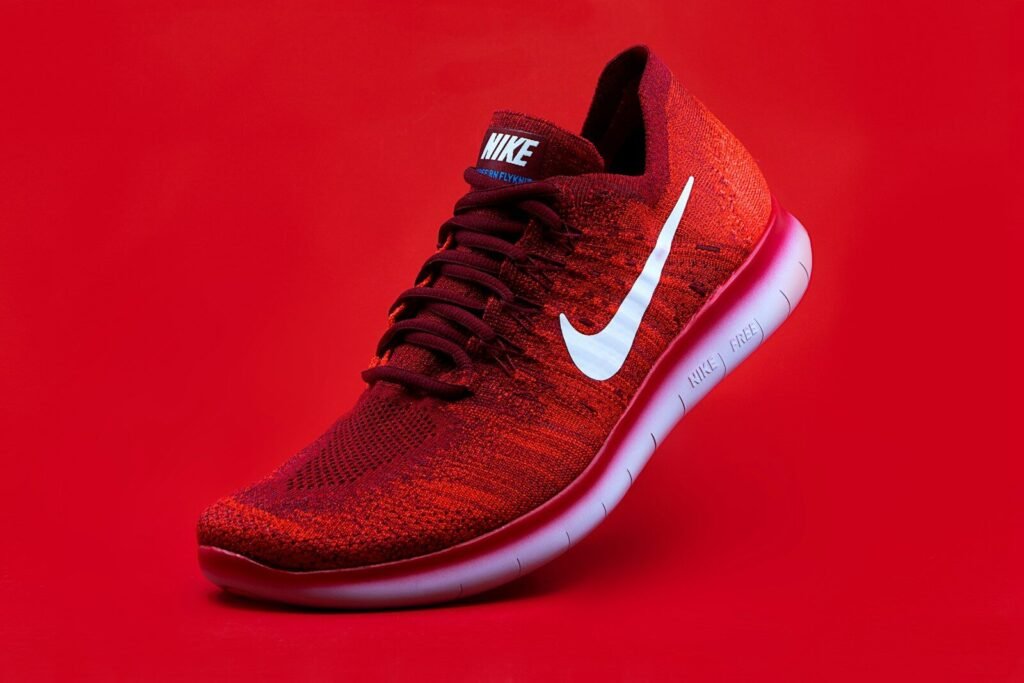
In 1971, the shoe company Blue Ribbon Sports needed a name for its own line. Co-founder Phil Knight wanted to call it Dimension Six. His team was not convinced. Then Jeff Johnson, the company’s first employee, suggested Nike, the Greek goddess of victory. He said the name came to him in a dream.
Knight was not a big fan at first, but the deadline was close. So Nike won. Today, the Nike brand shows how a short, strong name can grow into something much bigger than its origin.
Reebok
Reebok was started by brothers Joe and Jeff Foster in Bolton, England, in the late 1950s. Their grandfather had made some of the first spiked running shoes. The brothers wanted a new name, so they looked through a dictionary Joe had won in a running race as a boy.
There they found the rhebok, a fast African antelope. They used the Afrikaans spelling, Reebok. That’s exactly why the name sounds both athletic and slightly exotic.
Patagonia
In 1973, climber Yvon Chouinard needed a name for his new clothing line. He could have used his own name, which was already known for climbing gear. However, he did not want to confuse his tool brand, and he did not want the clothes to seem only for climbers.
So he chose Patagonia, the wild region at the tip of South America. As the company explains in its own story, the name sounded far away and adventurous, and it was easy to say in any language. It fits the Patagonia brand perfectly to this day.

Arc’teryx
Arc’teryx was founded in North Vancouver in 1989 under a much plainer name: Rock Solid. The company made climbing harnesses. In 1991, the owners renamed it after the Archaeopteryx, a prehistoric creature seen as a link between dinosaurs and birds.
The name stands for evolution and progress. In addition, the fossil became the brand’s logo, so the name and the symbol tell one story.
Named After an Idea
Some names capture a belief or a promise. These brands chose words that explain what they stand for, even if most customers never notice.
ASICS
ASICS was formed in 1977, when Onitsuka Co. merged with two other Japanese companies. The new name is an acronym of a Latin phrase: Anima Sana In Corpore Sano. According to the brand’s own history, it means “a sound mind in a sound body.”
Founder Kihachiro Onitsuka believed sport could help people live better lives. As a result, his whole philosophy is hidden in five letters.
New Balance
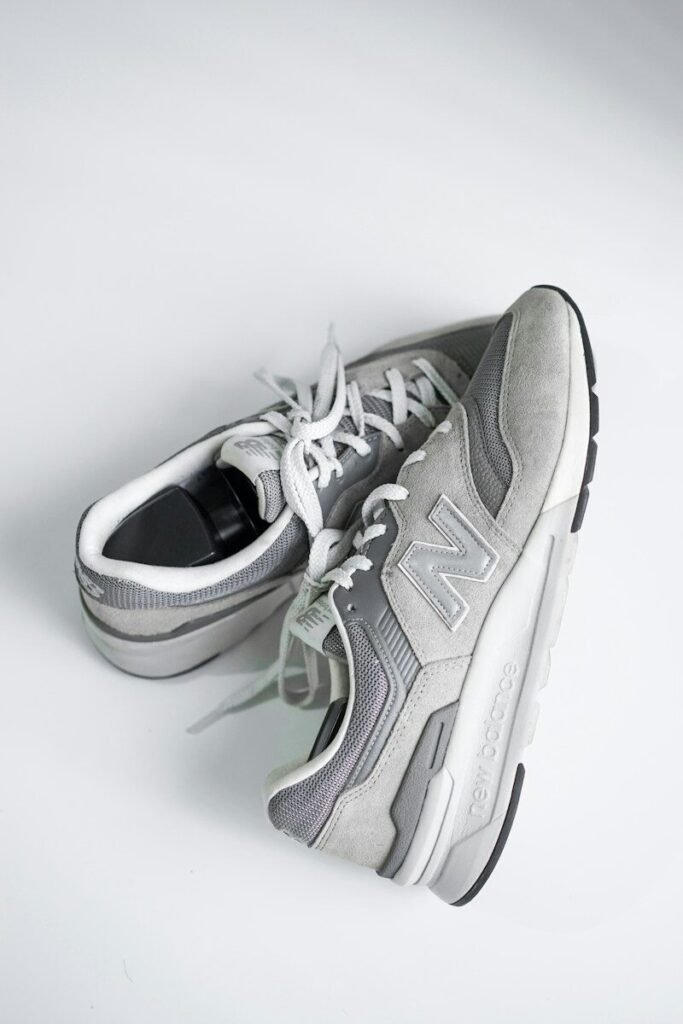
New Balance started in Boston in 1906 as a company that made arch supports. Founder William J. Riley reportedly got his idea from the chickens in his yard. He noticed how well they balanced on their three-pronged feet.
So he designed an arch support with three support points, which gave wearers a “new balance.” The name stuck long after the New Balance brand moved from insoles to running shoes.
Off-White
Virgil Abloh first launched his label as Pyrex Vision in 2012. A year later, he rebranded it as Off-White. He described the name as the grey area between black and white.
That idea matched the brand itself, which sits between streetwear and luxury. You can read how that position shaped the Off-White brand and its fast rise.
Named by Accident
Not every great name was planned. Two of the biggest fashion retailers in the world got their names through a mix of bad luck and quick thinking.
Zara
Amancio Ortega opened his first store in A Coruña, Spain, in 1975. He wanted to call it Zorba, after the film Zorba the Greek. However, a bar just two blocks away already had that name, and its owner complained.
Ortega had already ordered the letters for his sign. So he rearranged them and came up with Zara. It is now one of the most famous names among Spanish clothing brands.
Uniqlo
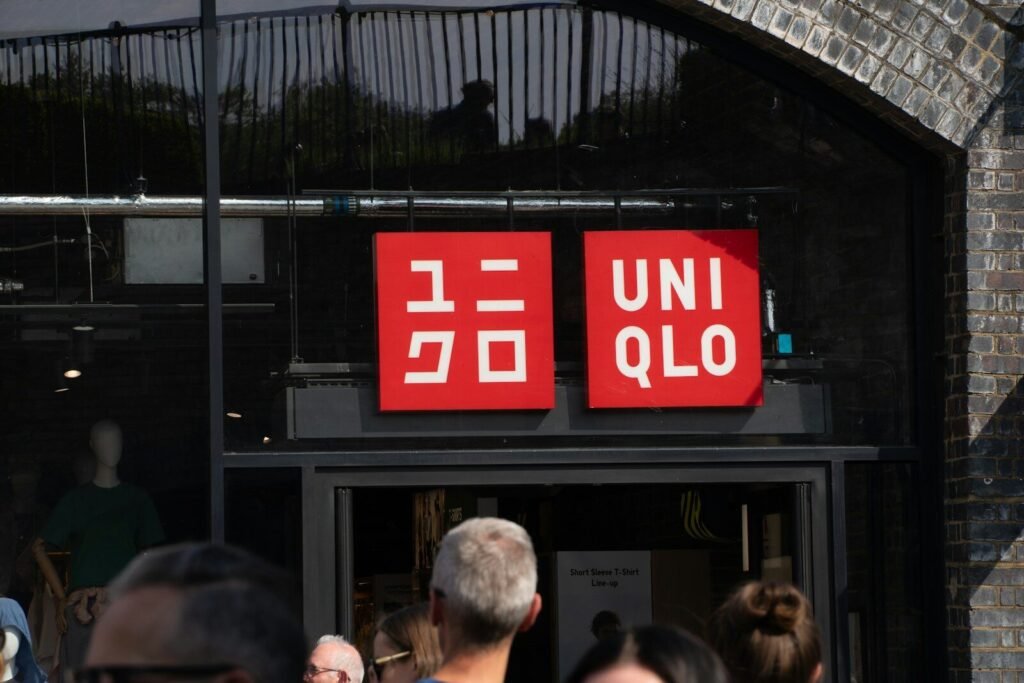
Uniqlo opened its first store in Hiroshima in 1984 under the name Unique Clothing Warehouse. The plan was to shorten it to Uni-Clo. But in 1988, during registration work in Hong Kong, the C was misread as a Q.
Owner Tadashi Yanai liked the mistake and kept it. That’s exactly why one of the best known Japanese clothing brands is spelled with a Q.
What These Brand Names Teach Us
Look at these 12 names together, and a pattern appears. Few of them had an obvious meaning at the start. Nike was an unknown goddess to most people. Zara was a rearranged sign, and Uniqlo was a typo. Yet each name became powerful because the brand behind it kept its promise for years.
Most of these names also share a few simple traits:
- They are short and easy to say in many languages.
- They are distinctive, so they are easy to remember and protect.
- They leave room to grow beyond the first product.
If you are naming your own label, our guide on how to choose a clothing brand name walks you through the process step by step. And for more on what turned these labels into legends, see our overview of iconic clothing brands that shaped fashion.
Frequently Asked Questions about Clothing Brand Names
Nike is named after the Greek goddess of victory. Jeff Johnson, the company’s first employee, suggested the name in 1971. Phil Knight had wanted to call the brand Dimension Six.
Adidas combines the nickname and surname of founder Adolf “Adi” Dassler: Adi plus Das. The popular phrase “All Day I Dream About Sports” is a myth.
Founder Amancio Ortega wanted to call his first store Zorba. A nearby bar already used that name, so he rearranged the letters of his sign into Zara.
Uniqlo was meant to be short for Unique Clothing, spelled Uni-Clo. In 1988, the C was misread as a Q during registration in Hong Kong, and the company kept the new spelling.
ASICS is an acronym of the Latin phrase Anima Sana In Corpore Sano, which means a sound mind in a sound body.