
Is Starting a Clothing Brand Worth It in 2027?
Is starting a clothing brand worth it in 2027? Most articles answer that question with opinions. This one answers it with data from real founders. In our 2026 survey, we asked 59 clothing brand owners how long it took them to make money, what they earn, and what actually works.
The short version is encouraging, but it comes with conditions. Many brands do become profitable. However, the first months are slow, and the founders who succeed tend to do a few things differently. Below, we walk through the numbers, the risks, and how to decide if a clothing brand makes sense for you this year.
The Short Answer: Yes, but Not for Everyone
Starting a clothing brand can be worth it in 2027. You can launch with a small budget, and shoppers are open to new labels. Still, it is not a quick way to earn money. These are the key figures from the 2026 Clothing Brand Survey:
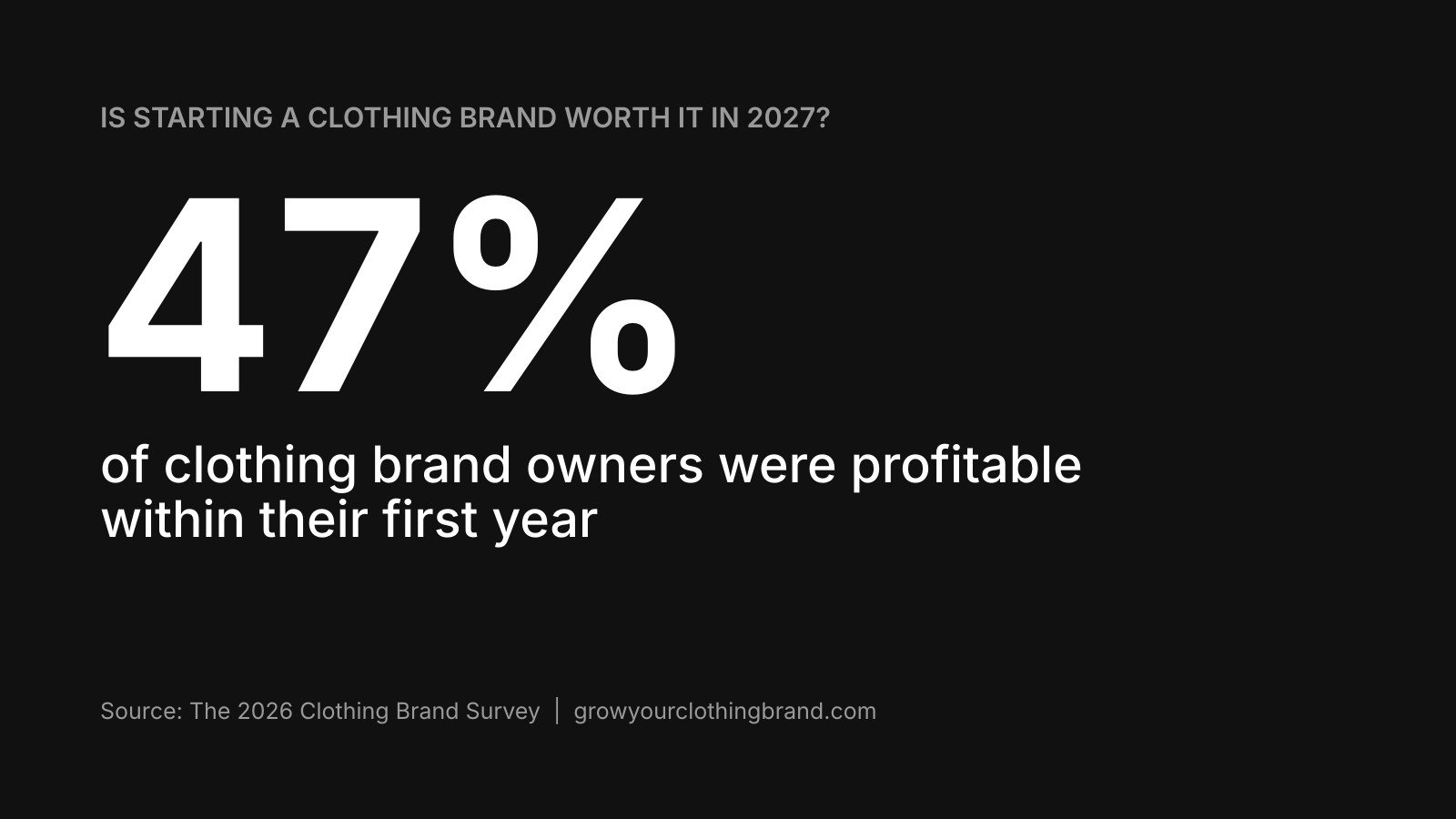
- 47% of brand owners reached structural profit within their first year.
- 26 of the 34 brands that have been live for more than a year say they are profitable today.
- 16 of the 22 brands launched less than six months ago had not made a single sale yet.
- Among brands older than six months, about half earn more than €1,000 per month.
- 68% of founders who are planning a brand have less than €1,000 for their first collection.
In other words, the brands that survive the first year usually start to pay off. The hard part is getting there.
What the Numbers Say About Starting a Clothing Brand
Our survey ran in the second half of 2026 and reached respondents in 46 countries. The answers are self-reported, and the sample is not representative of the whole fashion industry. Even so, it gives an honest look at small brands, which most industry reports ignore.
How Many Brands Turn a Profit
Brand age makes a huge difference. Among brands younger than six months, fewer than a third are profitable. For brands older than five years, 11 out of 13 are. As a result, the question is rarely whether a brand can make money. It is whether the founder keeps going long enough to find out.
How Long It Takes to Make Money
Profit came faster than many people expect. About 24% of owners were profitable within three months, and another 22% got there within a year. On the other hand, 41% are not profitable yet. You can see the full breakdown in our article on how long it takes a clothing brand to become profitable.
How Much Revenue Brands Make
Revenue is spread widely. 37% of owners had no sales yet, while 19% earned between €1,000 and €5,000 per month. At the top, 9% earned more than €25,000 per month. Keep in mind that “profitable” does not always mean a full-time income. Several owners with small monthly sales still call their brand profitable.
Why Starting a Clothing Brand Can Be Worth It in 2027
There are good reasons to start now. Launching is cheaper and easier than it was ten years ago. Moreover, our data shows that shoppers are willing to give small brands a chance.
Low Barriers to Entry
You no longer need a large stock to begin. Almost half of new founders plan to start with less than €500. Many of them use print on demand, which means you only pay for a product after a customer orders it. That limits your risk while you test your designs.
Shoppers Are Open to Small Brands
We also asked people without a brand how they shop. 63% said they are open to paying more for a small brand. For many of them, though, that depends on knowing the story behind the label. So a clear brand story is not a nice extra. It directly affects what customers will pay.
Free Channels Still Work
Owners named Google Search and organic Instagram as their best channels for return on investment. Both cost time rather than money. Interestingly, only 2 of 37 new founders plan to use Google Search at launch. That gap is an opportunity for anyone willing to invest in content early.
Why It Might Not Be Worth It for You
The same data also shows the downsides. These are the risks you should weigh before you spend money on a first collection.
A Flat and Crowded Market
The fashion market as a whole is not growing fast. McKinsey expects the global industry to post only low single-digit growth, with tariffs and cautious consumers putting pressure on brands. You can read more in their State of Fashion report. For a new brand, that means you mostly win customers from existing labels, not from new demand.
The First Months Are Slow
Most new brands sell nothing in their first months. That is normal, but it is also where many founders give up. Therefore, you need enough patience and savings to get through a quiet start.
Production Is Hard to Get Right
Owners rated finding a good manufacturer at 6 out of 10 for difficulty. Over a third gave it an 8 or higher. Low minimum order quantities are especially hard to find. As a result, many founders either overspend on stock or settle for lower quality.
Shoppers Have a Price Ceiling
Shoppers are open to small brands, but only up to a point. 55% would pay at most €50 for a hoodie from a brand they don’t know. That makes your margins tight if your production is expensive. Good pricing is therefore one of the first things to work out.
Who Should Start a Clothing Brand in 2027
Based on the data, a clothing brand is most likely worth it for you if:
- You can keep going for at least a year without needing the brand to pay your bills.
- You have a clear niche and a story that sets you apart.
- You enjoy marketing and content as much as design.
- You are willing to start small and improve step by step.
It is probably not the right move if you need fast income, if you plan to spend your entire budget on one large production run, or if you only want to design and not sell.
How to Make Starting a Clothing Brand Worth It
The owners in our survey shared plenty of advice. Most of it comes down to four habits.
Validate Before You Produce
Test demand before you order stock. Share designs, run a waitlist, or take pre-orders. Our guide on how to validate a clothing brand idea shows simple ways to do this without a big budget.
Start Lean
Launch with a few strong designs instead of a full collection. Keep a buffer for samples, shipping and marketing. Our overview of startup costs helps you plan where your first euros should go.
Build an Audience First
Several owners said they wished they had built an audience before selling. Start posting, writing and collecting emails months before launch. That way, your first drop goes to people who already know you.
Earn Trust From Day One
For new brands, trust is the biggest hurdle. 68% of shoppers we asked look for reviews or real customer photos. In addition, a site that looks cheap is the top reason people leave. Read more about what makes shoppers trust a new clothing brand.
Frequently Asked Questions about Starting a Clothing Brand in 2027
It can be. In our 2026 survey, 47% of owners reached profit within their first year, and most brands older than a year are profitable. However, the first months are usually slow, so you need patience and a small buffer.
About a quarter of owners in our survey were profitable within three months. Nearly half reached profit within a year, while 41% were not profitable yet.
Less than many people think. 68% of founders in our survey planned to start with under €1,000, often using print on demand. Holding your own stock costs more, because you pay for production upfront.
The market is crowded and grows slowly. Still, shoppers are open to new labels, and 63% would pay more for a small brand. A clear niche and a strong story help you stand out.
Owners in our survey named Google Search and organic Instagram as their best channels. Both take time but cost little money, which makes them a good fit for new brands.