Supreme Case Study: From SoHo Skate Shop to a $600 Million Loss for VF Corp
Supreme started in 1994 as a twelve-thousand-dollar bet on a single storefront in SoHo. Three decades later, it had changed hands three times, sold for as much as $2.1 billion, and become the reference point every streetwear brand still measures itself against. Few American clothing brands have swung between underground credibility and corporate ownership as visibly as Supreme has.
What makes Supreme worth studying is not just the hype. It is what happened to that hype once big companies got involved, and what smaller clothing brands can take from both the rise and the strain that followed.
What You Can Learn From Supreme
Five principles run through Supreme’s history, including the parts that did not go as planned. Keep these in mind as you read the full breakdown.
- Scarcity works when it is structural, not just marketed. Supreme’s Thursday drop system creates real weekly urgency, not a one-off gimmick.
- Community outperforms advertising when it is genuine. Supreme built its following through skate culture and word of mouth, never traditional ad campaigns.
- Collaborations work when they fit the brand’s identity. Louis Vuitton and Nike partnerships added credibility because Supreme chose them deliberately, not for exposure alone.
- Corporate ownership can quietly erode the thing it paid for. Sources close to the brand say Supreme’s “cool factor” shrank under VF Corporation, even as revenue held steady.
- Cultural capital does not always show up on a balance sheet. VF Corp sold Supreme for $600 million less than it paid, a reminder that hype-driven brand equity is harder to own than it looks.
Supreme Timeline: From SoHo Skate Shop to Changing Hands Twice
Supreme’s ownership history moved faster than its product ever did, and that mismatch is central to its story.
- 1994 — James Jebbia opened Supreme on Lafayette Street in SoHo, self-funding the store with around $12,000 after working at skate retailer Union NYC and alongside designer Shawn Stüssy.
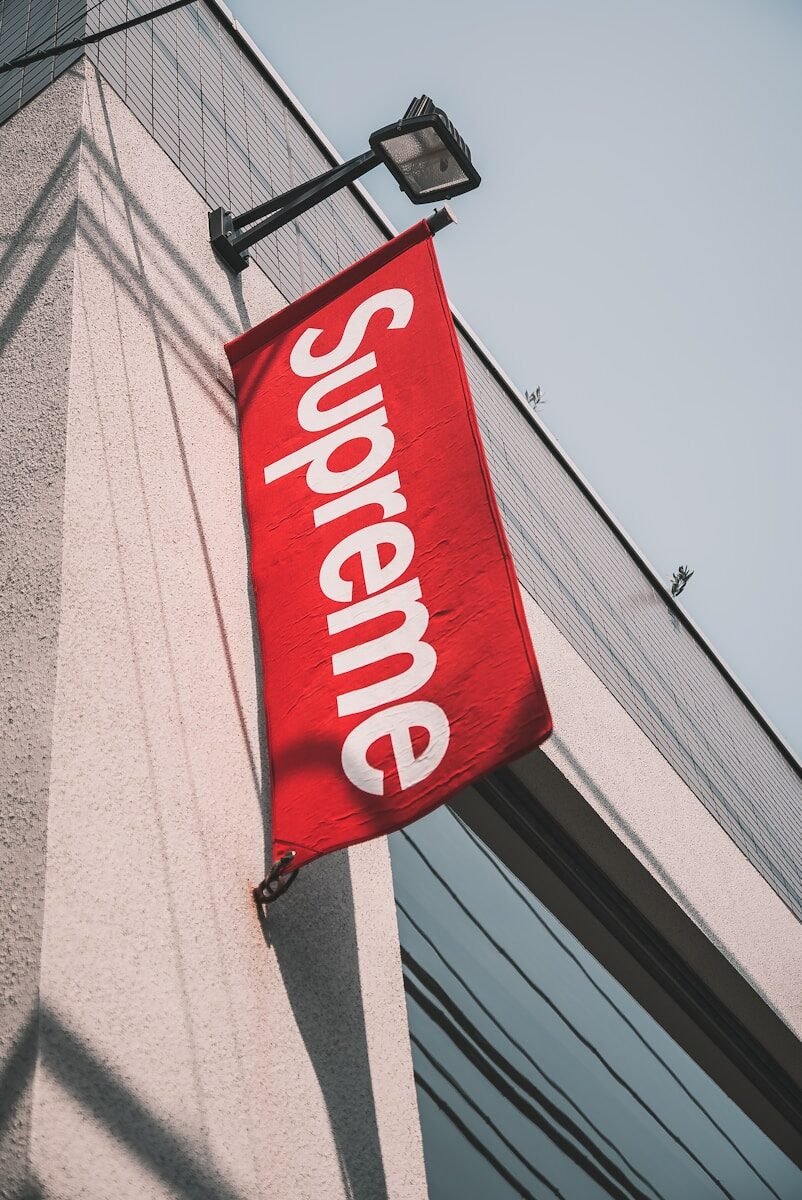
- 1994 — The brand adopted its red box logo, styled after artist Barbara Kruger’s bold text-over-image work, which became one of the most recognized marks in fashion.
- 2017 — Supreme released its collaboration with Louis Vuitton, a partnership that moved the brand from streetwear into luxury fashion conversation for the first time.
- 2017 — The Carlyle Group bought a 50% stake in Supreme for $500 million, valuing the company at $1 billion and marking its first major outside investment.
- 2020 — VF Corporation acquired Supreme outright for $2.1 billion, bringing the streetwear label under the same roof as Vans, Timberland, and The North Face.
- 2024 — VF Corporation sold Supreme to EssilorLuxottica for $1.5 billion, roughly 30% less than it had paid four years earlier.
Scarcity That Drives Hype
One of Supreme’s defining strategies is scarcity. Limited releases and highly sought-after items create urgency. When products are only available to a select audience, demand increases dramatically. Each drop becomes a shared experience, and fans line up, share their finds online, and celebrate the brand. Scarcity transforms clothing into a symbol of status and cultural relevance rather than just fabric and stitching.
This approach shows that scarcity is not only a sales tactic. It is a way to build brand value and loyalty.
Building a Community Around the Brand
Supreme has never relied on traditional advertising. Instead, it focuses on community. Social media, skate events, and storytelling let the brand build genuine connections with fans. People feel like they belong to something larger than a product. They are part of a shared culture and experience.
The close-knit community naturally amplifies hype. Every drop is a cultural event, and fans become ambassadors, spreading awareness and excitement without prompting.
Collaborations That Amplify Influence
Supreme’s collaborations with Nike, Louis Vuitton, and various artists show how partnerships can elevate a brand. Each collaboration is carefully curated to fit the brand story, adding credibility and keeping the label culturally relevant. Collaborations let Supreme reach new audiences while maintaining the loyalty and respect of its existing community.
Strategic partnerships show that collaboration is not just about exposure. It is about aligning with values and identity to strengthen the brand.
The VF Corp Era and What Corporate Ownership Cost
Supreme’s story does not end at the top of the hype cycle. What happened after VF Corp took over is just as instructive as what came before.
Buying Hype Does Not Guarantee Keeping It
When VF Corporation bought Supreme in 2020, it paid for a brand whose entire value came from scarcity, community, and underground credibility. Those qualities are hard to own on a spreadsheet. Industry sources told Modern Retail that Supreme’s cool factor shrank under both the Carlyle and VF Corp deals, since aligning with large conglomerates changes how a subculture-driven brand gets perceived, even if the product stays exactly the same.
That is a hard lesson for any brand built on authenticity: the thing that made you valuable is often the first thing outside ownership puts at risk, not through any single bad decision, but simply by changing what the brand represents to the people who made it cool in the first place.
The 2024 Sale at a Loss
In 2024, VF Corporation sold Supreme to EssilorLuxottica for $1.5 billion, about $600 million less than the $2.1 billion it paid in 2020. That is a rare, public example of a fashion conglomerate losing money on a streetwear acquisition, and it undercuts the assumption that buying cultural relevance is a safe bet just because the brand looks unstoppable at the time of purchase.
For smaller brands, the lesson is not about the size of the numbers. It is about what the numbers represent: brand equity built on culture and scarcity is genuinely valuable, but it is also genuinely fragile, and it does not automatically survive a change in ownership just because the checks cleared.
Lessons for Clothing Brands
Key takeaways from Supreme’s strategy, and from what happened after it sold, include:
- Create scarcity to make products feel special and drive demand
- Build a loyal community through authentic engagement and storytelling
- Position the brand clearly and maintain authenticity to stand out
- Use collaborations strategically to expand reach without losing identity
- Turn every product release into an event or shared experience
- Understand that outside investment can dilute the exact culture it is paying for
How Supreme Shows the Power and Limits of Streetwear Culture
Supreme proves that a small skate shop can become a global cultural icon when exclusivity, community, and authenticity come together. It also proves that culture is genuinely hard to own once outside money enters the picture. For clothing brands, the lesson runs in two directions. Success is not just about making clothes. It is about creating a culture, a story, and an experience that fans want to join, and then protecting that culture as deliberately as you built it, especially once bigger companies come calling.
Frequently Asked Questions About Supreme
James Jebbia founded Supreme in 1994, opening its first store on Lafayette Street in SoHo, New York City. He self-funded the shop with roughly $12,000 after working at skate retailer Union NYC and alongside designer Shawn Stüssy.
EssilorLuxottica has owned Supreme since 2024, when it bought the brand from VF Corporation for $1.5 billion. VF Corporation had acquired Supreme in 2020 for $2.1 billion, after the Carlyle Group bought a 50% stake in 2017 for $500 million.
VF Corporation sold Supreme to EssilorLuxottica in 2024 for $1.5 billion, about $600 million less than the $2.1 billion it paid to acquire the brand in 2020.
Industry sources have said Supreme’s cultural credibility weakened after its sale to the Carlyle Group and later VF Corporation, since aligning with large conglomerates changes how a subculture-driven brand is perceived, even when the product itself does not change.
Supreme releases new products in small, limited weekly drops rather than continuous restocks. That structural scarcity creates real urgency around each release, turning routine shopping into a shared event that fans anticipate and discuss online.
Clothing brands can learn six things from Supreme: structural scarcity drives real demand, genuine community outperforms advertising, collaborations should fit the brand’s identity rather than chase exposure, corporate ownership can quietly erode the culture it paid for, cultural brand equity is fragile and does not always survive a change in ownership, and protecting your culture deliberately matters as much as building it in the first place.