
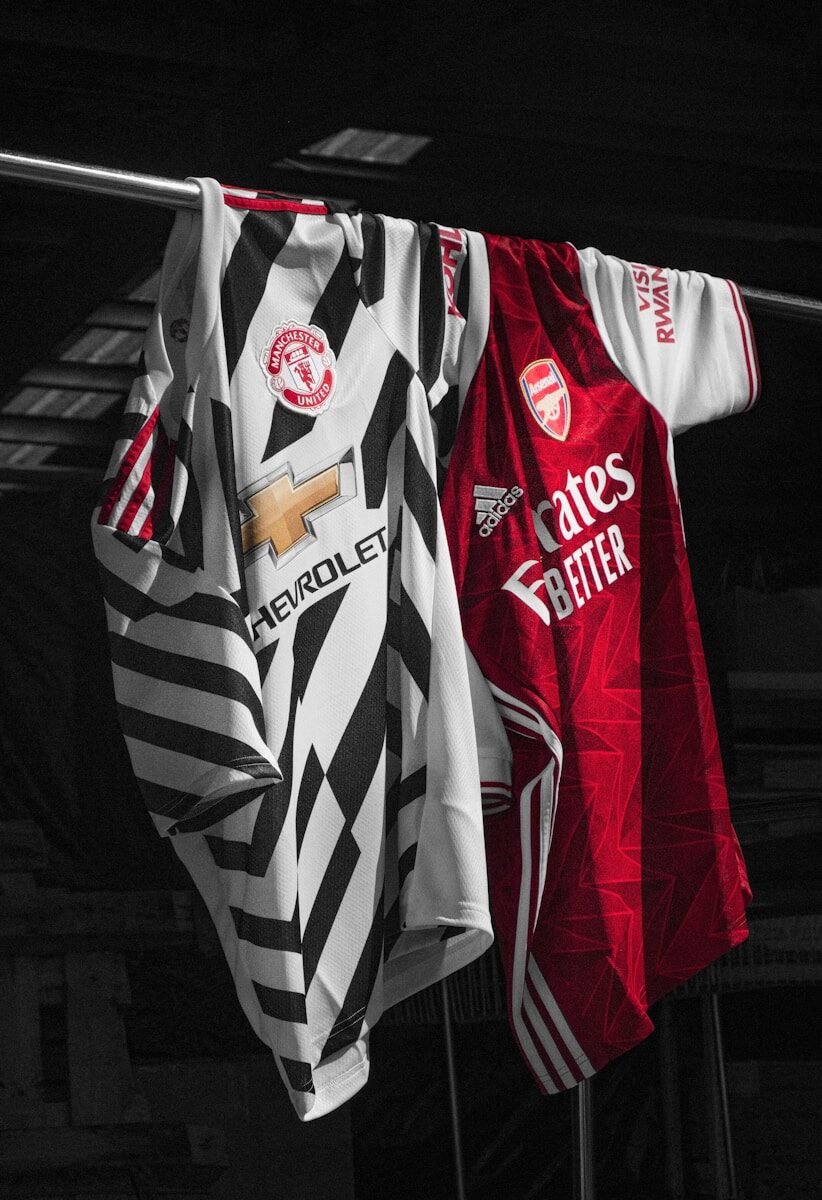
Blokecore: Why the Football Shirt Became a Fashion Staple
The football shirt is one of the most culturally relevant garments in fashion. Not because of the sport, but because of what the shirt has come to represent. Blokecore turned supporter wear into something people style like any other wardrobe staple.
This was never a short hype cycle. It built for years, and the 2026 World Cup pushed it fully mainstream. For clothing brands the opportunity is still open, and you do not have to make sportswear to use it.
What Is Blokecore?
Blokecore is a streetwear aesthetic built around football shirts. The formula is simple: a vintage or retro kit, relaxed jeans or trousers, and classic trainers. It references British terrace culture of the 80s and 90s, but people wear it far outside the stadium.
The name came from TikTok. In 2021, creator Brandon Huntley started styling old football shirts as everyday outfits, and the term stuck. Since then the look has moved from social feeds to runways. Celebrities now wear club and national kits as casual pieces, which pushed the aesthetic straight into mainstream fashion coverage.
Where the Football Shirt Trend Started
Football shirts have always carried cultural weight. In the 80s and 90s, the terraces in Britain were not just about the game. Fans dressed with intent: Stone Island jackets, vintage kits, Adidas trainers. The result was working class, tribal and tied to place and identity.
That visual language never disappeared. It simply went underground for a while. Blokecore then gave it a name, and the aesthetic spread fast. By 2023 it was everywhere, and the World Cup across the US, Canada and Mexico turned it into a global talking point.
Meanwhile the luxury market caught up. Prada, Balenciaga and Stella McCartney all referenced football, while Tommy Hilfiger partnered with Liverpool FC. What began as a niche TikTok aesthetic now sits inside mainstream fashion.
Why It Is More Than a World Cup Trend
Jersey sales spike around every World Cup, and people assume the interest fades afterwards. This cycle worked differently. Blokecore had already turned the football shirt into a year round piece long before the tournament kicked off.
The numbers held up once the final was played. Pinterest searches for jerseys were still up 138% afterwards, and the aesthetic kept showing up in autumn styling coverage. That is the difference between a spike and a shift.
Vintage kits are collected, upcycled and resold. Independent labels rework them into corset tops, dresses and accessories. A large share of the football audience now styles jerseys in ways the sport never planned for. As a result, the garment is attached to identity and nostalgia rather than to a result on the pitch.
What Big Brands Are Doing
Nike positioned its 2026 World Cup kits as lifestyle items rather than matchday wear. Adidas staged a kit launch in Los Angeles with fashion figures, styling national team shirts with flared trousers and distressed denim. Palace, Stussy, Miaou, Ahluwalia and Slam Jam all worked with sportswear brands on football inspired pieces.
The pattern is consistent. Treat the shirt as a design object, not a uniform. Pair it with unexpected silhouettes. Anchor it in a cultural story instead of a scoreline. Smaller brands can actually do that better than the giants.
What Your Clothing Brand Can Learn From This
You do not need to make football shirts to benefit from this moment. Blokecore proves something more basic: culture creates demand. The shirt itself is not special. What matters is the identity it carries and the community it signals.
1. Subculture beats trend chasing
Blokecore did not start with a brand campaign. It grew out of a real aesthetic with real roots. The brands winning today understood that culture early, instead of arriving late. The same principle applies to your niche, which is why your brand story and your brand DNA matter more when they are grounded in something real.
2. The garment is a canvas
Polyester mesh was never the appeal. The draw was the graphic language: bold colourways, sponsor blocks, number placements and retro typography. Independent brands used that framework as a starting point for graphic design that felt fresh. Your brand colors are part of the same conversation.
3. Collaborations accelerate relevance
Almost every brand riding this wave does it through collaborations. Palace with Adidas. Miaou with Adidas. Umbro with Aries. They work because they combine audiences and signal cultural fluency. You do not need a sportswear giant, because a local club or a graphic artist can do the same at a smaller scale.
4. Community first, product second
The blokecore audience did not form around a brand. It formed around an aesthetic and a set of shared references. Brands that built community inside that aesthetic, often through short form video, are seeing the commercial benefit now. Building an audience before you need one remains the most durable move for a small label.
5. Use content, even without a football product
Football styling still drives serious search and social volume. If your brand shares any visual overlap, such as bold graphics or oversized fits, there is room to join the conversation. A styling post works. So does a Pinterest board. You do not need a new product to take part, only a point of view.
If You Want to Make a Football Inspired Product
The opportunity is real, but execution decides the outcome. A few things separate credible brands from opportunistic ones.
- Authenticity over speed. Credible brands have a clear point of view: terrace culture, upcycling, or one specific era. A generic jersey with your logo on it will not land.
- Fabric and silhouette matter. The best pieces use lightweight mesh or polyester with precise boxy cuts. Construction signals whether you take the category seriously.
- Tell the design story. Explain the colourway, the era and the meaning of the graphic. That context is what makes a piece collectible.
- Think beyond the shirt. The aesthetic extends to shorts, socks, track jackets and bucket hats. A cohesive collection will always outperform a single standalone piece.
The Bigger Takeaway
The football shirt is a useful case study in how fashion actually works. A garment with subcultural roots gets picked up by the right people on the right platform. It travels through streetwear, gets validated by luxury, and reaches the mainstream at scale. That whole cycle took only a few years.
This pattern repeats constantly. The brands that benefit are rarely the first movers. Instead, they are the ones who understand the culture well enough to enter it with a clear brand identity and a lifestyle strategy that makes their entry credible.
Frequently Asked Questions About Blokecore and Football Shirts
Blokecore is a streetwear aesthetic built around football shirts, usually a vintage or retro kit worn with relaxed jeans or trousers and classic trainers. It borrows from British terrace culture of the 80s and 90s, but it is worn as everyday fashion rather than matchday kit.
Yes. The look was already established before the 2026 World Cup and kept its momentum afterwards, with jersey searches and styling coverage staying high once the tournament ended. It behaves like a lasting shift in how sportswear is worn, not a seasonal spike.
Football shirts carry a strong graphic language: bold colourways, sponsor blocks, number placements and retro typography. Combine that with nostalgia, subcultural roots and social media styling, and the shirt works as a design object rather than fan merchandise.
Keep the shirt as the loudest piece and calm everything else down. Relaxed jeans or tailored trousers, classic trainers and a simple jacket work well. Oversized fits, tucked hems and layering over a long sleeve are the most common variations.
Yes, and you do not need to produce jerseys. The lesson is that culture creates demand, so a clear point of view, a collaboration with a local club or artist, and styling content around the aesthetic can be enough to join the conversation.