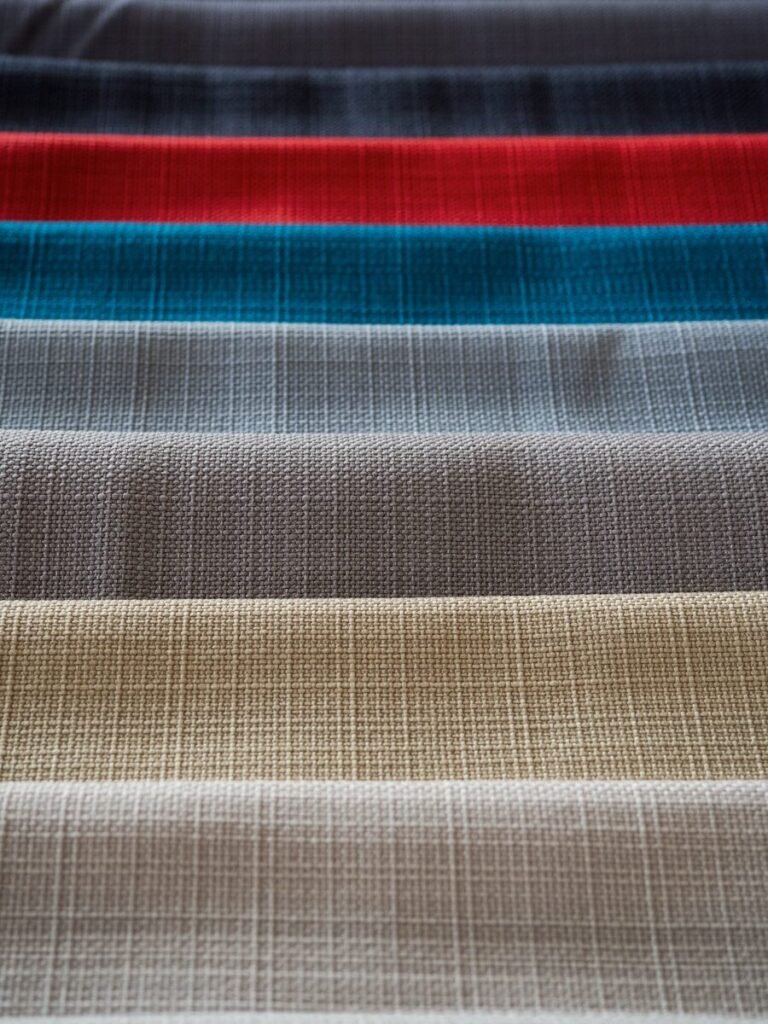
Blends Explained for Clothing Brands
Blended fabrics combine two or more types of fibers to balance comfort, durability, and performance. Common blends include cotton-polyester, cotton-viscose, and cotton-nylon. Understanding fabric blends helps clothing brands create garments that meet diverse needs and enhance customer satisfaction.
Blends allow brands to combine the best qualities of different fibers, resulting in versatile and high-performing products. The exact ratio between fibers matters just as much as which fibers you pick.
Properties of Blended Fabrics
Blends vary depending on the fibers used, but common characteristics include:
- Combine the softness of natural fibers with the durability of synthetics
- Can improve stretch, drape, or moisture-wicking properties
- Often more affordable than 100% natural fibers
- Allow for customization of texture, weight, and weight in GSM
Benefits for Clothing Brands
Using blends provides practical advantages for both production and consumer appeal:
- Offers versatility across a wide range of garments
- Enhances comfort, performance, and longevity
- Reduces shrinkage, wrinkles, or fading compared to single fibers
- Opens possibilities for functional clothing, like activewear or casual wear
Common Blend Ratios
The ratio between fibers changes how a blend behaves just as much as the fibers themselves. A small shift in percentage can move a fabric from soft and breathable to stiff and synthetic-feeling.
60/40 Cotton-Polyester
This is the industry standard for hoodies and heavyweight sweatshirts. The higher cotton percentage keeps the hand feel soft, while the polyester share adds shape retention and reduces shrinkage after washing.
50/50 Cotton-Polyester
A more budget-friendly ratio common in basic t-shirts and promotional garments. It sacrifices some of the natural softness of a higher cotton blend but costs less to produce at scale.
95/5 Cotton-Elastane
A small amount of elastane, sometimes as low as 2 to 5 percent, adds meaningful stretch and recovery without changing how the fabric looks or feels. This ratio is common in fitted tank tops and slim silhouette basics.
Types of Common Blends
Different blends serve specific purposes and aesthetics:
- Cotton-polyester: Soft, durable, and easy to care for; common in t-shirts and hoodies
- Cotton-viscose: Typically 60/40 or 70/30, this combination adds fluid drape to tops and dresses that pure cotton cannot achieve on its own
- Cotton-nylon: Usually blended at a lower nylon percentage, around 10 to 20 percent, to add strength and abrasion resistance for jackets and bags
- Polyester-nylon: Strong, lightweight, and water-resistant for outerwear or technical garments
Polyester is one of the most common blend partners for cotton, since it adds durability without a major loss in comfort.
How to Read a Blend on a Label
A fabric label lists fiber content by weight, always in descending order. A tag reading “60% Cotton, 40% Polyester” means cotton makes up the majority of the fabric’s weight, not necessarily how it looks or feels on the surface.
Two blends with the same fiber pairing can still feel completely different depending on yarn thickness and knit structure, so always request a physical swatch before committing to a ratio based on the percentage alone.
Considerations When Using Blends
While blends provide flexibility, brands should consider a few points:
- Care instructions may vary depending on the fibers used
- Some blends may compromise breathability or softness if over-reliant on synthetics, for example a 35/65 cotton-polyester mix will feel noticeably more synthetic than 60/40
- Blending ratios must be carefully chosen to achieve the desired fabric performance
The Textile Exchange fiber market report tracks how blended and synthetic fibers continue to make up the majority of global textile production, which is worth keeping in mind when weighing a blend against a single fiber fabric.
Tips for Clothing Brands
- Select blends that align with your garment’s purpose and brand values
- Test fabric performance before full-scale production to ensure quality
- Ask your manufacturer for the exact ratio in writing, since “cotton blend” alone can mean anything from 20% to 80% cotton
- Educate customers on proper care to maximize garment longevity
- Experiment with different fiber combinations to create unique textures and finishes
Why Blends Are Important
Blended fabrics give clothing brands the freedom to balance comfort, durability, and functionality. They allow for versatility in design, meeting both aesthetic and practical needs. By understanding blends and their exact ratios, brands can create garments that feel great, last long, and appeal to a wide range of customers, whether that’s a sweater or a full seasonal collection.
Frequently Asked Questions about Fabric Blends
A fabric blend combines two or more types of fibers, such as cotton and polyester, to balance qualities like comfort, durability, and cost that a single fiber cannot offer on its own.
60% cotton and 40% polyester is the most common ratio for hoodies and heavyweight sweatshirts, balancing soft hand feel with shape retention and reduced shrinkage.
Fiber content is listed by weight in descending order, so the first fiber listed makes up the largest share of the fabric. A tag reading 60% Cotton, 40% Polyester means cotton is the majority fiber by weight.
Not necessarily, but a higher polyester share generally makes a fabric feel less breathable and more synthetic. The right ratio depends on the garment’s purpose, not a fixed quality rule.
Yarn thickness and knit structure affect hand feel just as much as fiber percentage, so two fabrics with an identical blend ratio can still feel very different in person.