
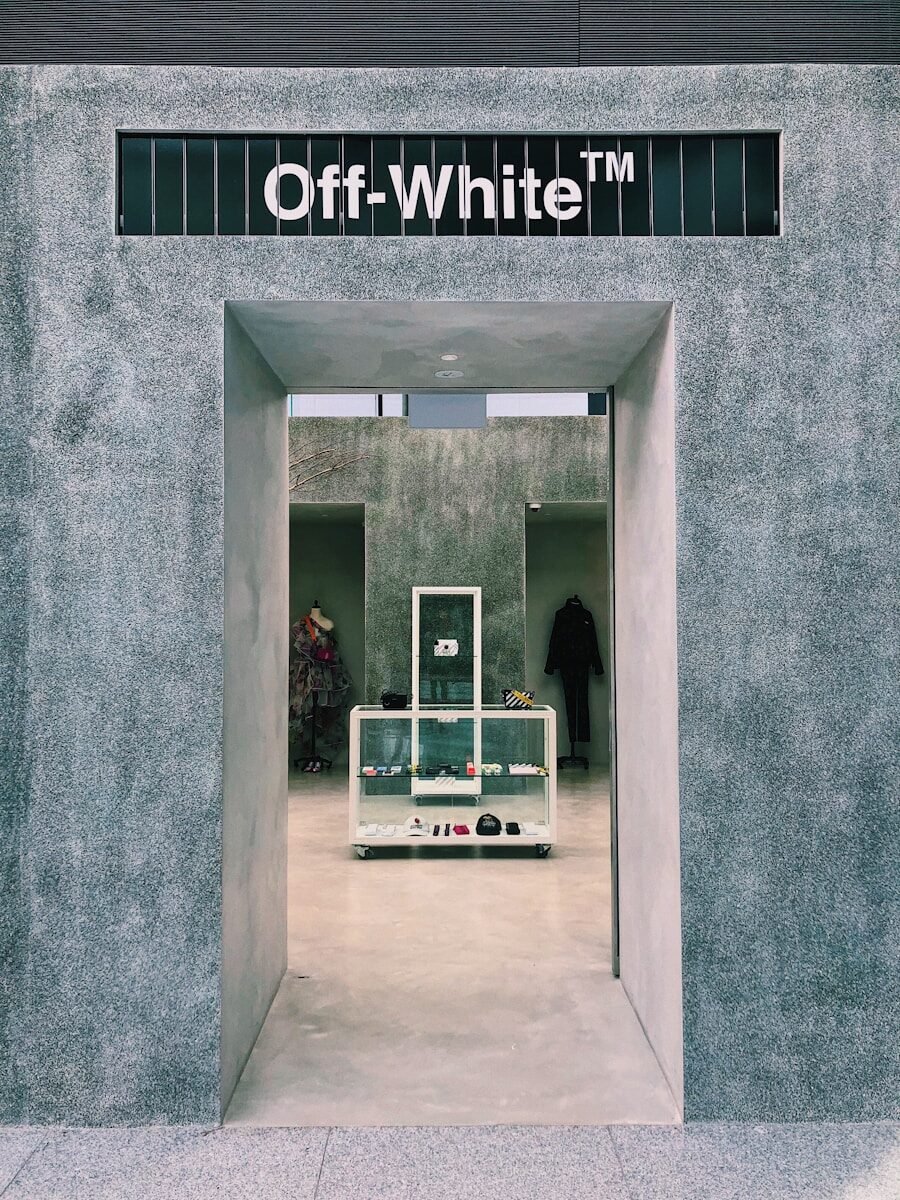
Off-White: How Virgil Abloh’s Remix Philosophy Built and Outlived a Global Fashion Brand
Off-White is one of the clearest examples of how fast a fashion brand can rise, and how fragile that rise can be once its founder is gone. Virgil Abloh built the label from a remix philosophy into one of the most collaborated-with names in fashion history, only for the brand to change hands twice within three years of his death.
Founded in 2013, Off-White blurred the line between streetwear and luxury fashion faster than almost any label before it, built on a design philosophy Abloh called his 3 percent approach. This case study traces that rise, the collaborations that defined it, and what happened to the brand once the person behind it was no longer there to run it.
From Pyrex Vision to a New Design Philosophy
Virgil Abloh did not come from a traditional fashion background. He trained in civil engineering and architecture, a foundation that shaped how he approached design less like a stylist and more like someone reworking existing systems. Before Off-White, he ran a smaller project called Pyrex Vision, which laid the groundwork for the ideas he would later scale into a full label.
When Abloh founded Off-White in 2013, he built it around what he called the 3 percent approach, the idea that a genuinely new design could be created by changing just 3 percent of an existing one. That philosophy borrowed directly from hip-hop’s remix culture, treating fashion the way a producer treats a sample, and it gave Off-White a clear, repeatable creative logic from day one.
A Design Language Built From Simple Symbols
Off-White’s visual identity became instantly recognizable years before most people could name the brand, built on a small set of symbols reused constantly across every category the label touched.
Quotation Marks, Zip Ties, and Industrial Motifs
Diagonal stripes, caution-tape yellow, plastic zip ties left on sneakers as a finished detail rather than packaging, and ironic quotation marks placed around ordinary words all became signatures of the brand. That consistency, applying the same handful of visual cues across every brand identity touchpoint, meant a single zip tie or quotation mark was often enough to identify the brand without a logo in sight.
Turning Collaborations Into Cultural Events
Few brands have used brand collaborations as effectively as Off-White did in its first decade, turning partnerships into genuine cultural moments rather than simple co-branding exercises.
The Ten Redefined Sneaker Collaborations
In 2017, Off-White and Nike released “The Ten,” a collaboration in which Abloh deconstructed ten of Nike’s most iconic silhouettes with an X-Acto knife before rebuilding them with exposed foam, new materials, and zip ties left dangling on the laces, according to Wikipedia. Every pair sold out almost immediately, and resale prices on the secondary market regularly climbed past $2,000. The project became a template other brands are still trying to copy, and set the tone for years of Off-White x Nike releases that followed, including a 2018 capsule with footballer Kylian Mbappé and the 2019 “Athlete In Progress” collection for women’s track and field.
Beyond Sneakers: IKEA, Rimowa, and Mercedes-Benz
Off-White’s collaboration strategy reached well outside fashion. The IKEA MARKERAD collection applied the brand’s industrial visual language to furniture, including slogan-covered rugs and a reimagined wooden chair with a bright red doorstop called Door Stop Interruption. A transparent Rimowa suitcase and a Mercedes-Benz partnership pushed the same aesthetic into travel and automotive design, while apparel and accessory collaborations with Levi’s, Jimmy Choo, Moncler, Champion, Converse, and Dr. Martens kept the brand present across nearly every category a consumer might shop.
From Streetwear Label to Louis Vuitton’s Menswear Director
Off-White’s cultural momentum eventually pulled its founder into the highest levels of traditional luxury fashion, a crossover that had rarely happened at this scale before.
A Historic Appointment With Immediate Impact
On March 26, 2018, Abloh was named artistic director of Louis Vuitton’s menswear collections, becoming the first Black designer to hold that position at a major French luxury house. The announcement generated an estimated two million dollars in earned media value within five days, and Off-White’s own desirability spiked alongside it, climbing 33 spots on the Lyst Index in the following quarter and holding the position of most desired brand into 2019.
What Happened After Virgil Abloh
Off-White’s business structure shifted significantly in its final years, both before and after Abloh’s death, in ways that show how much a brand can still depend on a single creative voice even once it has scaled globally.
The LVMH Acquisition
In July 2021, LVMH acquired a 60 percent stake in Off-White LLC, the entity that owned the brand’s trademark, leaving Abloh with a 40 percent stake and his role as creative director. Operating partner New Guards Group, which Farfetch had acquired for $675 million back in 2019, continued running the brand’s day-to-day licensing. Just months later, on November 28, 2021, Abloh died at age 41 from cardiac angiosarcoma, a rare cancer he had kept private from the public throughout his final years.
A Quiet Change of Ownership
LVMH appointed Dazed editor-in-chief Ib Kamara as Off-White’s new creative director, but the brand struggled to maintain the same level of hype without its founder. According to Complex, LVMH ultimately sold Off-White to Bluestar Alliance, a New York brand management company that also operates Bebe, Scotch & Soda, and Hurley, in a deal announced on what would have been Abloh’s 44th birthday in September 2024, with the terms of the sale undisclosed.
A few lessons from Off-White’s rise and its aftermath apply well beyond streetwear.
- A simple, repeatable design philosophy scales faster than one-off ideas. The 3 percent approach gave Off-White a consistent creative logic across every category it entered.
- A handful of recognizable symbols can replace a loud logo. Zip ties and quotation marks made Off-White identifiable without ever needing to shout its name.
- Collaborations work best when they extend the brand’s world, not just its reach. IKEA and Rimowa deals felt consistent with Off-White’s identity rather than random licensing.
- A founder-driven brand carries real succession risk. Off-White’s hype and ownership structure both destabilized within three years of Abloh’s death, a reminder that limited drops and hype cycles alone cannot replace the creative vision that built them.
Off-White’s arc, from an unlikely designer’s remix philosophy to one of the most collaborated-with names in fashion, sits alongside other streetwear and luxury clothing brand case studies on this site, including Supreme, another label that proved streetwear could hold its own inside the luxury conversation rather than sitting outside it.
Frequently Asked Questions about Off-White
Off-White was founded in 2013 by Virgil Abloh, evolving out of his earlier, smaller project Pyrex Vision.
It is the idea that a genuinely new design can be created by changing just 3 percent of an existing one, a philosophy borrowed from hip-hop’s remix culture.
Released in 2017, The Ten saw Virgil Abloh deconstruct and rebuild ten of Nike’s most iconic sneaker silhouettes. Every pair sold out immediately, and resale prices regularly exceeded $2,000.
Abloh died on November 28, 2021, at age 41 from a rare cancer he had kept private. LVMH, which had acquired a 60 percent stake in the brand months earlier, appointed Ib Kamara as the new creative director, but ultimately sold the entire brand to Bluestar Alliance in September 2024.
Off-White is owned by Bluestar Alliance LLC, a New York-based brand management company that also operates Bebe, Scotch & Soda, and Hurley, following LVMH’s 2024 sale of the brand.
Yes. Abloh was named artistic director of Louis Vuitton’s menswear collections in March 2018, becoming the first Black designer to hold that role at a major French luxury house, while continuing to lead Off-White as creative director until his death in 2021.
