Ripstop Nylon: How the Reinforcement Grid Actually Works
A small snag or tear in most fabrics keeps spreading until it becomes a real hole. Ripstop nylon is engineered specifically to stop that spread in its tracks, a small tear stays small instead of running across the entire panel. That single property has made it one of the most trusted fabrics in outdoor and technical apparel.
This guide covers how ripstop’s reinforcement grid actually works, how it compares to standard nylon, and where it earns its place in a clothing brand’s catalog. It builds on our broader guide to nylon, so start there for the fabric’s core properties.
What Makes Nylon “Ripstop”
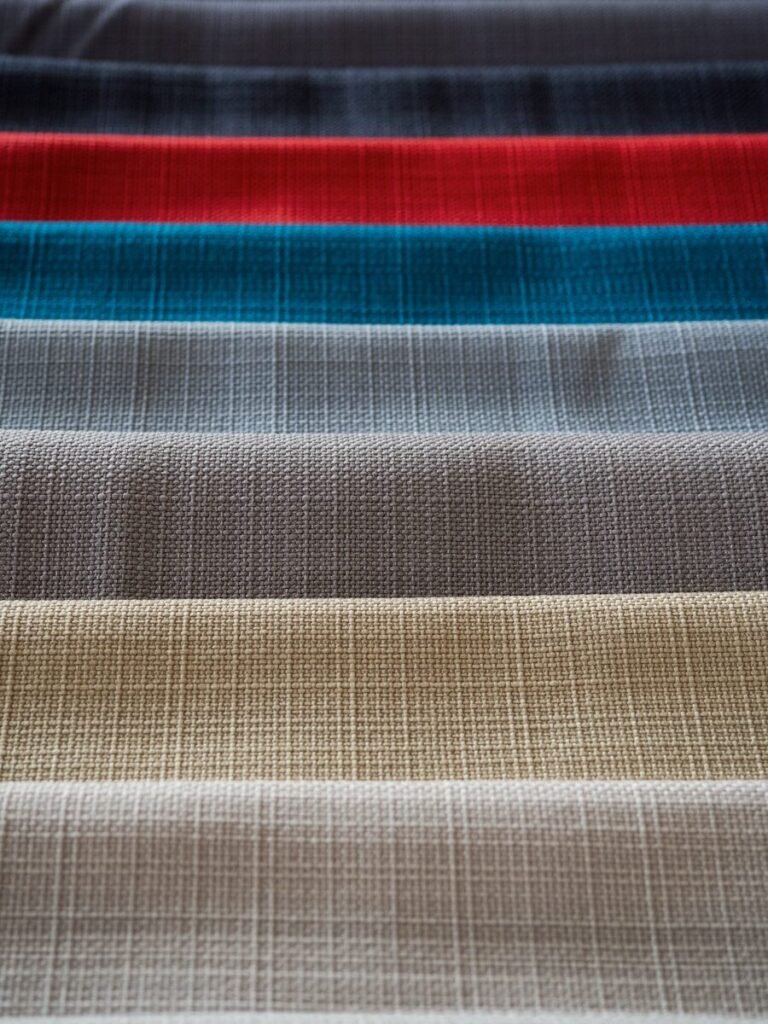
Ripstop isn’t a different type of nylon fiber. It’s a weaving technique. Thicker reinforcement threads are woven into the fabric at regular intervals, usually every few millimetres, creating a visible grid pattern across an otherwise standard lightweight weave.
Those reinforcement threads are the whole point. They don’t stop a tear from starting, but they stop it from spreading past the nearest grid line, which contains damage to a small area instead of letting it run across the entire garment.
How the Reinforcement Grid Works
Picture a normal woven fabric as a grid of thin threads running in two directions. If one thread snaps, the tension around it shifts to the neighbouring threads, which can snap in turn and let the tear run further. Ripstop interrupts that chain reaction by weaving in noticeably thicker threads at set intervals.
When a tear reaches one of these reinforced threads, the extra strength there holds and stops the damage from continuing past that point. The result is a small, contained rip instead of a rapidly spreading tear across the whole panel.
Ripstop vs Standard Nylon
- Tear resistance: ripstop’s reinforcement grid contains tears to a small area, while standard nylon has no built-in mechanism to stop a tear from spreading.
- Weight: both can be produced at similarly light weights, since the reinforcement threads add minimal bulk despite the added strength.
- Appearance: ripstop shows a subtle visible grid pattern, while standard nylon has a smoother, uniform surface.
- Cost: ripstop’s more complex weaving process typically adds a modest premium over standard nylon.
The added durability rarely comes with a meaningful weight penalty, which is part of why ripstop has become the default choice across so much technical and outdoor gear rather than a niche upgrade.
Where Ripstop Nylon Excels
Ripstop earns its place on any garment that faces real physical abrasion risk: packable jackets, outdoor shells, and technical gear that might brush against branches, rocks, or rough surfaces. If your brand is building around an outdoor clothing identity, ripstop is close to an expected baseline for outerwear rather than a premium add-on.
It’s also become a signature material for techwear, where the visible grid pattern has crossed over from purely functional to a recognisable aesthetic element in its own right.
Weight, Denier, and Feel
Ripstop nylon is commonly specified by denier, a measure of thread thickness, rather than GSM alone. Lighter deniers, around 20D to 40D, suit packable jackets where minimal weight matters most. Heavier deniers, 70D and above, suit gear that needs to survive more serious abrasion, like bags or heavy-duty outerwear.
Compare denier alongside your overall garment weight goals when specifying with a manufacturer, since the two numbers describe related but distinct properties of the same fabric.
Common Mistakes
- Choosing denier by price alone. A lower denier isn’t automatically wrong, but it should match how the garment will actually be used, not just your budget.
- Assuming ripstop prevents tears entirely. It contains tears to a smaller area. It doesn’t make the fabric tear-proof.
- Ignoring the visible grid in design. The reinforcement pattern is visible on the finished garment, so factor that texture into your design rather than treating it as invisible.
- Overlooking care instructions. Coated ripstop fabrics can lose water resistance if washed incorrectly, so include clear care guidance with the product.
Frequently Asked Questions About Ripstop Nylon
Ripstop is a weaving technique, not a different fiber type. Thicker reinforcement threads are woven into the fabric at regular intervals, creating a grid pattern that stops a tear from spreading past the nearest reinforced line.
No. Ripstop contains tears to a smaller, more manageable area rather than preventing damage entirely. A small rip stays small instead of spreading across the whole panel, but the fabric can still be punctured or torn at the initial point of damage.
Lighter deniers, generally in the 20D to 40D range, suit packable jackets where minimal weight and pack size matter most. Heavier deniers, 70D and above, are better suited to gear that needs to survive more serious abrasion, like bags or heavy-duty outerwear.
Not significantly. Both can be produced at similarly light weights, since the reinforcement threads add minimal bulk relative to the strength they provide. This is part of why ripstop has become a default choice rather than a heavier, niche upgrade.
It’s most common there, but the visible grid pattern has also become a recognisable aesthetic element in techwear specifically, where the functional texture is used deliberately as a design feature rather than purely for durability.